A cream sweater, a crisp white shirt, a charcoal dress: neutral clothes make getting dressed feel simple, but they can also be a wonderful canvas. Colorful jewelry brings a little movement and personality to those familiar pieces without asking you to rebuild your wardrobe. The secret is not matching every shade or piling on more; it is choosing one clear point of focus and letting the rest of the outfit support it.
Think of neutrals broadly. Ivory, camel, denim, gray, navy, black, olive, and soft brown all behave like useful backdrops, each with its own mood. A coral necklace against cream reads sunny; deep blue with camel feels calm; green beads against charcoal look crisp and grounded. These are starting points, not rules. The most successful colorful jewelry combinations feel like you, suit the setting, and are comfortable enough to wear beyond the mirror. For everyday dressing, colorful jewelry can be the small detail that shifts a familiar uniform.
Start with the neutral, then choose a color mood
Before reaching for accessories, notice the temperature and depth of the clothing. Warm neutrals—cream, tan, camel, chocolate, and many earthy olives—often sit easily beside tomato red, coral, amber, teal, and warm green. Cooler neutrals such as crisp white, slate, charcoal, and blue-based navy can make cobalt, berry, cool pink, or clear green feel especially fresh. This is a helpful visual shortcut, not a strict color theory test: fabric texture, light, and personal preference matter just as much.
For a low-effort first pairing, let one vivid shade do the talking. A single colored necklace on a plain crewneck or a bright pair of earrings beside a white button-down gives the eye somewhere to land. Colorful jewelry is often most wearable when the garment stays uncomplicated in silhouette and print. That does not mean the outfit must be plain; it simply means a patterned blouse, bold lip, and several saturated accessories may compete for attention at once.
Use contrast when you want the color to read clearly. Red or coral against navy has a lively, classic feel; turquoise or teal against camel creates a cool-warm balance; pink against gray looks gentle rather than sugary. If you prefer a quieter effect, choose neighboring or related hues: sage beads with cream, blush with warm beige, or blue-green with denim. The color does not need an exact echo elsewhere. A small repeat—a shoe detail, bag, scarf, or a touch of makeup—can make the combination feel considered, but it is optional. One piece of colorful jewelry is often enough to create that connection.
When unsure, hold the piece next to the garment in daylight and check whether you like the overall impression from a few feet away. Ask whether the jewelry looks distinct, disappears, or feels like a deliberate accent. That simple pause turns colorful jewelry into a styling choice instead of a last-minute add-on.
Choose one focal point and make scale work for you
Decide what you want noticed first: a necklace, earrings, or a bracelet stack. A bold necklace works naturally with a clean neckline and an open collar; a vivid earring becomes the focal point when hair is tucked back or the top half of the outfit is simple. If the neckline already has a ruffle, tie, or strong graphic shape, earrings or a ring may be easier than adding another busy area. These choices help colorful jewelry look intentional without requiring a matching set. Let colorful jewelry be the focal point, then use the garment shape to frame it.
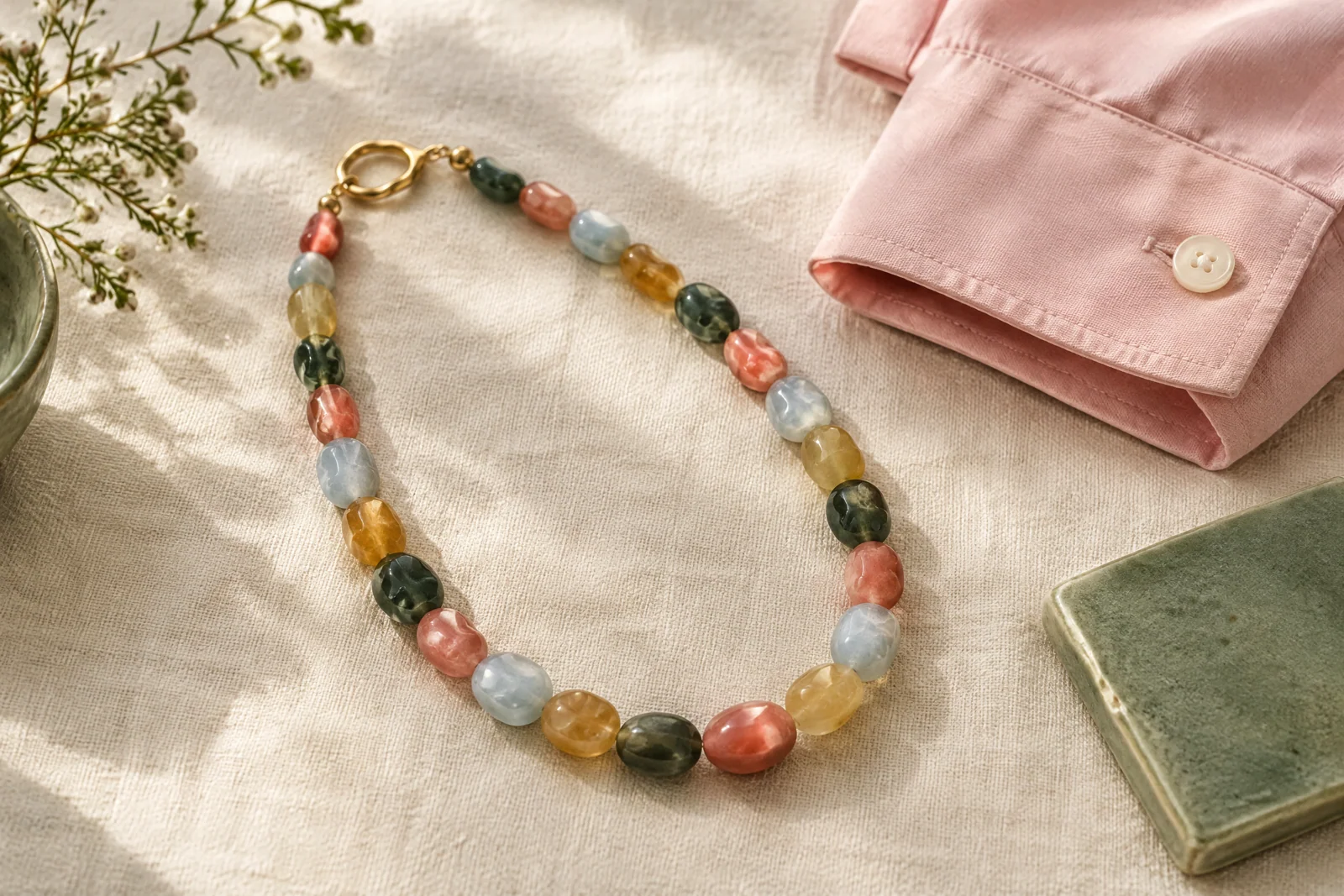
Scale is about more than the size of a single piece. Consider the visual weight of your clothing, your proportions, and how you move through the day. A fine chain with one bright bead can be a small, close-to-the-body accent; a substantial strand of rounded beads has a more graphic presence. Neither is inherently dressier. The visual weight of colorful jewelry should feel in proportion to the clothing, not necessarily to your body. Against a chunky knit, a delicate piece may disappear, while a larger necklace can sit confidently on top. With a fine cotton shirt, a heavy piece may become the entire story, which can be exactly right when that is the effect you want.
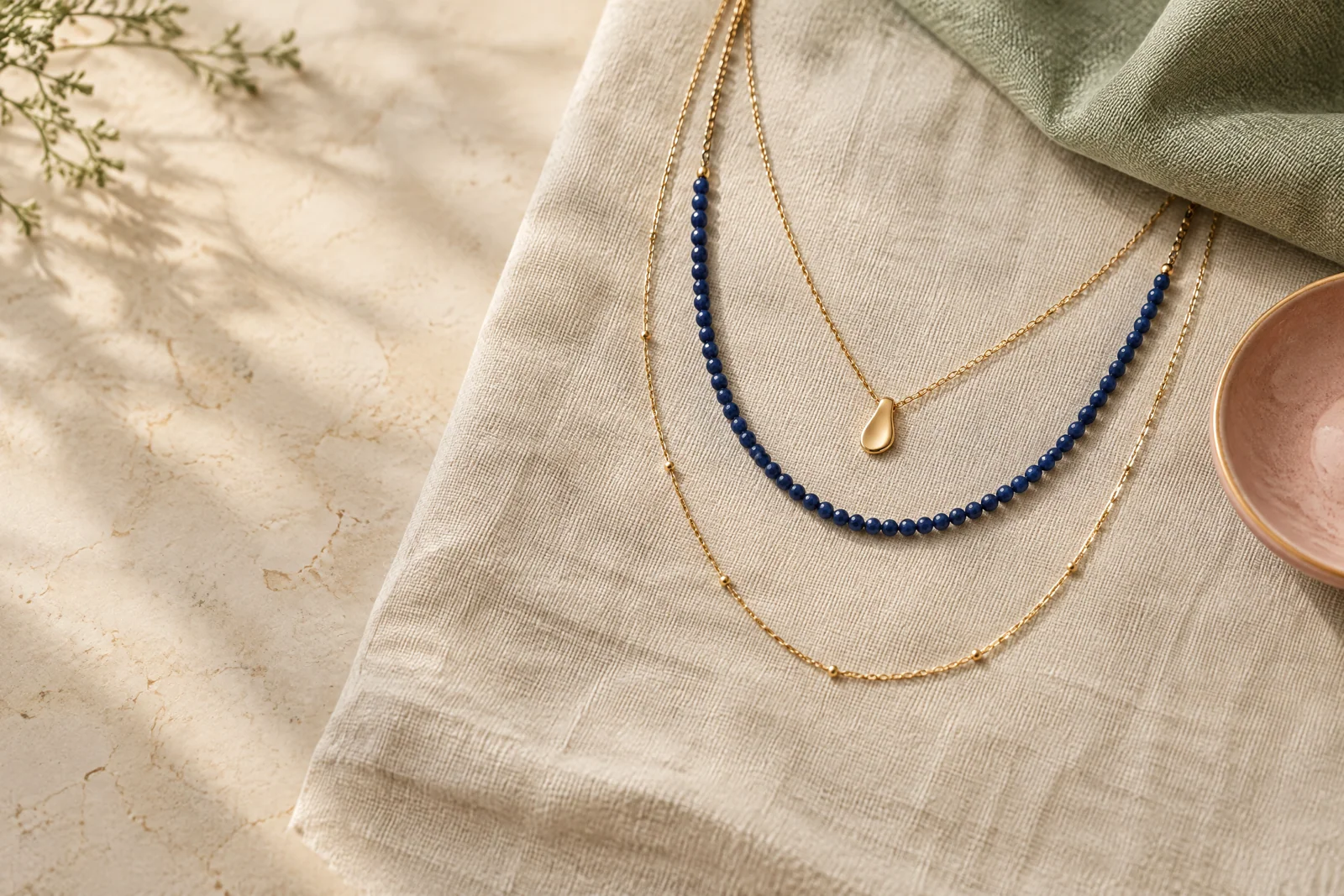
Try a simple balance check: if the necklace is the main event, keep earrings small or skip them; if your earrings are vivid or oversized, choose a quieter neckline. This is a guideline rather than a ban on layering. Two pieces can coexist when they have different jobs—for example, a short colored strand with a fine, simple chain, or a small pendant beside understated studs. Give each element breathing room in length, shape, or color. Colorful jewelry looks more composed when every piece is not trying to be the loudest. For more ideas on spacing and lengths, explore our necklace collection.
Colorful jewelry can also be scaled to the occasion. At a desk or on an errand, one bright bead strand or a small pair of colored drops can enliven a uniform of denim and a tee. For dinner, keep the same base outfit and switch to a stronger focal piece, or add one complementary accent. The point is not to label certain colors as formal or casual; finish, size, and the rest of the styling set the tone. The same colorful jewelry can feel relaxed or polished as the surrounding pieces change.
Build an outfit around a color story, not a perfect match
A useful color story has a lead shade, a supporting neutral, and—if you want it—a small connector. Imagine a coral necklace over an ivory blouse with tan shoes: coral leads, cream and tan calm it down. A sage-green strand against black can feel more graphic; add a soft gray layer or keep the rest of the accessories minimal. With denim, a colored necklace or earring often acts like a bridge between the blue of the jeans and whatever neutral top you chose.
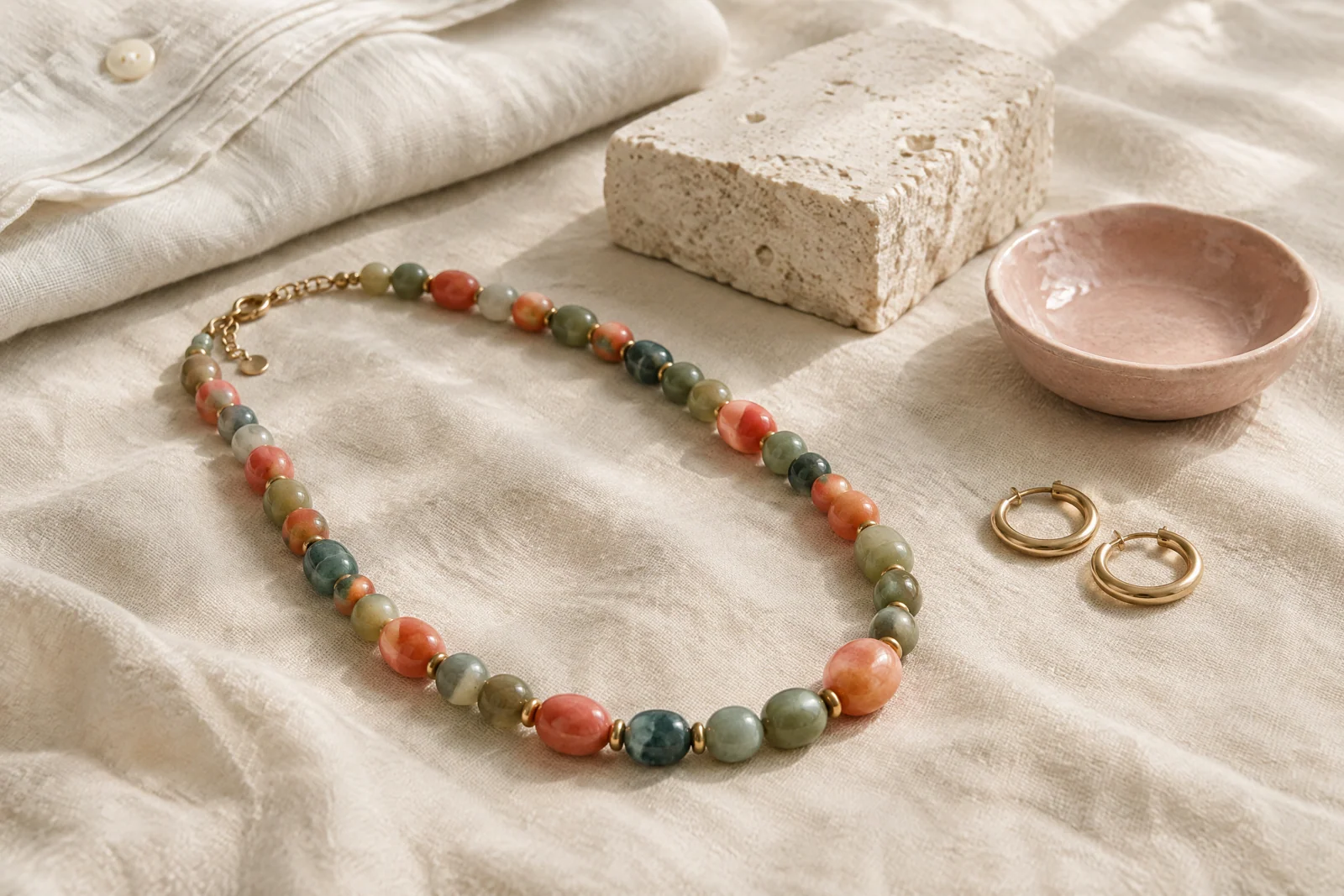
For a warm, soft combination, try a cream knit with coral or terracotta beads and a little gold-toned detail. Duddingtons' Fenella necklace is described as coral-colored acetate beads with gold-plated mixed-metal details; the catalog gives its length as approximately 42 cm plus an extender. That makes it a useful example of a warm color accent over white, cream, or chambray—not a requirement to match its exact shade. Colorful jewelry in coral tones can warm a neutral outfit without needing another coral accessory. For a cooler, more muted direction, the Jovie necklace is described as sage-green rondelle beads with gold-plated mixed metal and 14k gold-fill details. Its green offers a softer alternative to a bright primary color against ivory, denim, or charcoal. For colorful jewelry with a quieter mood, muted greens are an easy place to begin.
Another approach is to let neutrals vary in texture while the jewelry supplies the color: linen, denim, ribbed cotton, and smooth tailoring can make a tonal outfit interesting before accessories enter the picture. A rich red beaded necklace, such as the catalog-described Karia necklace, can then provide a decisive contrast against a white shirt, navy knit, or taupe dress. Its listing describes glass beads and silver-plated mixed-metal details. Use product material descriptions as given, and check each listing for the details that matter to you; the examples here are styling references, not claims about inventory or availability.
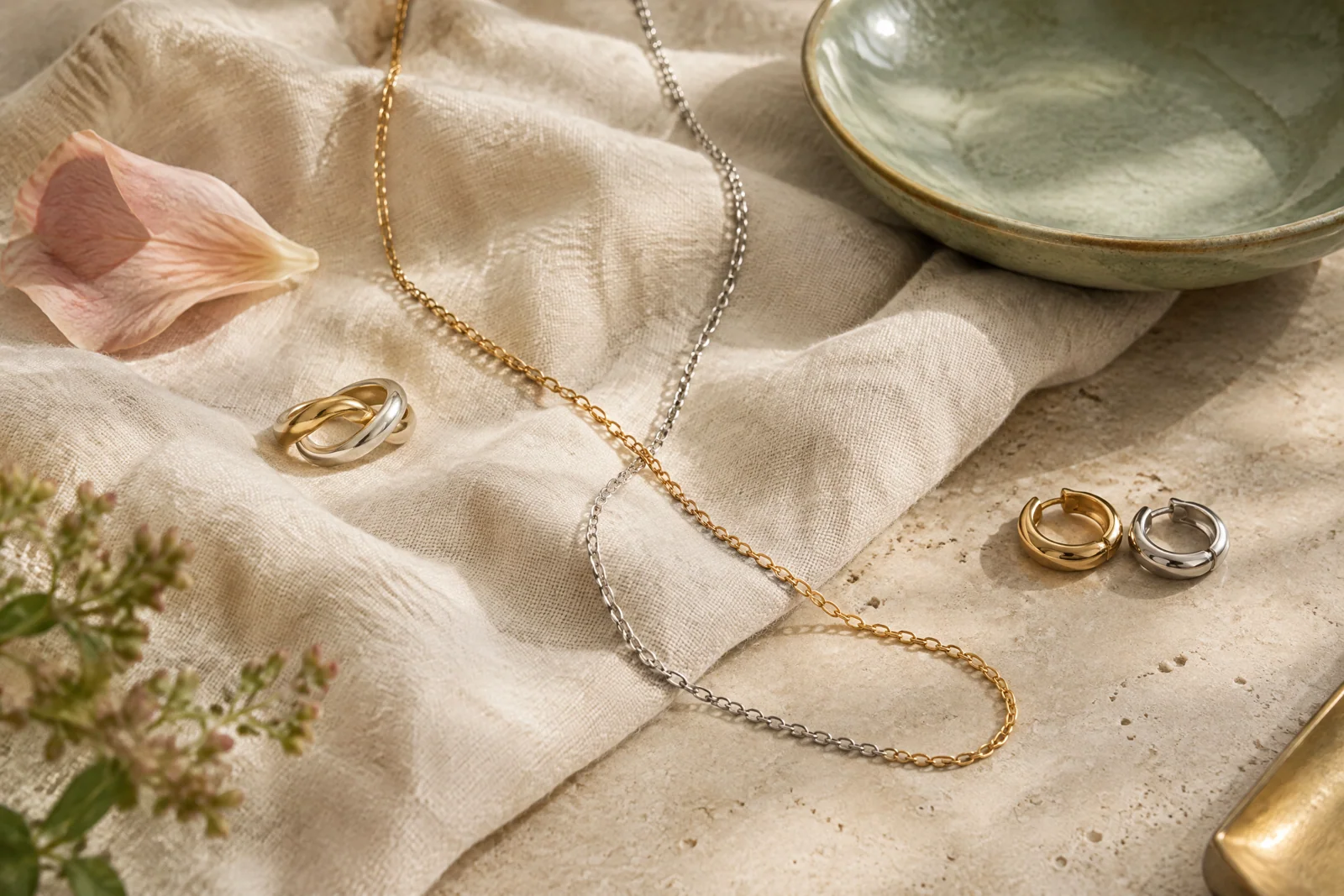
Repeated color is optional, but repeated shape or finish can be just as effective. A rounded bead beside a rounded earring feels coherent even when the hues differ; gold-toned details can tie together a necklace and a simple ring. Silver and gold can also share an outfit. If you enjoy the mix, keep the shapes simple or repeat each finish once so the combination feels purposeful. Browse earrings for a different focal point, or use a few pieces from the bracelet collection to carry a color story down the arm rather than around the neckline.
Make colorful jewelry feel easy in real life
The best outfit formula is the one you can repeat. Start with a familiar base—jeans and a white tee, a black dress, a linen shirt and trousers, or a soft gray sweater. Add one colorful piece, then look at the whole outfit in natural light. If the color feels too loud, remove a competing accessory or switch to a quieter shade; if it feels flat, try a warmer or cooler contrast. A quick photo can help you see proportions you miss when looking down at the mirror.
- For a workday: choose one accent, such as a colored necklace over a solid shirt or expressive earrings with a simple neckline.
- For the weekend: pair denim or relaxed linen with a bead strand, then keep other accessories light enough for comfortable movement.
- For an evening: use a dark neutral as a backdrop for a saturated hue, or keep the jewelry tonal and let texture provide the interest.
- For a printed outfit: pick one color already present in the print and repeat it in a single piece, rather than matching every motif.
Comfort and practicality matter as much as color. Check that earrings feel suitable for the length of time you plan to wear them, and make sure necklace lengths sit well with collars, scarves, or layers. If a piece includes multiple materials, follow its own care guidance rather than assuming every component can be treated the same way. After wearing, store pieces separately when possible so chains and beads are less likely to tangle or rub against one another.
Finally, treat your jewelry box as a set of possibilities, not a collection of obligations. You do not need a perfect palette, a complete set, or a different accessory for every outfit. A favorite bright piece can earn its place by working with several neutrals you already own. That versatility is what makes colorful jewelry feel like part of a wardrobe rather than a one-outfit novelty. Keep the combinations that make you feel at ease, take a quick note when a pairing surprises you, and let personal taste lead. Colorful jewelry should make those familiar clothes feel more like your own. With a little practice, colorful jewelry becomes less of a special-occasion decision and more of a small, expressive part of getting dressed.
Related reading
Keep exploring with How to Layer Necklaces Without the Tangles, How to Style Beaded Necklaces with Everyday Outfits, and A Practical Guide to Mixing Gold and Silver Jewelry.