Pearl care is less about elaborate rituals than a few calm habits: put pearls on after cosmetics have settled, wipe them gently after wearing, and store them where harder jewelry cannot rub against them. Those small choices help preserve the soft glow that makes both natural-looking pearls and faux-pearl designs so appealing. The right routine depends on what the piece is made of, too. A strand of pearls, a pearl set into a gold-plated setting, and faux-pearl earrings may look related, but their surfaces, stringing, and metal parts do not all respond to the same treatment.
This guide offers a practical, cautious approach to pearl care at home. It explains what to do after a wear, how to handle a spot of grime, where to keep each piece, and when to pause and ask a jeweler rather than experiment. If you are comparing styles, browse our earrings and necklaces edits; the examples below clarify why identifying materials matters before cleaning.
Start with the pearl and the rest of the piece
“Pearl jewelry” can describe several different things. Cultured pearls are formed in an oyster or mussel and have a delicate nacre surface. Faux pearls are imitations; their cores and finishes vary, and some have a coating that can be scratched or dulled. A jewelry listing may also pair pearls with plated metal, silver, thread, leather, enamel, or other beads. Because those components have different care needs, treat the most delicate or least water-tolerant part as the guide. This is the first pearl care rule: consider the whole construction, not only the pearl.
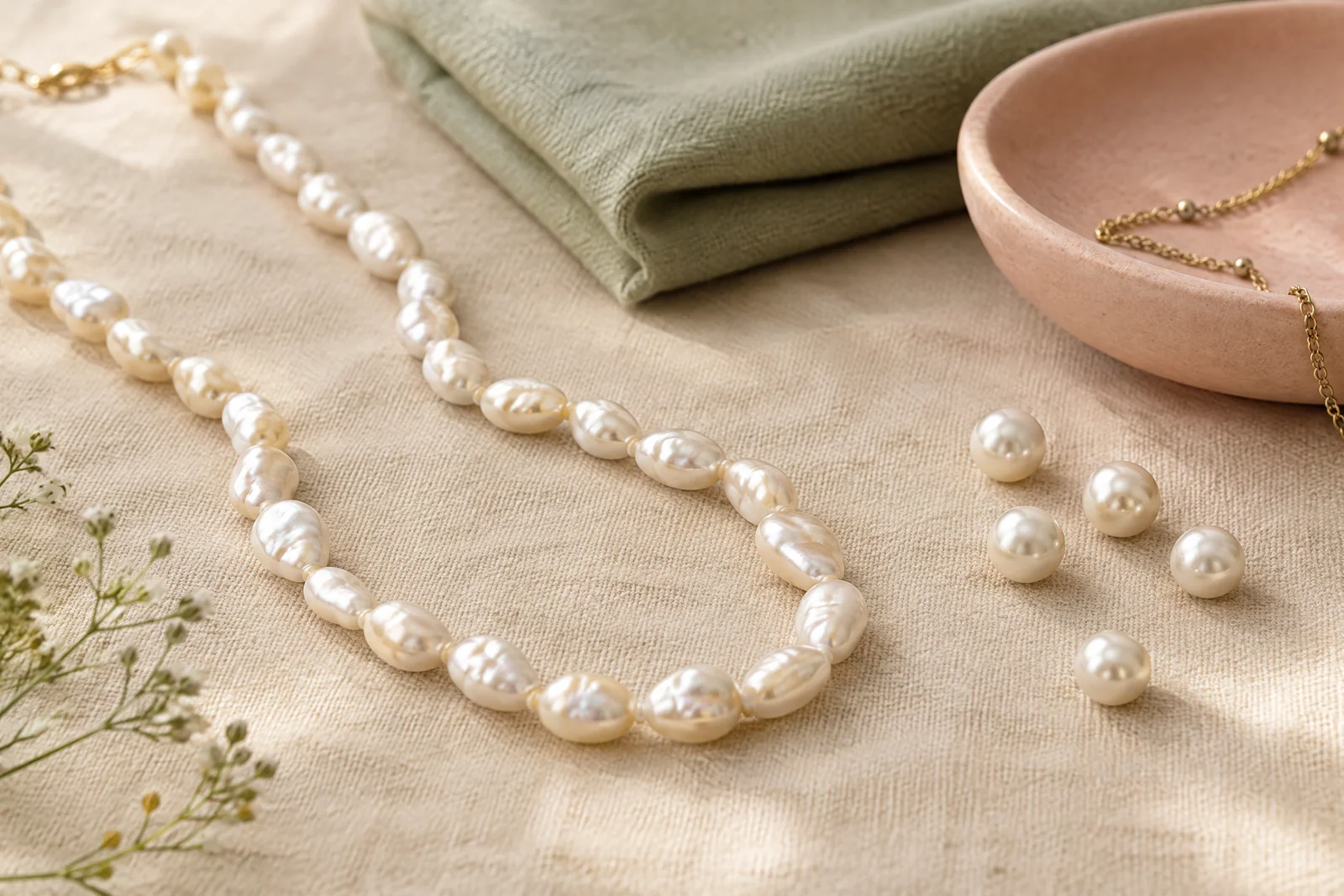
When you have the original product description, check it before cleaning. Look for the pearl type, metal finish, whether the design is strung or linked, and any maker’s instructions. A baroque freshwater pearl is still a real pearl even when its shape is irregular; it should not be treated like a glass bead. By contrast, a faux-pearl surface may be a finish over another material, so abrasive polishing or prolonged moisture could affect its appearance. When a listing simply says “pearl,” do not assume more than it tells you.
For example, Duddingtons’ Delphine necklace is described as a baroque pearl with gold-plated mixed-metal and gold-plated silver details. Its natural variation is part of the look, not a flaw to polish away. The Nova Hearts earrings, by contrast, are described as gold-plated stainless steel with faux pearls. These are catalog examples, not a reason to assume every piece with a similar look has identical materials. A clear description is the starting point for pearl care, not a substitute for piece-specific instructions.
The Gemological Institute of America notes that pearls are relatively soft and can be scratched, and advises keeping them away from chemicals such as perfume, hairspray, cosmetics, and perspiration. GIA also advises against ultrasonic and steam cleaners for pearls. Its pearl care and cleaning guidance is a useful reference for cultured pearls; for a mixed-material piece, use the more conservative method appropriate to all of its components.
Make a gentle after-wear routine
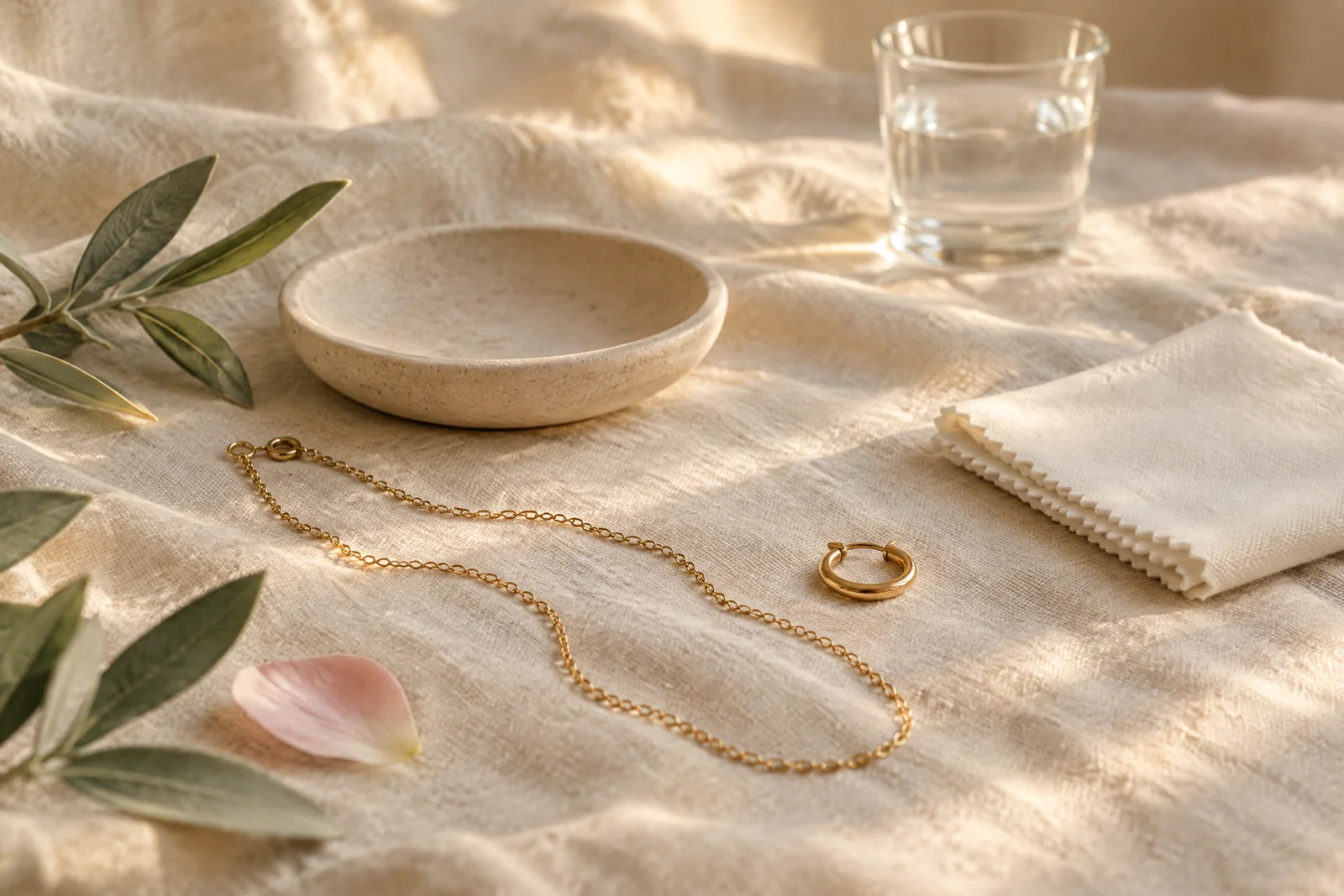
The easiest pearl care step happens as soon as you take a piece off. With clean, dry hands, use a very soft, clean cloth to wipe away skin oils, perspiration, makeup traces, or dust. Use light pressure and turn a strand slowly so you reach each pearl without pulling on the thread. Do not use a rough polishing cloth, paper towel, tissue with texture, or a brush; a tiny abrasive particle caught in the fabric can leave a mark.
Make jewelry the last part of getting dressed and the first thing you remove when you come home. Apply fragrance, hair products, sunscreen, and cosmetics first, then allow them to dry before putting on pearls. That simple order is everyday pearl care, not a complicated cleaning routine. This is not a promise that a dried product cannot affect a finish; it simply reduces direct contact. If you have been warm or active, give the piece a gentle wipe before it goes away. Keeping this small pearl care habit consistent is more useful than waiting for visible dirt and reaching for a stronger cleaner. Regular pearl care also means removing jewelry before lotions, swimming, and household tasks.
If the piece has a clasp, hold the clasp or the metal body while putting it on and taking it off, rather than tugging the pearls or string. For earrings, handle the post or fitting instead of pinching the pearl. Avoid wearing pearl jewelry while showering, swimming, exercising, applying lotions, or doing household cleaning. Water, sweat, detergents, chlorine, and cleaning agents can affect pearls, string, coatings, or metal finishes in different ways. This advice is about careful use, not a claim that any item is waterproof.
Give pearls their own moment in your dressing routine. If necklaces are layered, put on the pearl strand after the other chains and check that clasps or textured links are not scraping it. The same principle applies to bracelets: a pearl bracelet should not knock against a watch or a hard bangle all day. For ideas on separating pieces between wears, see our bracelets and accessories collections, then choose combinations that leave delicate surfaces room.
Clean spots carefully, without a one-size-fits-all soak
For routine pearl care, a dry soft-cloth wipe is usually the safest first step. A careful pearl care response starts with observation, not a cleaner. If you see a small mark, pause before adding liquid. Identify whether the pearls are cultured or imitation and whether the piece includes a strand, glued setting, plated components, porous beads, or fabric cord. When you cannot tell, contact the seller or a qualified jeweler for instructions. A quick question is preferable to testing a cleaner on a conspicuous surface.
For cultured pearls by themselves, GIA says warm, soapy water can be used for occasional thorough cleaning, and specifically notes that a strung piece should be completely dry before it is worn. That does not mean every pearl design should be soaked. A mixed-material necklace or earring may have a thread, glue, plating, or another component that makes immersion unsuitable. Do not soak a mixed-material piece as a blanket rule; instead, follow the maker’s directions or ask a jeweler. That is an important pearl care distinction: advice for loose cultured pearls may not suit an assembled design. If a specialist confirms water is appropriate, use only a barely damp soft cloth for a localized clean, then gently blot with a second clean cloth and let the jewelry air-dry fully on a flat, clean surface before wearing or storing it. With heirloom pieces, pearl care is best discussed with a jeweler before any home cleaning.
Faux pearls also call for restraint. Their surface coating can be more important than the material inside, and the exact construction differs by piece. Gentle pearl care for an imitation finish starts with the maker’s directions and the least abrasive option. Start with a dry cloth; if the maker permits moisture, use a cloth that is only slightly damp, work gently, and dry immediately. Do not scrub, scrape, polish with metal compounds, or try to “restore” shine with oils. Avoid vinegar, alcohol, bleach, ammonia, jewelry dips, and household cleaners unless the manufacturer specifically says a particular product is safe for that exact finish. Strong chemicals and abrasives can do more harm than a faint mark.
Never use an ultrasonic or steam cleaner on pearls. Those methods can be too aggressive for a delicate pearl surface and may also affect the other materials in the setting. Do not use boiling or hot water, and do not place pearls near a heater or in direct hot sun to dry. Good pearl care is deliberately unexciting: mild handling, a clean cloth, patience, and a professional opinion when the jewelry is valuable, badly soiled, or structurally worn.
Store pearls separately and know when to seek help
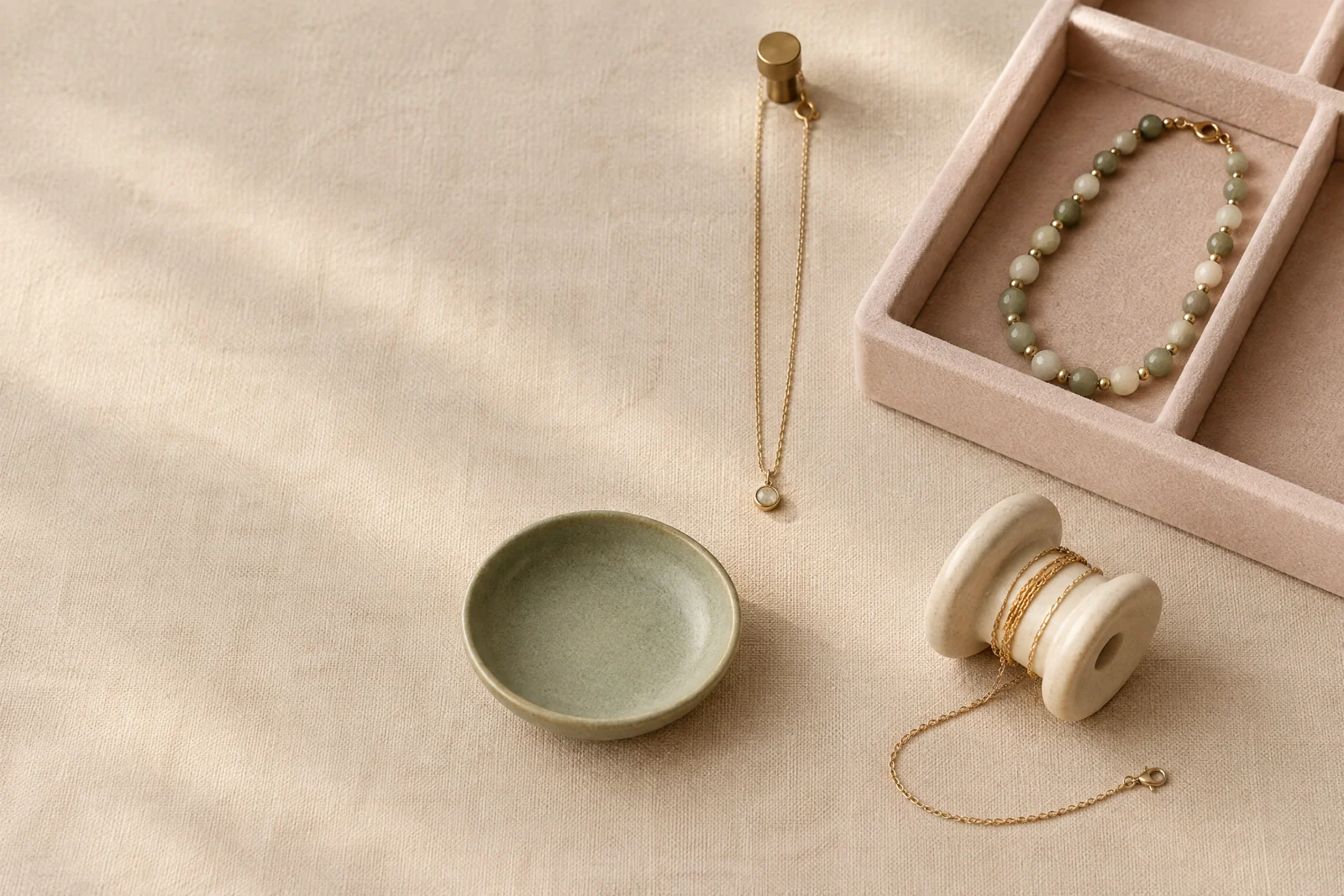
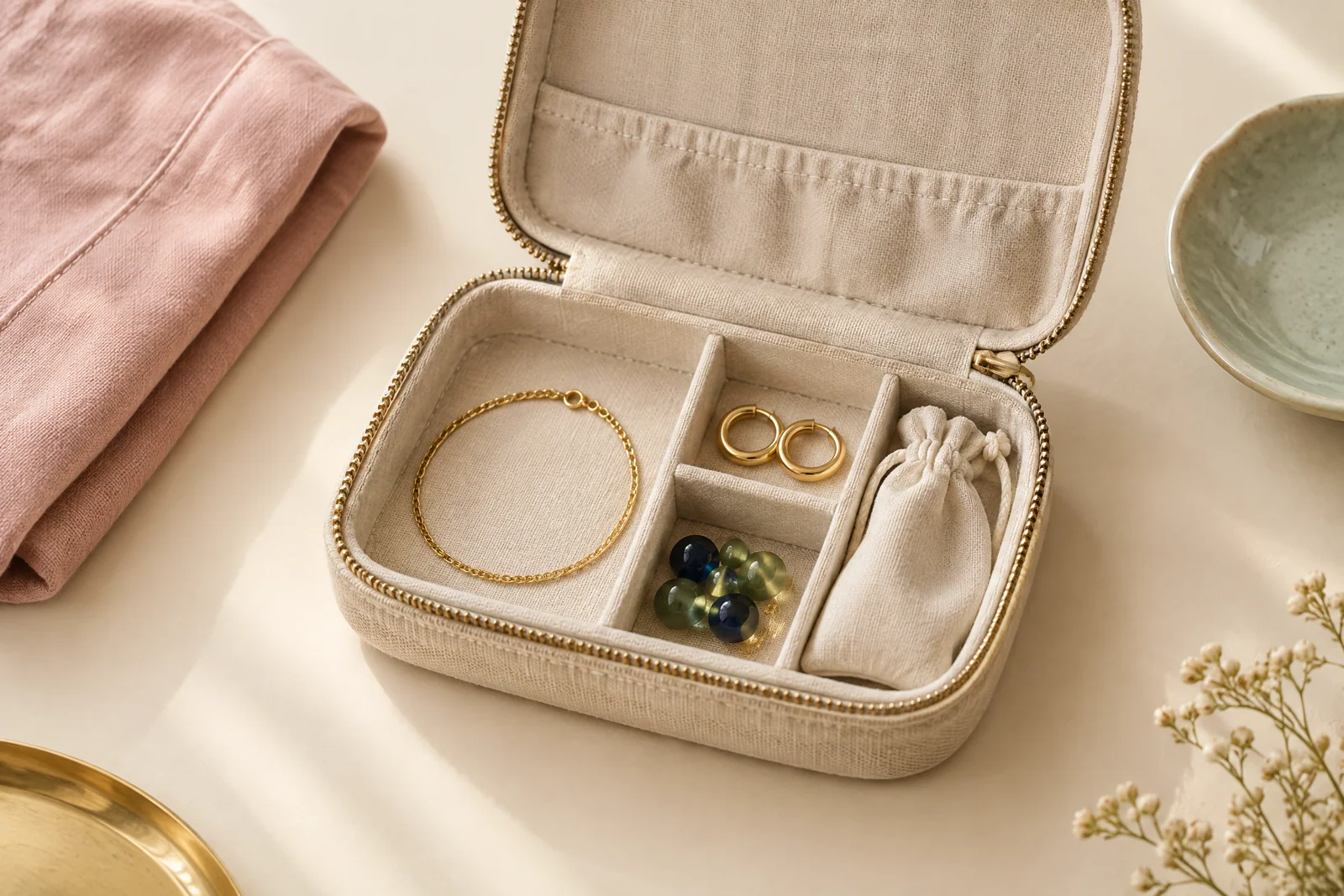
Once fully dry, store pearls in a soft pouch or a lined compartment away from loose chains, sharp edges, and harder gemstones. Keep each piece separate so clasps and metal details cannot scratch the pearl surface. A dedicated space also prevents a necklace from becoming tangled and reduces strain when you retrieve it. This quiet storage step is part of everyday pearl care, too. Avoid leaving pearls in a bathroom, in a sunny window, or next to a heat source; a cool, dry place with steady conditions is a sensible home for them.
Do not hang a long-strung pearl necklace for extended storage if its thread is under strain or the strand is old. Lay it flat without sharp bends or knots. If you notice fraying, a stretched-looking line, a loose clasp, or pearls shifting along the thread, stop wearing it until it has been assessed. A jeweler can advise whether restringing or repair is appropriate. Store faux-pearl pieces separately as well: a coating that looks smooth today can be marred by friction with keys, coins, or other jewelry.
Different pieces call for different kinds of help. A persistent mark, a loose pearl, chipped or peeling faux-pearl coating, darkening metal, or an older strand is not a cue to try a stronger home remedy. Photograph the issue in good light, check any care information that came with the jewelry, and ask a qualified jeweler or the original retailer what is suitable. Be candid about what the piece is made of when known; do not assume the pearl alone determines the safest repair.
A simple routine brings pearl care down to four decisions: identify the materials, keep products and friction at a distance, wipe gently after wearing, and store each piece on its own. That approach respects the difference between cultured and faux pearls without asking you to become a gemologist. For Duddingtons questions, contact us at [email protected]; for broader browsing, explore the jewelry collections.
Related reading
Continue with our gentle guide to gold-plated jewelry care, learn how to store necklaces without tangling them, or read how to pack jewelry for a weekend away.