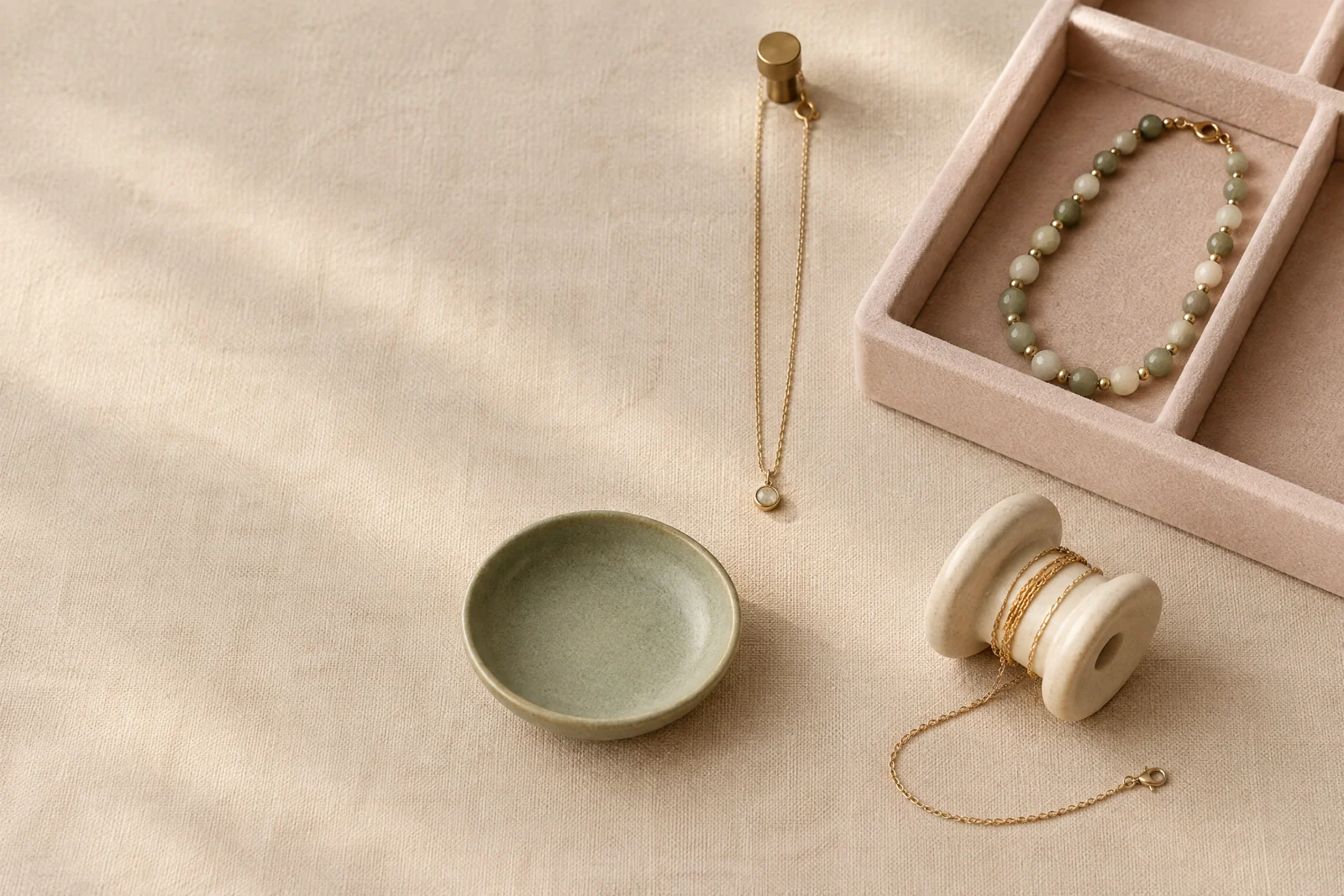
Gold-plated jewelry has an easy brightness: a glint at the wrist, a fine chain at the collar, a familiar favorite that makes a simple outfit feel considered. Thoughtful jewelry care begins with understanding that a plated finish is a surface layer, not solid gold all the way through. That distinction is not a reason to be precious about every wear; it is a useful guide to gentler jewelry care routines. Keep cosmetics and moisture to a minimum, wipe pieces after wearing, and choose storage that prevents rubbing. With a few small choices, your gold-plated favorites can stay part of your regular rotation without relying on harsh cleaners or complicated rituals.
Understand the finish before you clean
Gold plating describes a layer of gold over another metal. The exact construction, thickness, and base metal vary from piece to piece, so do not assume all gold-colored jewelry is made the same way. Gold-plated is also not interchangeable with gold-filled or solid gold. The Federal Trade Commission’s Jewelry Guides emphasize that jewelry descriptions should truthfully represent a piece’s metallic content and other characteristics. When you shop or revisit a piece you already own, For reliable jewelry care, start with its own material description and care notes rather than inferring its composition from color alone.
That material check matters because plated pieces often combine more than one surface or component. A gold-plated chain may sit alongside glass, resin, enamel, shell, a cord, or a set stone. Each part can respond differently to water, friction, and cleaning products. In our catalog, for example, Midnight is described as glass beads with gold-plated mixed-metal details. The sensible approach is to protect both the finish and the beads: make jewelry care simple: avoid soaking the whole necklace, and use a soft, dry cloth on the metal details. The same logic applies to any mixed-material piece, even when the plated section looks sturdy.
Think of jewelry care as preserving the finish that is there, not restoring it with force. If the gold tone becomes patchy or the underlying metal begins to show, polishing harder will not add gold back and may increase abrasion. Stop rubbing and check the maker’s guidance or ask a qualified jeweler about the specific piece. A realistic understanding of plating keeps your routine simple and your expectations clear.
Build gentle habits into getting dressed
The easiest jewelry care often happens before a piece ever needs cleaning. Put on perfume, hairspray, sunscreen, lotion, and makeup first; let products settle, then add jewelry. That order makes everyday jewelry care easier. This reduces direct contact with cosmetics and sprays that can leave residue or dull a surface over time. When you get home, take jewelry off before washing up, applying more skincare, or doing household tasks. You do not have to treat a necklace like a museum object—just give it a little distance from repeated chemical exposure and unnecessary handling.
In jewelry care, water deserves a thoughtful, not absolute, rule. A quick splash is different from a long shower, a swim, or a soak, but plated finishes and mixed materials are best protected by removing them before bathing, swimming, exercising, or cleaning. Moisture can linger around links, clasps, and settings; soaps and pool chemicals add further variables. GIA’s jewelry-care guidance also advises keeping jewelry away from chemicals such as cosmetics and household cleaners, and explains why care depends on the materials involved. For jewelry care at home, the safest default is to take a plated piece off before water or cleaning products rather than testing how much exposure it can tolerate.
Friction is another quiet source of wear. For gentle jewelry care, avoid tossing a chain into a bag with keys, zippers, or other jewelry; repeated rubbing can scratch surfaces and pull delicate links. If you wear several pieces together, notice where they touch. A pendant that repeatedly bumps a plated chain, or a bracelet stacked tightly against a watch, may see more contact than a piece worn alone. Change the combination or give each item its own space when not being worn.
For everyday styling, make jewelry care fit your real routine. Keep a soft, clean cloth near the place where you remove accessories. A quick wipe after wear takes less effort than tackling a film of lotion later. If a piece is part of your usual uniform, rotate it with other favorites rather than wearing the same item through every activity. Browse the current necklace collection or bracelet collection for different shapes and materials to work into a rotation; product descriptions are the place to confirm each piece’s materials.
Clean gold-plated jewelry with a light touch
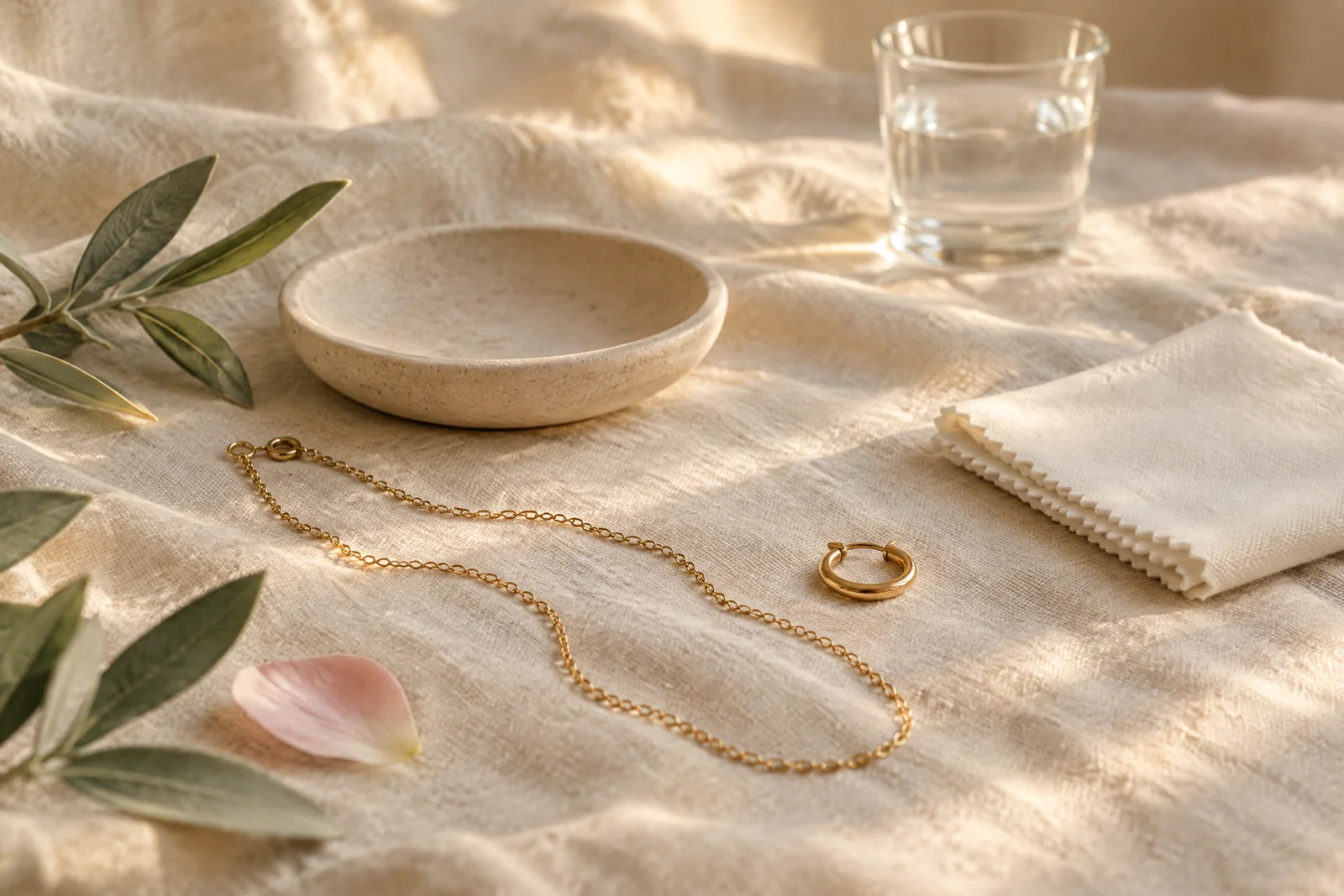
For routine jewelry care, begin jewelry care with the least aggressive option: a clean, soft, lint-free cloth. Hold the piece gently and wipe away fingerprints or surface residue without pressing hard. Use a fresh part of the cloth as you go, especially around links and the clasp, so you are not dragging grit across the finish. This dry wipe is often enough after ordinary wear. It is also a good first step when you are unsure whether a piece includes a delicate bead, coating, cord, or other component that should not be wet.
If the product’s care instructions allow a damp wipe, barely moisten a soft cloth with clean water and work in small, gentle passes. Do not submerge the piece or leave it to soak, and avoid abrasive cloths, polishing compounds, household cleaners, alcohol, vinegar, baking soda, and silver dips unless the maker specifically confirms they are suitable. Strong rubbing and abrasive materials can remove or disturb a thin finish rather than improve it. GIA notes that jewelry materials vary in their tolerance for cleaning methods; its general advice is not a substitute for instructions for a particular plated or mixed-material item.
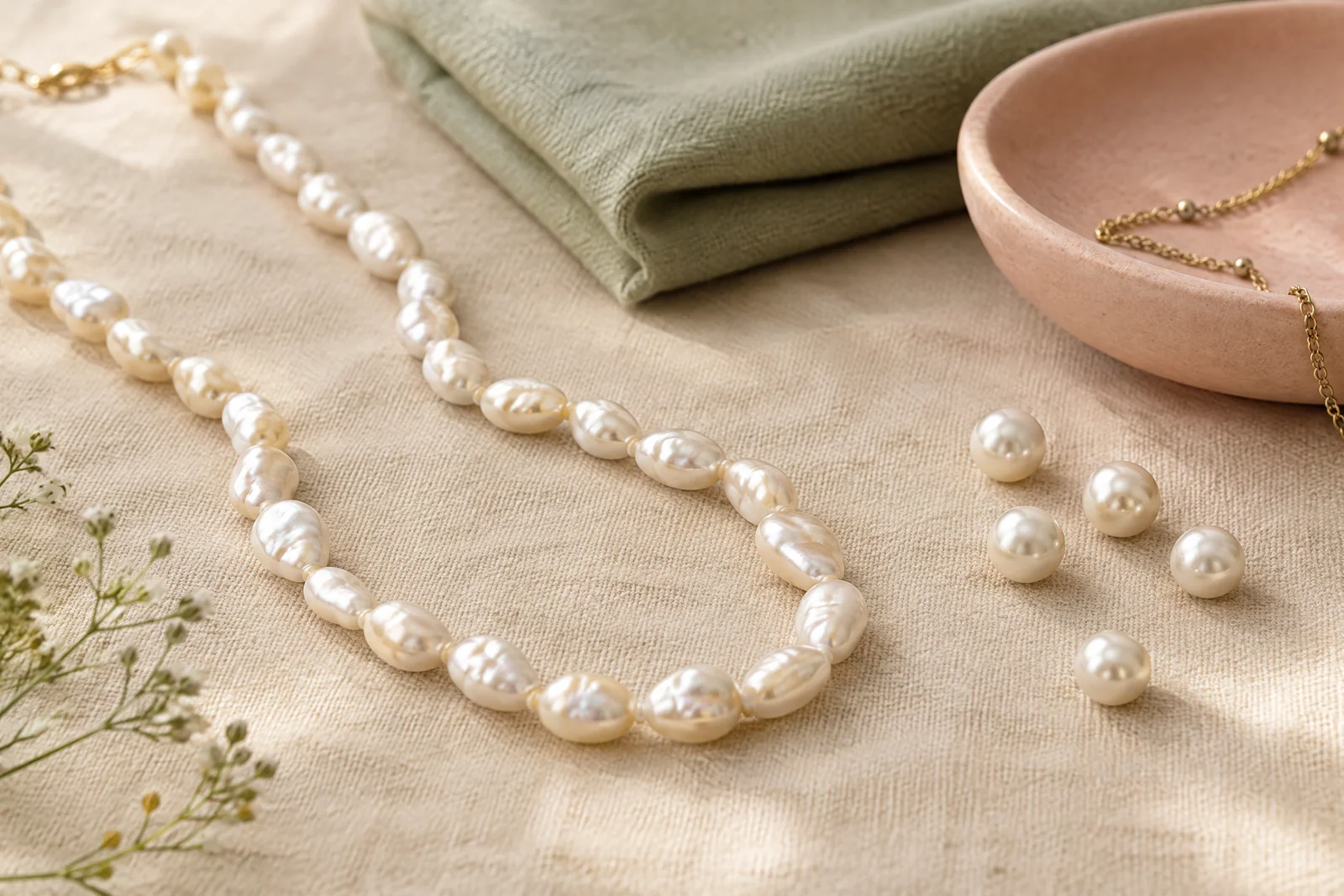
Be especially cautious around glued components, pearls, shells, porous stones, enamel, leather, fabric, and beads strung on thread. Do not apply a one-size-fits-all bath to a necklace simply because one component is metal. Keep any damp cloth away from the sensitive part, then dry accessible metal promptly with a second soft cloth. Do not use an ultrasonic cleaner or steam on a plated or mixed-material piece at home: vibration, heat, or moisture may be unsuitable for its components or construction. If dirt is lodged in a narrow setting or the piece has sentimental value, ask a professional who can assess the specific materials before cleaning.
A useful rule for jewelry care is to stop as soon as a piece looks clean. More polishing is not automatically better. Avoid trying to brighten a worn area by scrubbing, using a metal polish, or following a generic hack intended for solid gold or sterling silver. If a soft dry wipe does not lift the residue, pause and consult the seller’s instructions. That restraint helps prevent a small cosmetic issue from becoming unnecessary wear.
Store thoughtfully and know when to pause
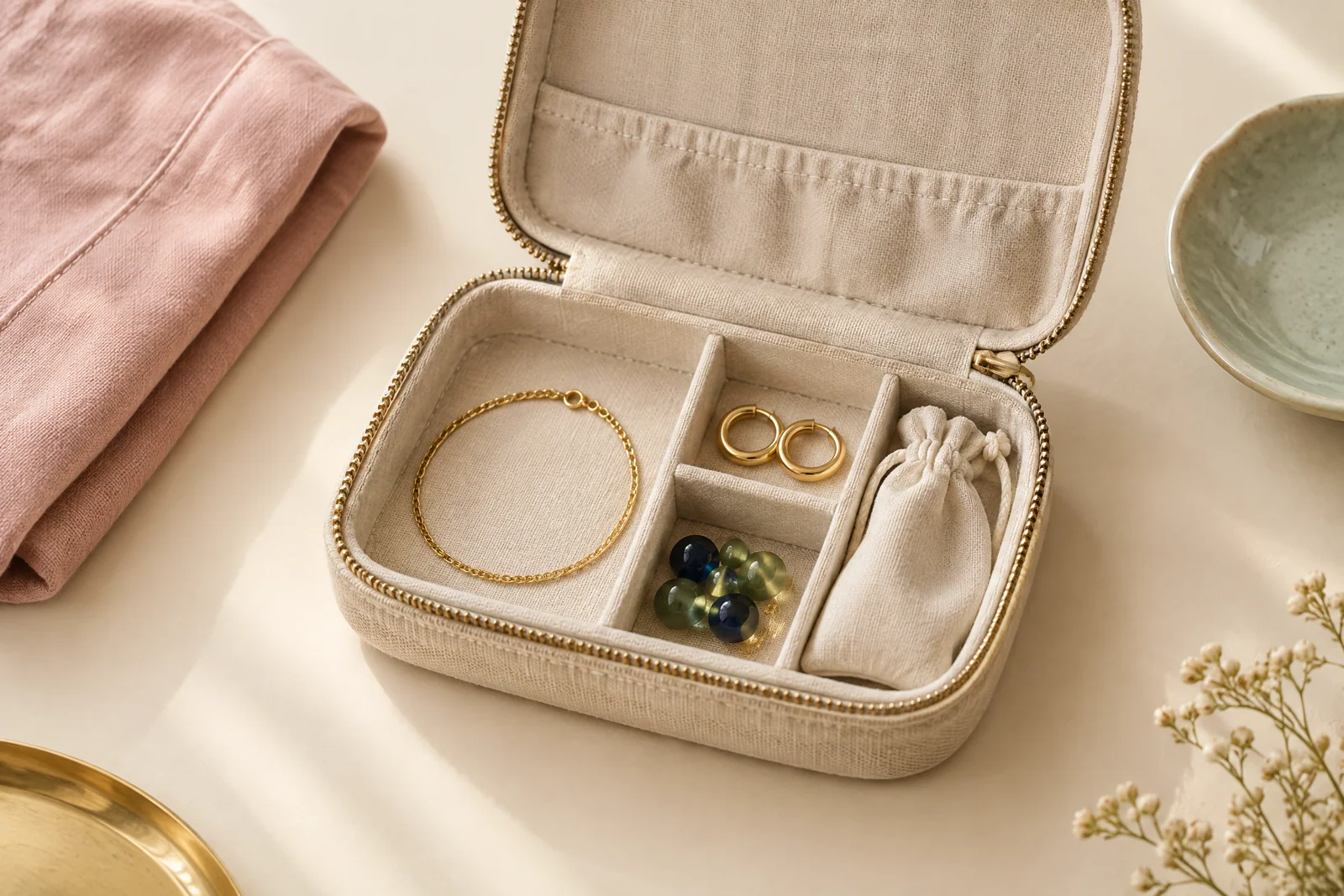
Once a piece is clean and fully dry, store it separately so it cannot tangle or rub against harder objects. A soft pouch, a lined compartment, or an individual section in a jewelry box can work well. Close clasps before putting chains away; fastenings are less likely to catch on links or other pieces. Keep jewelry out of direct sunlight, steamy bathrooms, and places where it can be knocked onto a hard surface. GIA’s storage advice similarly favors keeping pieces protected rather than loose on a dresser, and recommends separating items to reduce scratches and damage.
Good storage is especially helpful for plated jewelry because it reduces avoidable contact between its finish and other objects. Do not pile chains together or leave hoops rattling in a dish with rings and keys. If you travel, tuck each piece into its own small pouch or compartment and keep it away from toiletries that could leak. These habits take little space and make jewelry care easier when you unpack: pieces arrive untangled, and you can see at a glance whether a clasp or link needs attention before wearing.
Check a favorite now and then in good light. Look for a clasp that no longer closes securely, a bent link, loose stones or beads, lifted coatings, or a change in the visible finish. A brief inspection is not a promise that plating will remain unchanged indefinitely; plated surfaces can show wear with use, and the rate depends on construction and how a piece is worn. If the finish changes, stop polishing and contact the maker or a trusted jeweler for advice. For questions about a specific Duddingtons item, use the contact page and include its name and material description if you have them.
Above all, make jewelry care kind to the piece and uncomplicated for you. Put it on after getting ready, remove it before water and chores, wipe gently after wear, and store it on its own. Those small steps will not change what gold plating is, but they can help limit avoidable wear while letting you enjoy the color and character of a piece in everyday life.
Related reading
For more practical ideas, read How to Store Necklaces Without Tangling Them, A Gentle Care Guide for Pearl and Faux-Pearl Jewelry, and How to Pack Jewelry for a Weekend Away.