The most memorable bridal-party details feel considered, not copied. Bridesmaid jewelry can tie a group together while still leaving room for each person’s taste, comfort, and existing wardrobe. The secret is to coordinate one or two visual cues—perhaps metal tone, color family, or overall scale—rather than prescribe an identical necklace-and-earring set for everyone.
That approach makes the photographs feel harmonious, but it is also more welcoming in real life. One attendant may reach for delicate studs, another may love a noticeable pendant, and someone else may rarely wear earrings at all. A good bridesmaid jewelry plan treats those differences as part of the story. Here is a practical way to build a shared look that feels easy to wear before, during, and after the wedding.
Begin with a shared color story, not a matching set
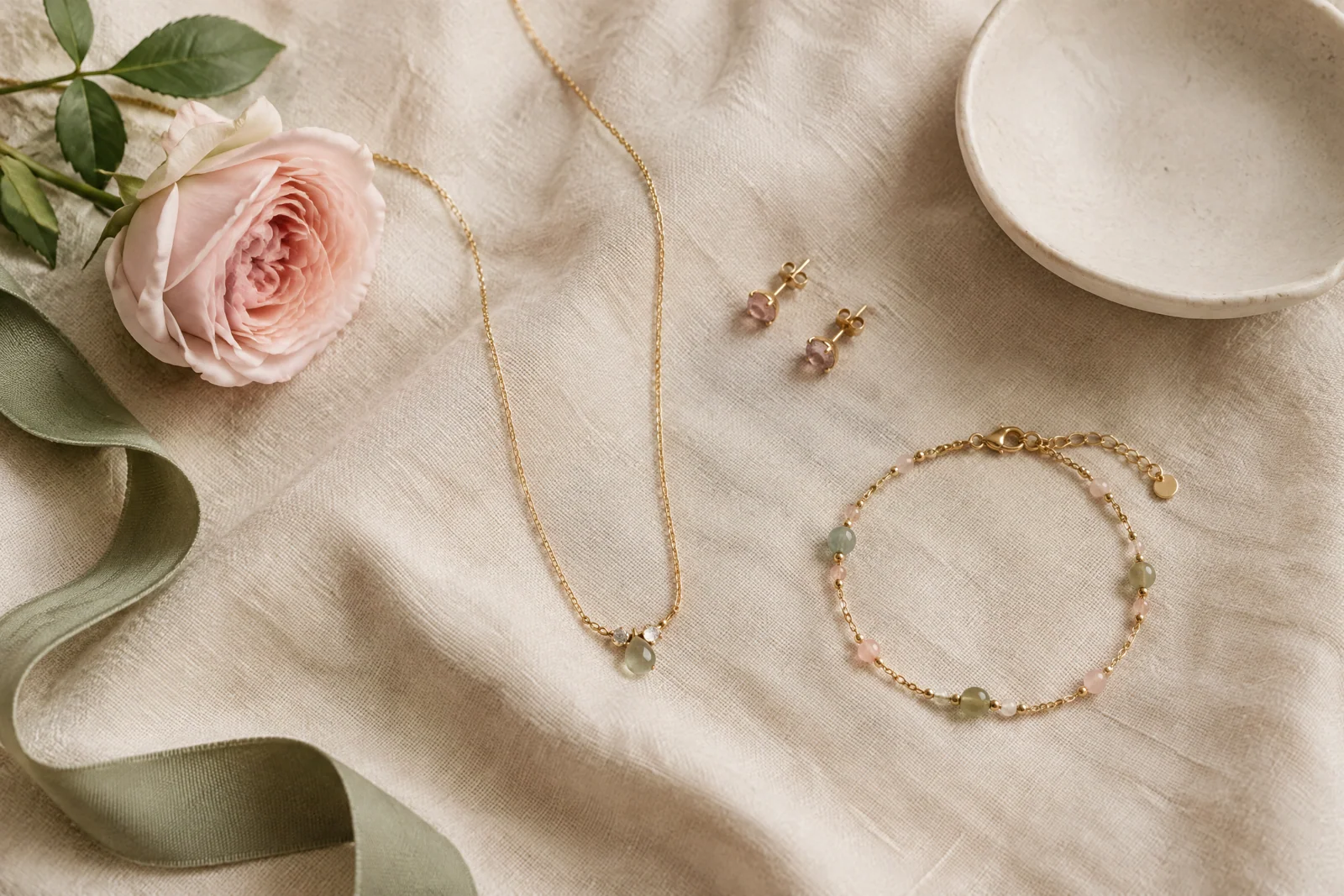
For bridesmaid jewelry, start by looking at the colors already doing the work: dresses, flowers, linens, and the overall light of the venue. Rather than matching jewelry to a swatch exactly, choose a related color family. Soft sage can sit beautifully beside blush, warm ivory, muted blue, or a deeper garden green. If the dresses are strong in color, jewelry can be quieter; if the clothing is neutral, a gentle colored accent can add personality without competing.
Metal is another simple point of connection for bridesmaid jewelry. Warm gold tones can echo golden light and cream fabrics, while silver-toned details may feel crisp beside cool blues or clear pastels. There is no rule that every piece must use the same finish. A shared palette can bring different metals together, especially when another element—shape, bead color, or a recurring motif—creates a visual bridge. Decide what matters most in your photographs, then keep the remaining choices flexible.
Think about bridesmaid jewelry in proportions as well as color. If the dresses have embellished necklines, a small earring or bracelet may be enough. A clean, open neckline can make space for a short necklace, while a high neck or dramatic shoulder detail may look more balanced without one. Browse the earrings collection and necklaces collection as separate starting points rather than assuming everyone needs both.
A useful phrase when choosing bridesmaid jewelry is “choose within this mood.” For instance: warm metal, soft color, and pieces that feel light and celebratory. That brief gives each person a clear direction without dictating an exact item. It also helps avoid the slightly uncomfortable effect of a gift that looks like a uniform instead of a personal thank-you.
Choose a coordination formula that leaves room for taste
There are several ways to make bridesmaid jewelry read as a set while using different pieces. Pick one bridesmaid jewelry formula and share it early, so attendants have time to ask questions or find an option that suits them. The simplest formulas rely on one consistent feature and let everything else vary.
- Same color, different silhouettes: Keep a blush, sage, or blue accent in every look, but allow necklaces, earrings, and bracelets to differ.
- Same metal, different scale: Choose a warm or cool finish as the anchor, then let each person decide between subtle and statement shapes.
- Same motif, different category: A small floral, shell, or geometric note can appear in different forms, without repeating the same complete set.
- Same mood, personal choice: Ask everyone to wear something delicate, playful, or quietly polished from their own collection, then offer one optional shared accent.
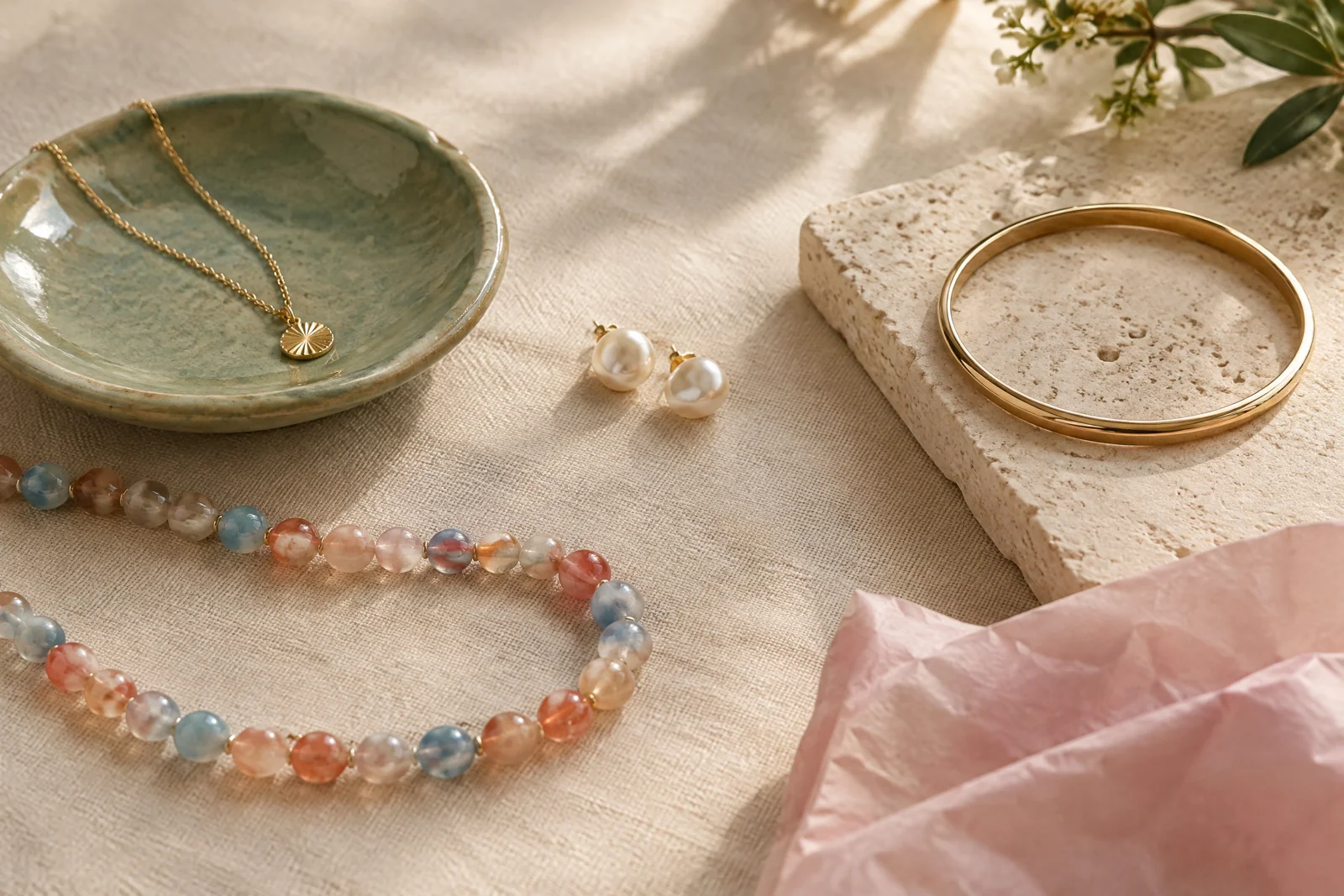
For example, one attendant might wear a simple chain while another chooses a colorful beaded necklace. A catalog example of that more expressive direction is Karia, a rich red glass-bead necklace with silver-plated mixed-metal details. It is a useful reminder that a color accent can have presence without needing elaborate styling. In a real wedding palette, however, the exact shade and scale should work with the dresses and the wearer—not merely with the group photograph.
Or make earrings the shared category but vary their scale and shape. Amy offers one sage-toned example: the catalog describes agate and silver-plated mixed-metal earrings with a decorated, beaded drop of about 30 mm. That descriptive detail is helpful when considering proportion, but it does not mean every attendant should wear that exact silhouette. Someone who prefers a stud or does not wear earrings can join the visual plan through a necklace or bracelet in a related tone.
This flexibility makes bridesmaid jewelry planning especially useful when the group has different piercings, sensitivities, clothing preferences, or comfort levels. Ask what people actually wear before making decisions on their behalf. If someone never wears a necklace, an alternative such as a bracelet or a small accessory can feel far more thoughtful than an unworn matching set.
Make the gift feel personal and genuinely wearable
When bridesmaid jewelry is a thank-you gift, the person matters more than the photograph. Consider the recipient’s everyday style: Does she wear color? Is she drawn to simple shapes, playful details, or vintage-inspired pieces? Does she favor earrings, necklaces, bracelets, or none of these? A quick, discreet conversation with someone who knows her can be more useful than guessing from a dress color.
Bridesmaid jewelry gifts do not need to be the same item. You might keep the presentation consistent—one shared note, a coordinated wrapping color, or a similar scale of gift—while choosing different jewelry for different tastes. One attendant could receive a pair of earrings, another a necklace, and another a charm or accessory that feels more natural to her. The connection is the intention and the palette, not the sameness of the box.
Comfort is part of good bridesmaid jewelry styling. Check approximate length and overall drop when product information provides it, and think about how a piece will sit with the dress neckline, hairstyle, and other accessories. A longer earring may catch on a veil or hair; a necklace can disappear against a high neckline; a prominent pendant may feel busy next to beading or lace. These are practical considerations, not reasons to impose one solution on everybody.
Keep material descriptions clear when you are gifting bridesmaid jewelry. Plated metal, gold-filled components, solid gold, glass, agate, and other materials are not interchangeable terms. Use the supplied product description and avoid promising that a piece is suitable for every skin type or every kind of wear. If a recipient has a known concern, ask her what materials she prefers and choose accordingly. That small step feels more considerate than making a broad claim.
To make bridesmaid jewelry useful beyond the event, favor a style that has a place in the recipient’s existing wardrobe. A subtle accent in a color she already wears is often easier to rewear than a piece selected only to match a one-day dress. If you are uncertain about the exact item, a personal note inviting her to choose from the collection can leave the final choice with the person receiving it. The gesture can still be personal: include a note about the color, shape, or memory that made you think of her.
Plan the details early and keep the day comfortable
Set the bridesmaid jewelry direction while outfits are still being finalized, but avoid turning it into another complicated assignment. Share a short note describing the palette, metal preference if there is one, and whether the group is aiming for delicate or statement pieces. Make clear which elements are suggestions and which are genuinely important to the look. A small amount of clarity prevents last-minute uncertainty without asking everyone to shop in exactly the same way.
For bridesmaid jewelry, invite each attendant to confirm what she plans to wear. A quick photo beside the dress fabric, taken in ordinary daylight, can reveal whether colors are competing or disappearing. Look at the whole composition rather than zooming in on minor differences: varying chain lengths, earring shapes, or a mix of categories can feel intentional when the palette and overall scale are aligned. If one accessory is especially prominent, let it be the focal point and simplify nearby pieces.
Think through the practical rhythm of bridesmaid jewelry on the day. Jewelry that feels fine at a fitting should still be comfortable through a ceremony, dinner, dancing, and travel between locations. Encourage people to bring a small pouch for pieces they may want to remove later. Keep jewelry away from cosmetics, perfume, hairspray, and damp fabric when possible, and follow care advice appropriate to the specific materials. Mixed-material pieces deserve particular care; there is no single cleaning method that suits every component.
Good bridesmaid jewelry planning leaves space for the unexpected. Someone may wear a sentimental heirloom, choose a different metal, or decide that bare ears feel most like herself. If the overall styling remains thoughtful, those choices need not disrupt the group. The best bridesmaid jewelry coordination is generous enough to include personal meaning. A shared color story or a recurring detail can make the party feel connected, while individual choices make the images—and the memory—feel like the actual people in them.
Related reading
For more ideas as you plan a thoughtful gift, continue with our guides to jewelry gift ideas for different personalities, choosing jewelry for someone else, and meaningful birthday jewelry gifts.