Choosing jewelry for someone else can feel wonderfully personal—and a little daunting. The best jewelry gifts are not necessarily the most expensive or dramatic; they are the ones that show you have noticed what the recipient actually wears, reaches for, and enjoys. A simple chain, a favorite color, or a familiar motif can say more than a surprise that looks impressive but stays in its box. Start with observation rather than assumptions, then use a few practical clues to narrow the field. This guide offers a steady way to choose jewelry gifts for a partner, friend, relative, or colleague while leaving room for your own warmth and imagination.
Start with the person, not the jewelry
Before browsing, picture the person getting dressed on an ordinary day. What jewelry do they wear repeatedly? Do they keep a small pair of hoops in rotation, layer necklaces, or leave their ears bare? Is there a consistent metal color, a favorite shape, or a piece they never seem to take off? These small observations are more useful than broad labels such as “classic” or “trendy.” Jewelry gifts feel considered when they fit into a life the recipient already has.
Look for evidence over several occasions, not just a single outfit. Notice what they wear to work, on a relaxed weekend, or for a celebration. If you are close enough, you can ask a low-pressure question such as, “Do you usually reach for gold or silver?” or “Are you more of a necklace or earring person?” A direct clue is not a failure of surprise; it is a way to make the surprise more likely to suit them. That is the quiet advantage of jewelry gifts guided by real preferences. You can keep the exact piece secret while learning the category, color, or scale they prefer.
Also consider what they do not wear. Someone who favors tiny studs may not welcome oversized drops, however beautiful. A person who avoids necklaces may have a practical reason—uniforms, sensory preferences, tangled hair, or simply habit. Do not treat a gift as an invitation to change their style. That is a useful standard for jewelry gifts: a generous choice meets them where they are. If you are uncertain about piercings, wrist fit, or metal sensitivities, choose a form that avoids guessing where possible, or ask tactfully rather than relying on stereotypes.
Use context as a guide, not a script. A milestone can make jewelry gifts feel especially meaningful, while a small thank-you might suit an easy everyday accent. But the recipient’s taste still matters more than the occasion. A lively, color-loving friend may enjoy a bright bead, while someone with a pared-back wardrobe may prefer one clean shape. Thoughtful jewelry gifts do not need to announce a grand meaning; they can simply feel familiar in the best way.
Let their real-life style guide the category
For jewelry gifts, once you have a sense of their habits, decide which kind of piece is most likely to be worn. Necklaces can be a strong choice when you know the recipient likes them and can estimate a comfortable length. A short chain or pendant tends to work with open necklines, while a longer style can sit over a knit or simple top. Check the product description for length and extender details rather than guessing from a photograph. Browse the necklace collection for different silhouettes, and favor a length that makes sense with the necklines you have seen them wear.
Earrings are often a satisfying option when you know the recipient wears pierced earrings and have a sense of their preferred scale. Small studs or modest hoops can be easy to incorporate; a vivid drop or sculptural shape makes more of a statement. Think about weight, closure, and proportions as described, not just color. For instance, the Nova Hearts earrings are described as gold-plated stainless steel with faux pearls and a heart-shaped center, with an overall width of about 30 mm. That is a distinctive, visible design—not a barely-there stud—so it makes most sense for someone whose style welcomes a noticeable earring. Explore the broader earring collection if you want to compare shapes.
Bracelets can be lovely when you know the person enjoys wearing something at the wrist, but fit deserves attention. A fixed bangle, an adjustable chain, and a stretch style offer different experiences; check measurements and closure information. If you do not know their wrist size, avoid a design that depends on a precise fit. Rings call for even more certainty because sizing matters and can vary by style. If you cannot confirm a ring size comfortably, choose another category rather than turning the gift into a sizing puzzle. The bracelet collection is a useful place to compare forms, while rings are best when you have a reliable size clue.
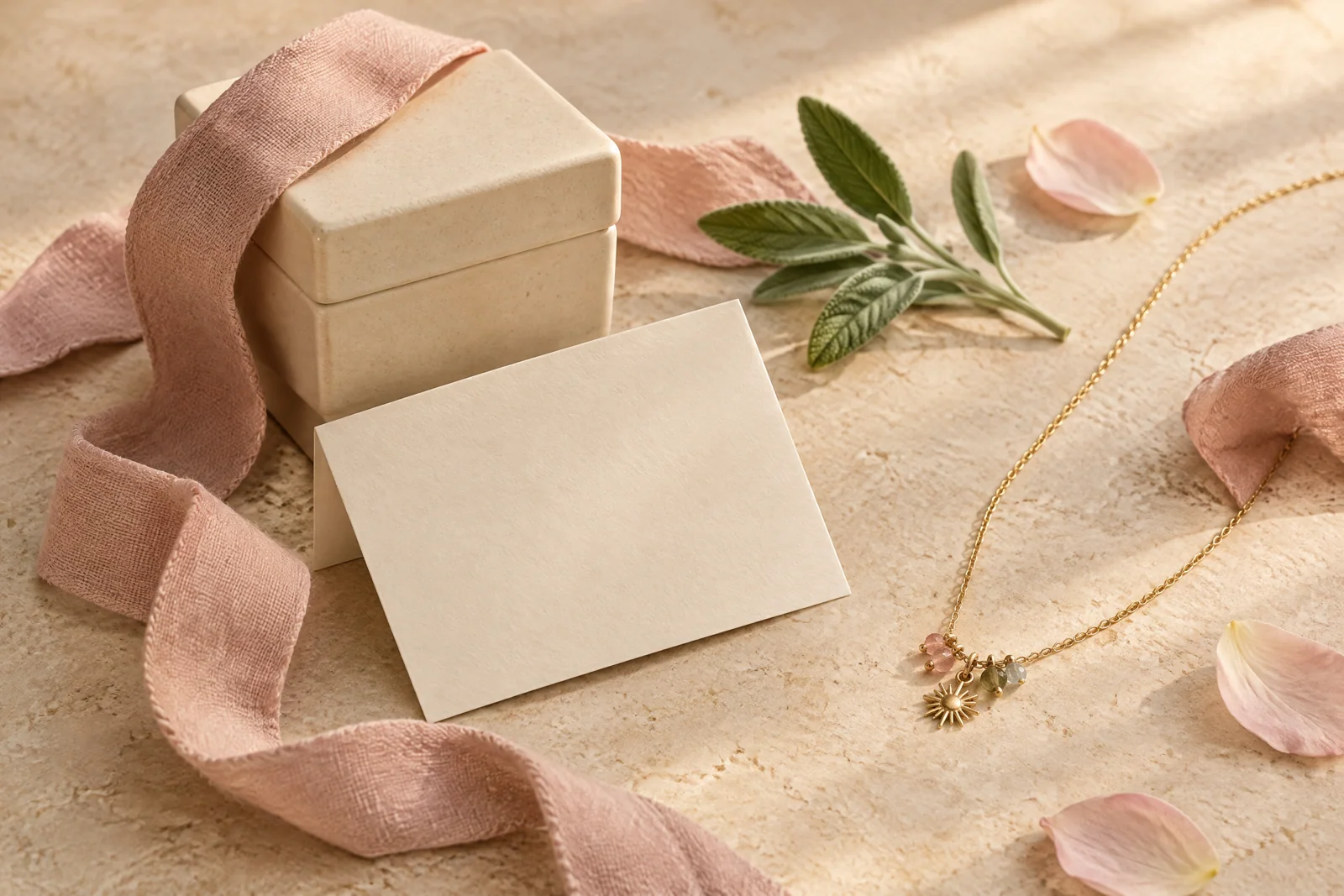
When the recipient’s preferences are genuinely hard to read, a note inviting them to choose their own piece can be a thoughtful alternative, not a lesser one. It lets them choose a color, length, or category that feels right. You can make the gesture personal by pairing the card with a handwritten note explaining why you thought of them, or by offering to browse together. The point of these jewelry gifts is not to remove all choice from the recipient; it is to give them a warm invitation to choose something they will enjoy.
Choose color, scale, and details with care
For jewelry gifts, color is one of the easiest clues to notice and one of the most personal to give. Look at the colors they wear near the face, the shades in a favorite scarf, or the palette that appears repeatedly in their home and accessories. A person who lives in navy, cream, and denim might appreciate a small bright accent; someone who already wears saturated colors may enjoy a piece that joins that conversation rather than competing with it. Jewelry gifts in color can be playful without requiring an elaborate theory about seasonal palettes. Let actual habits lead.
Metal preference can help, but it does not have to be an absolute rule. Some people consistently choose warm gold tones; others prefer silver-toned details or mix both. If you are unsure, see whether their watch, glasses, bag hardware, or everyday earrings offer a pattern. When choosing jewelry gifts, a mixed-metal piece can work for someone who already combines finishes, while a familiar tone is a safer direction for a person who keeps their accessories coordinated. Read material descriptions carefully: “gold-plated,” “gold-filled,” and solid gold do not mean the same thing, and product copy should be your guide to what a particular piece is made from.
Scale matters just as much as color. Compare the jewelry with the recipient’s usual proportions: delicate chain or substantial beads, petite hoops or a wider statement shape. Consider how a piece will meet their clothes and hair. A pendant may disappear under a high neckline; long earrings may tangle in thick curls or scarves; a large brooch-like motif might be exactly right for someone who enjoys a focal point. You do not need to forecast every outfit. You are simply asking whether the piece seems comfortable within the person’s existing visual language.
Motifs can make a gift feel especially individual, provided the symbol has a connection rather than an assumption behind it. A heart might suit someone who loves romantic shapes, not automatically every partner. A shell, fish, sun, or floral form can recall a shared trip or a favorite interest if that association is real. The Midnight necklace, for example, is described as ink-blue glass beads with a shell-like charm and gold-plated mixed-metal details; its stated length is approximately 40 cm with a 5 cm extender. That specific mix of dark blue, bead texture, and coastal detail could be a useful reference if you know the recipient enjoys those elements. Avoid assigning symbolic meaning they have never expressed.
Finally, for jewelry gifts, check practical details on the actual item page: measurements, materials, closure, and any care notes supplied. Do not infer comfort, durability, or suitability from a styled photo alone. When jewelry combines several materials, it is sensible to follow the more delicate component’s care needs and the product’s own instructions. If a gift recipient has mentioned sensitivities, avoid making an assumption about a material and ask or choose a clearly documented alternative. These small checks help jewelry gifts feel thoughtful after the wrapping is gone.
Make the presentation personal—and the choice easy
The best jewelry gifts become personal through the reason you chose them as much as through the object. A brief note can connect the piece to a shared memory, a color they often wear, or a quality you admire. Keep the explanation open rather than prescribing how they should wear it: “This reminded me of the blue you wore on our trip” leaves room for their interpretation. Thoughtful jewelry gifts say, “I noticed,” not “I know better than you.”
For a little extra reassurance, keep useful information together. If you have a receipt or product details, save them in case the recipient wants to review the materials or measurements later; do not promise an exchange or return unless you have confirmed the current policy. A discreet check of the retailer’s current information is better than relying on assumptions about shipping, packaging, or after-purchase options. If you are shopping with Duddingtons and have a question about a product description, you can use the contact page for current details.
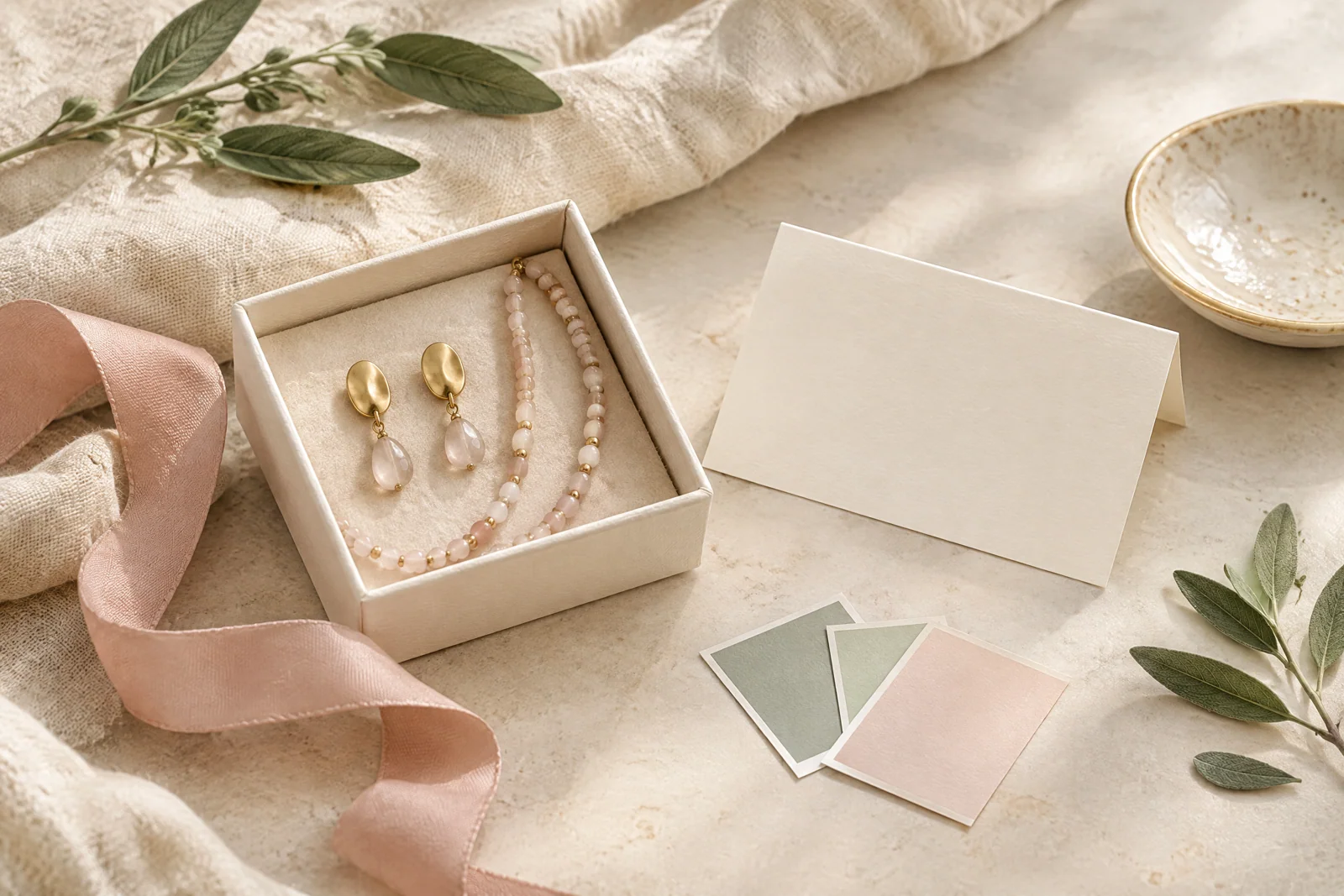
There is no need to build a large set to make a meaningful gesture. One well-chosen piece can feel more personal than several items selected without a clear reason. If you do want to give a pair or a small combination, keep the pieces connected by one deliberate idea: a shared color, complementary shapes, or a balance between a simple foundation and one expressive accent. Avoid making the recipient feel that every item must be worn together. The best jewelry gifts leave room for different moods and outfits.
When you are still torn between two options, return to the clues you gathered. Which one resembles what they already wear? Which has the more comfortable size or adjustable detail? Which material description is clearest? Which color would sit naturally with their wardrobe? If one choice depends on several guesses and another fits observed preferences, trust the second. If both rely on assumptions, a gift card or a conversation can be kinder than forcing certainty. There is no prize for being mysterious at the expense of usefulness.
Choosing jewelry gifts for another person is ultimately an exercise in attention. Notice the small details, respect what they already like, and let practical information narrow the possibilities. A gift does not have to be perfectly matched to every outfit to be cherished; it needs to feel like it was selected with the recipient in mind. When you lead with that intention, jewelry gifts become less intimidating to choose—and more likely to become part of someone’s own story.
Keep exploring
For more ideas, read 10 Thoughtful Jewelry Gift Ideas for Different Personalities, A Guide to Meaningful Birthday Jewelry Gifts, and Bridesmaid Jewelry: Coordinated Without Being Identical.