Coastal jewelry is less about dressing for a beach day than borrowing the details that make the shore feel restorative: softened color, an organic shape, a little sunlit shine. Worn with a crisp shirt, a knit, or a favorite dress, those details can feel personal rather than themed. The easiest place to begin is with one element you genuinely love—perhaps sea-glass blue, a shell shape, or an easy-moving pendant—and let the rest of the outfit stay comfortably familiar.
At Duddingtons, we think seaside influence works best when it leaves room for everyday life. You do not need a nautical uniform or a stack of literal motifs. Think of coastal jewelry as a mood: relaxed, tactile, color-aware, and just polished enough to make an ordinary outfit feel considered.
Start with the feeling, not a nautical checklist
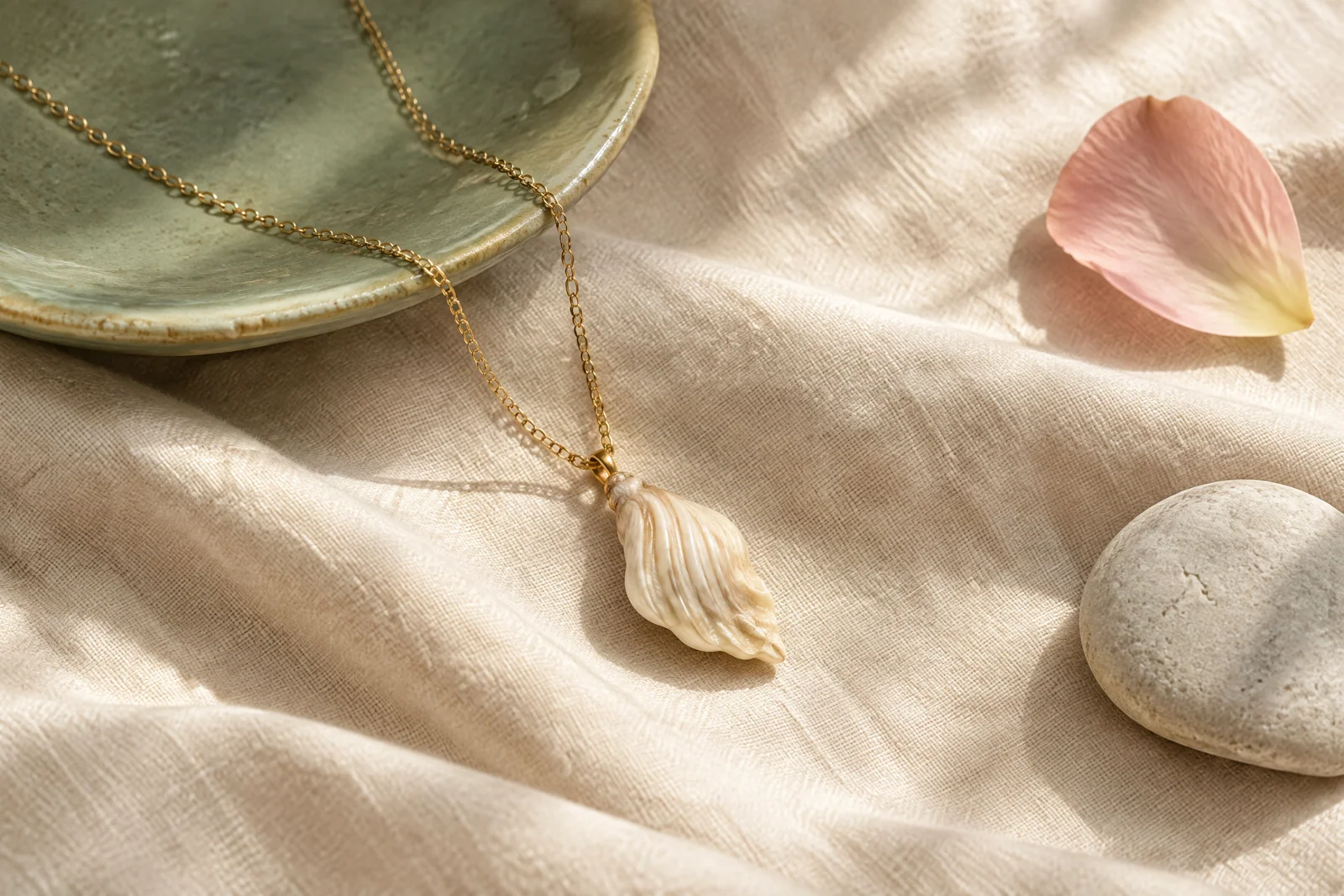
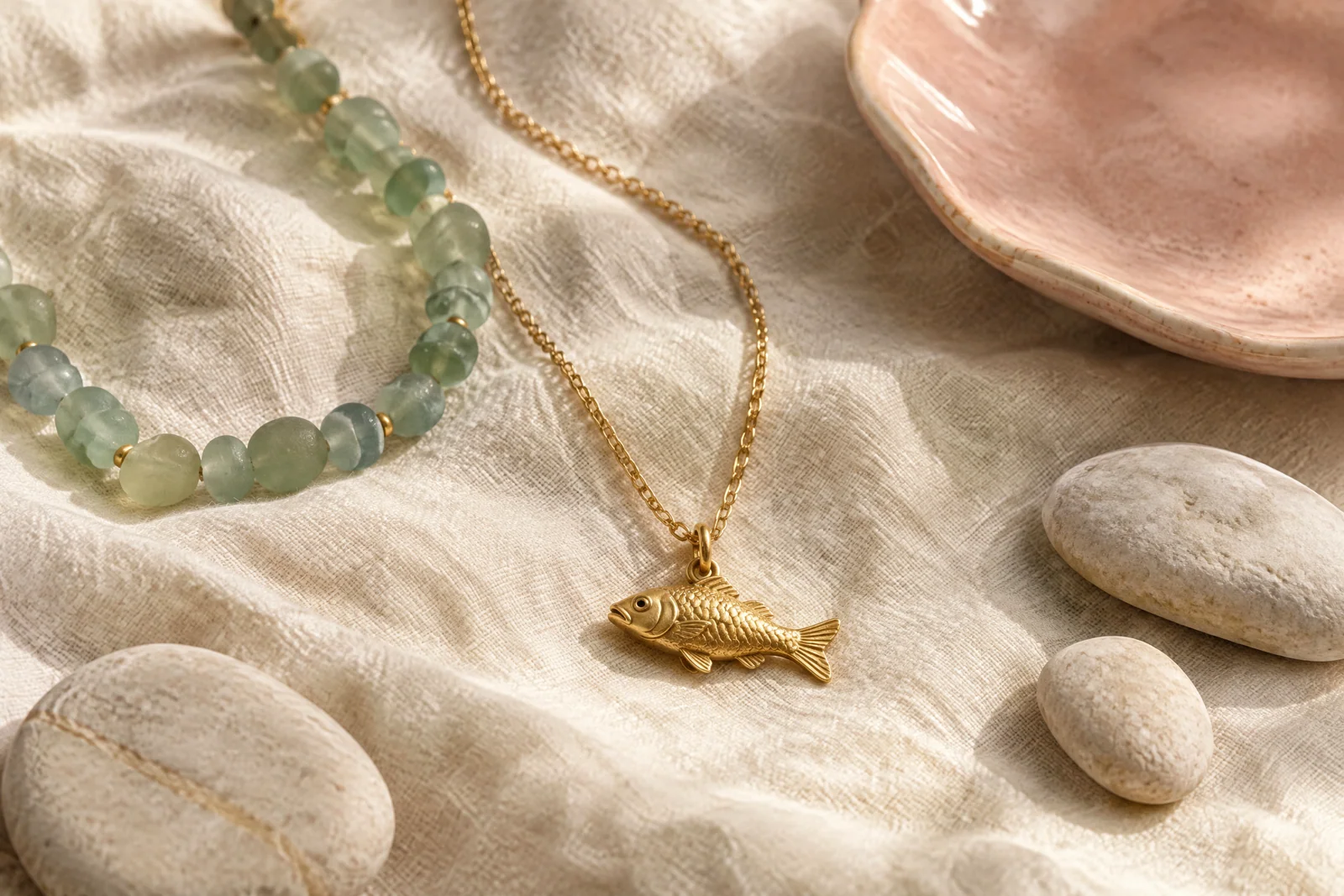
When you picture coastal jewelry, decide which part of the coast you want to bring into your look. Is it the pale, quiet palette of shell and sand? The clear blue of water against a white shirt? Or the playful character of a small fish or shell pendant? Choosing one visual cue makes the styling feel intentional. Collecting every anchor, rope, wave, and shell at once can tip an outfit into costume; one clear reference is usually more compelling.
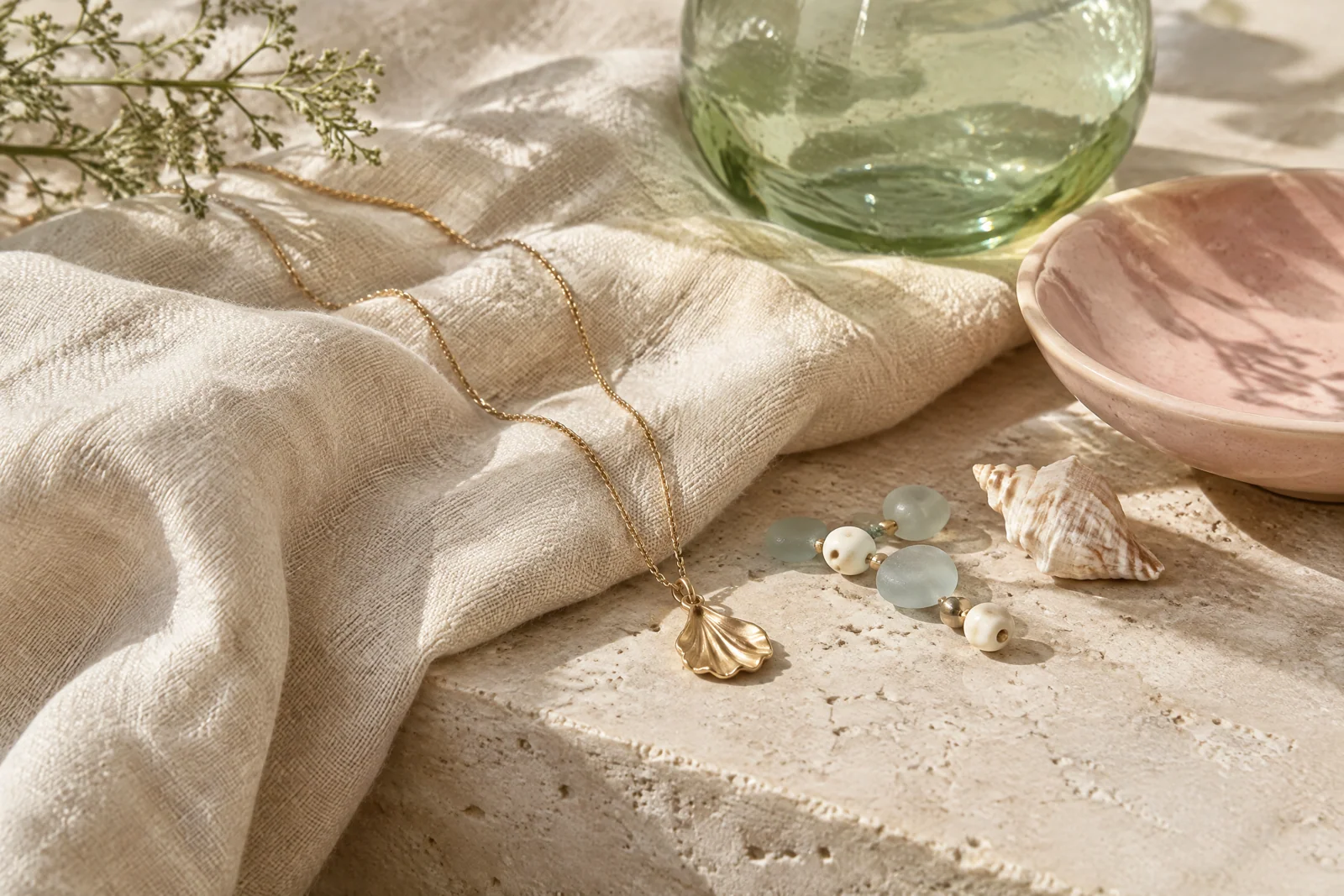
For coastal jewelry, shape matters as much as motif. A shell has an irregular outline and a naturally tactile quality, while a smooth oval bead reads quieter and more graphic. A fish charm can feel whimsical when it is small or sculptural, and a simple gold-tone chain can suggest warm light without spelling out a theme. Coastal jewelry does not need to be literal: curved lines, rounded beads, and a softly uneven finish can evoke the same easy feeling.
Consider scale in relation to your clothes and to the other jewelry you wear. A statement pendant against an open neckline has room to register; a small charm is more subtle with a crewneck or a buttoned collar. If the jewelry is detailed, simplify the neckline and let it be the focal point. If the piece is minimal, a textured shirt or a second fine chain can add depth without competing.
There is no need to reserve coastal jewelry for vacation or warm weather. A pale blue bead can lift a dark sweater; a shell-shaped accent can make a simple tee feel styled. Treat it as a personal reminder of color, light, or a favorite place—not a dress code with a calendar attached.
Choose a coastal palette that works with your wardrobe
A thoughtful coastal jewelry palette is a practical way to make these pieces feel at home in an existing closet. Sea-glass blue and green sit comfortably beside white, cream, denim, navy, and many soft neutrals. Coral or tomato red brings more energy; use it as a small punctuation mark when you want a look to feel lively. Sand, pearl, and warm gold make a gentler combination, especially with linen, cotton, and pale knits.
Try a simple three-part color formula: begin with the outfit’s base, add one seaside hue, then repeat that hue once elsewhere in a restrained way. A blue bead necklace with a blue stripe in a shirt feels connected without looking overly matched. If your outfit is already colorful, pick up one existing shade instead of introducing another. Coastal jewelry is often most wearable when the color story looks like it belongs to you, not to a themed display.
For coastal jewelry, metal tone can help bridge the palette. Warm gold brings a sunlit note to cream, rust, and olive; silver can sharpen cool blues, crisp white, or gray. Mixing metals can work too—repeat each tone at least once, or let one mixed-metal piece do the connecting. For more ideas, explore our necklace collection and earrings, then compare colors against pieces you already reach for.
Real shell and natural-looking materials have variation, which is part of their appeal. Catalog details for Duddingtons’ Sunday Sun necklace describe a shell decorated with gold stripes on a gold-plated silver box chain, with individual shells varying in size. That variation means a shell accent may not look perfectly uniform—and that is a feature to appreciate, not a flaw to style around. The On The Beach earrings pair real shells with blue enamel-coated, gold-plated hoops and silver edging, a useful example of a small blue accent framing an organic shape.
For a more tactile, bead-led interpretation, Beachy combines shell beads with glass seed beads in red and gold-plated metal details; its clasp can be worn at the back or shown at the front. These are examples of distinct approaches rather than a set to copy. Browse accessories as well if you want to balance a necklace or earrings with a different kind of finishing touch.
Build an outfit around one seaside detail
When styling coastal jewelry, the most useful question is not “What else looks beachy?” but “What will let this piece feel like me?” Begin with a familiar outfit, then add a single coastal jewelry focal point. With a white tee and relaxed denim, a shell pendant or colorful beads can supply all the personality you need. A crisp button-down gives a short necklace a clean frame; leave a button or two open if you want the chain to sit visibly without crowding the collar.
For a dress, use the neckline as a guide. A V-neck naturally gives a pendant space to fall. A high or crew neckline often pairs more easily with earrings, especially if the fabric or print already has visual interest. With a square neckline, a shorter necklace can echo the shape, while a slightly longer pendant creates contrast. These are starting points, not rules—try the piece on and check whether it moves comfortably when you turn or sit.
Layering coastal jewelry can make a look feel collected, but keep the pieces distinct. Combine one fine chain with a bead strand or a pendant at a different length, and give each piece a little breathing room. A small shell charm can sit above a longer plain chain; two necklaces with nearly identical lengths are more likely to overlap and tangle. If you prefer earrings as the focal point, keep the neck area quieter. To explore more combinations, browse our bracelet collection for a separate point of color rather than crowding the neckline.
Texture can make coastal jewelry feel evocative without adding more motifs. Linen, cotton poplin, soft denim, and fine knits offer a calm background for glossy metal, rounded beads, or an irregular shell surface. A polished piece against a natural fabric creates an appealing contrast. If your clothes are smooth and minimal, let the jewelry bring texture; if your outfit already has embroidery, ruffles, or a strong print, choose a simpler shape.
When styling coastal jewelry, consider the whole color composition in natural light. Hold a piece next to the clothing you plan to wear, and notice whether its color looks clear or muddy beside that shade. A sea-glass tone can feel fresh against cream but may disappear against a very similar pale green. Gold may warm a cool blue, while silver can make it feel crisp. Small changes in contrast can make the same coastal jewelry feel either soft and blended or bright and graphic.
Wear it beyond the shore, and care for it thoughtfully
Coastal jewelry can become part of your regular rotation when you pair it with the routines and clothes you already enjoy. Wear a shell-inspired pendant with a workday blouse, then keep it on with a simple weekend layer if it remains comfortable. Bring one color accent into a travel capsule rather than packing several pieces that all do the same job. A versatile piece is one that suits your real wardrobe, not just the destination you imagine wearing it in.
Before choosing a piece, read its description for materials, length, and closure. Details can help you picture how it will sit: for instance, a 45-centimeter chain will fall differently from a shorter necklace, while a bead strand has a different visual weight from a delicate pendant. Check whether a product description specifies shell, glass, enamel, plated metal, or another material instead of assuming every seaside-looking detail is the same. If you are unsure how a piece will work with your clothing or prefer to see details before deciding, you can contact Duddingtons.
Care should follow the materials in the specific piece. As a cautious everyday habit, put jewelry on after fragrance, lotion, sunscreen, and hair products have dried, and remove it before swimming, showering, exercise, or sleep unless its product guidance says otherwise. Salt water, pool chemicals, moisture, and abrasion can affect different materials in different ways, so do not assume that a coastal-looking piece is made for the water. Shell, glass, enamel, beads, chain, and plated details may not all respond to the same cleaning method.
After wearing, use a soft, dry cloth to remove surface residue when appropriate, and store each piece separately so chains do not snag and harder elements do not rub against delicate surfaces. Avoid soaking mixed-material jewelry or using ultrasonic cleaners unless the maker’s instructions explicitly support that method. If a piece has a shell or enamel element, use especially gentle handling and consult its product-specific care guidance rather than treating it like plain metal.
Ultimately, coastal jewelry is most compelling when it feels like a small piece of your own story: a color you return to, a shape that makes you smile, or a texture that brings an outfit to life. Start with one detail, repeat a color only if it helps the whole look, and wear it with the clothes you already love. The seaside can be a mood you carry lightly, wherever the day takes you.
Related reading
For more ideas, read Shell Jewelry: Natural Variation and Styling Ideas, Fish Necklaces: A Playful Motif with Everyday Appeal, and Heart Jewelry Beyond Valentines Day.