A memorable boutique jewelry display feels edited rather than crowded: familiar pieces make getting dressed easy, while a few unexpected colors or shapes invite a closer look. Building that balance through wholesale buying is less about guessing a trend and more about knowing your customer, setting boundaries, and choosing pieces that work together. This guide to boutique jewelry planning offers a practical route from shop identity to a considered order, whether you are opening a first assortment or refining an established one.
There is no universal formula for a good buy. Store size, season, customer habits, cash flow, and supplier terms all differ. Treat the ideas below as a decision framework, then adapt the quantities and timing to your own records and agreements. The aim is an assortment with a clear point of view and enough flexibility to learn.
Start with your customer and the role of the assortment
Before browsing a wholesale line sheet, describe the person you want to serve in observable terms. What do customers wear to work, weekends, celebrations, or travel? Do they gravitate toward quiet metal shapes, colorful beads, meaningful motifs, or pieces that can move between occasions? Which questions do they actually ask in store or online: how long a necklace sits, whether an earring feels bold, how a color reads against an outfit, or how to care for a finish? These details are more useful than a vague label such as “fashion conscious.”
Use your own evidence first. Review sales by category and price band, note what customers try on but set back, save common questions, and look at the pieces that lead to a second purchase. Include qualitative signals such as compliments, gift requests, and styling conversations, but keep them distinct from confirmed sales. For a new shop without much history, write down your assumptions and make a deliberately measured first buy; revisit them after real customer feedback. A clear profile keeps boutique jewelry choices grounded in the audience you actually serve.
Next, define the job the boutique jewelry assortment must do. A small shop might need approachable everyday pieces, a clear gift edit, and a handful of expressive conversation starters. A destination boutique may lean more heavily into a recognizable palette or motif. Write a short positioning sentence—for example, “playful color with easy-to-wear shapes”—and use it as a filter. If a beautiful item has no customer, outfit, or display role you can explain, it may be a distraction rather than a useful addition. That positioning helps each boutique jewelry decision earn its place.
Build an assortment map before choosing individual styles. List the categories you intend to support—such as necklaces, earrings, bracelets, and rings—then note the purpose of each: everyday anchor, color accent, giftable option, or statement piece. A boutique jewelry category map makes gaps visible. Avoid assuming every category needs equal depth. A shop whose customers primarily ask about necklaces can make that category a stronger signature, while keeping a smaller, coherent selection elsewhere.
Build balance through category, color, and point of view
Think in roles, not just item counts. Anchors are easy to understand and pair with more than one outfit; accents bring a distinctive hue, texture, or motif; statements give the display its visual punctuation. A healthy boutique jewelry mix includes more than one role, but it does not require a rigid ratio. Let sales history, shelf space, available budget, and your shop’s identity determine the proportions. This role-based boutique jewelry edit keeps the display varied without imposing a fixed ratio. Too many near-identical anchors can feel repetitive; too many statements may make it harder for shoppers to imagine everyday wear.
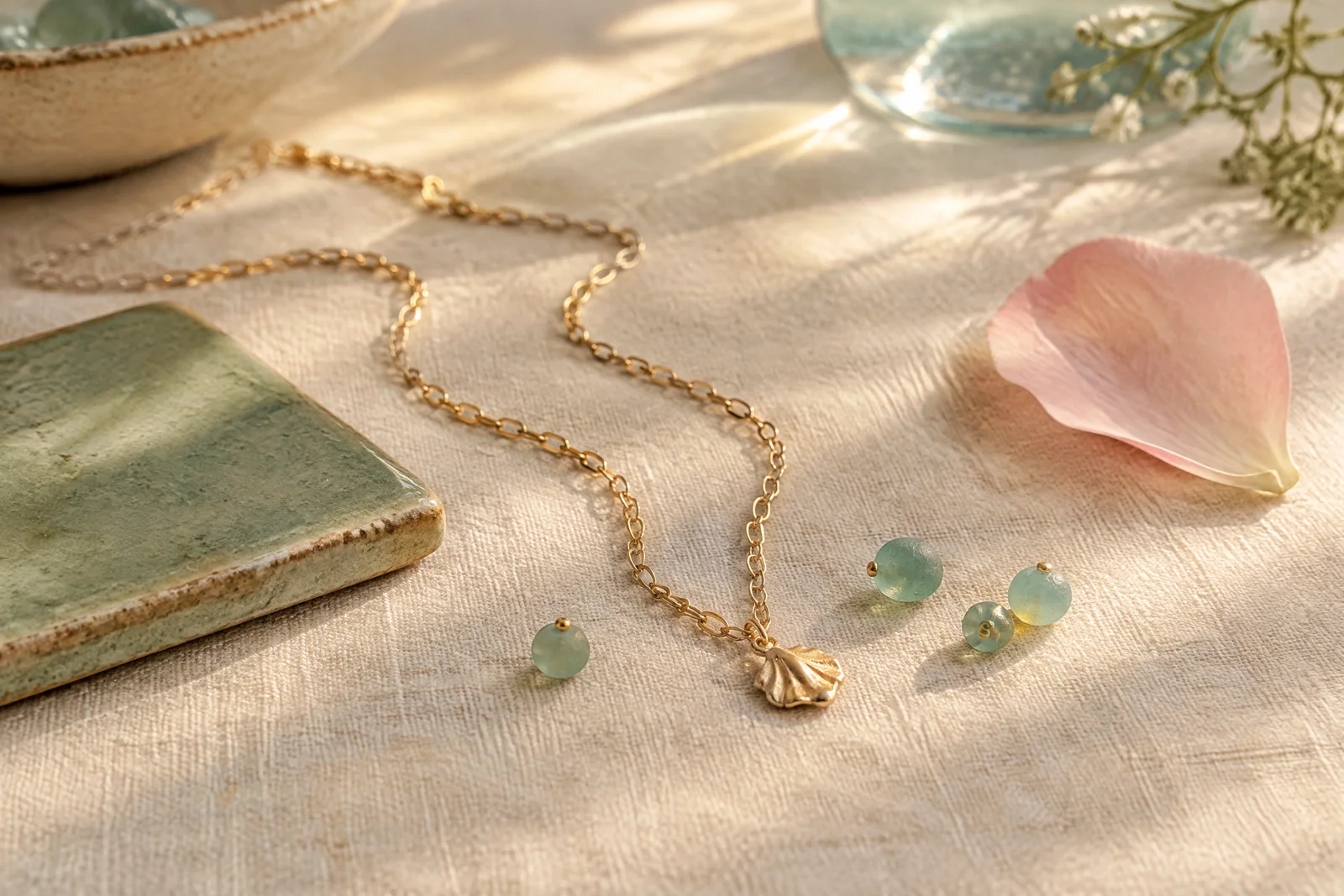
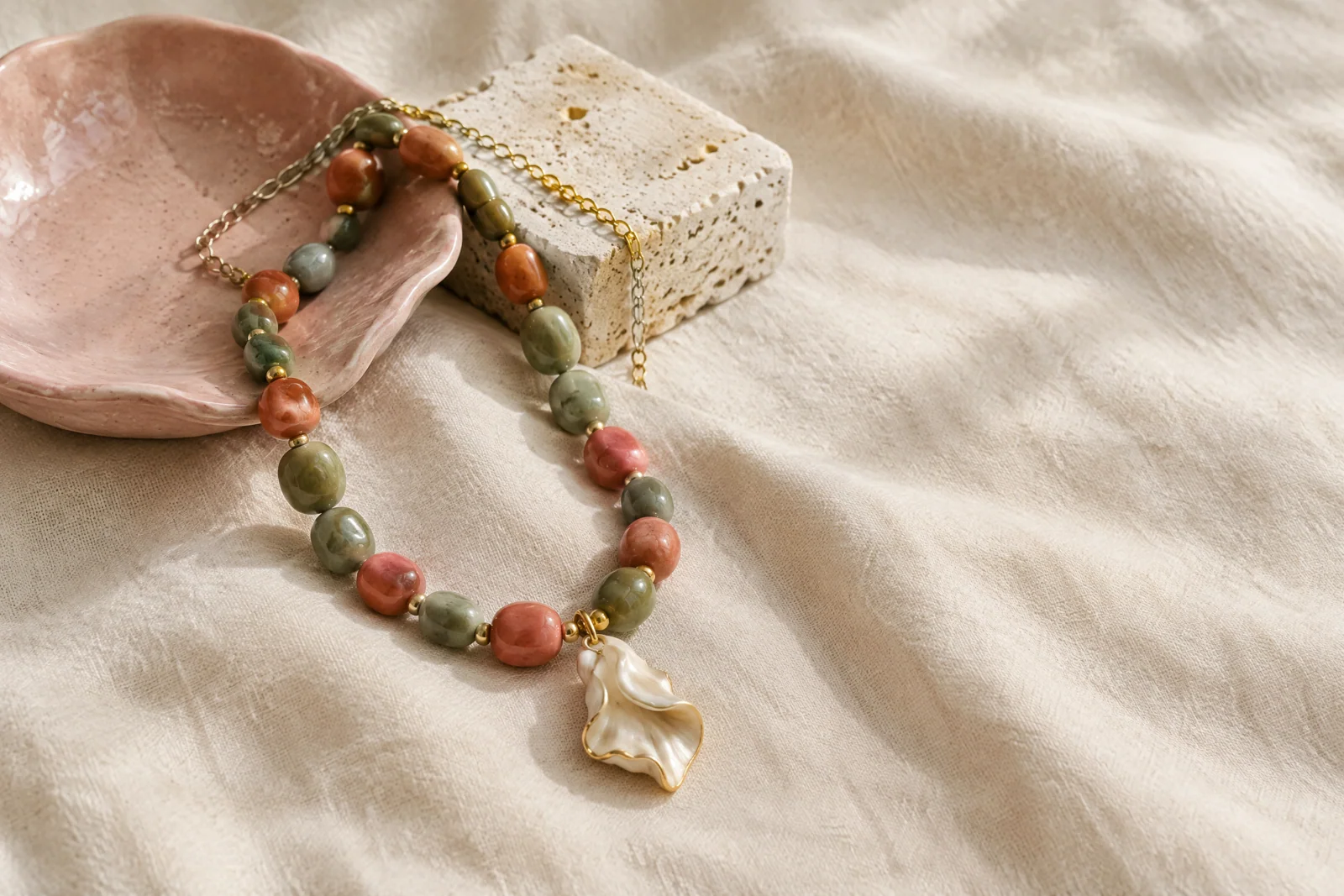
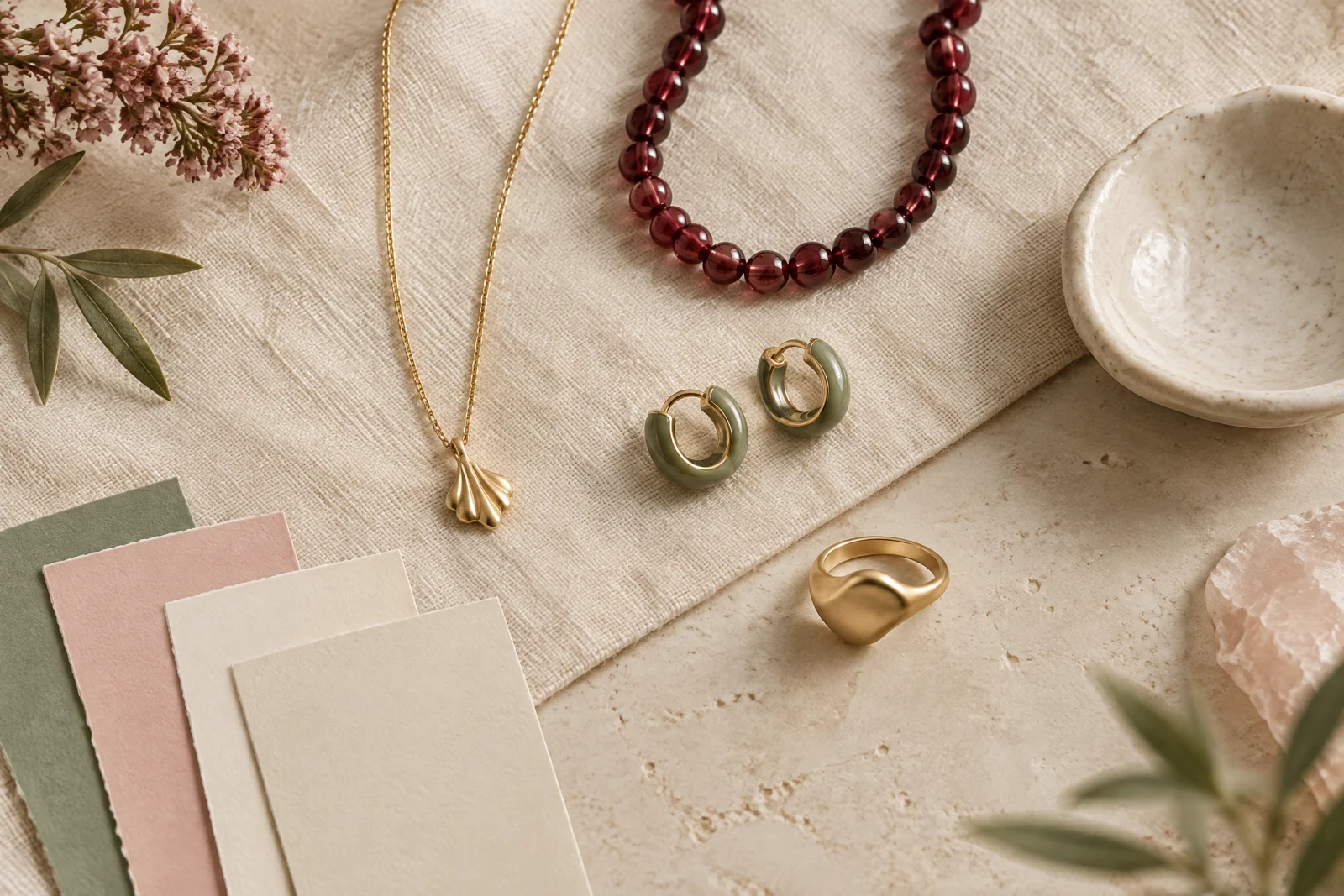
Color is a useful organizing tool because it can connect different forms without making them look like a matched set. Color gives boutique jewelry a quiet sense of continuity. Begin with a base—perhaps warm metal, soft neutrals, or a cool-toned family—then choose one or two accents that feel intentional. Consider saturation as well as hue: a deep berry bead reads differently beside pale sage than beside bright coral. Lay the pieces together under the lighting where they will be displayed, and check them against the clothing colors your customers commonly wear. A screen or supplier photograph is only a starting point; ask for material and color details when they are not clear.
Use contrast with care. Smooth beside textured, petite beside substantial, and restrained beside playful can make a tabletop feel lively, but repeated contrast without a unifying thread becomes visual noise. When curating boutique jewelry, repeat one element—tone, shape, motif, or material description—across a few pieces so customers can see a story. Leave room for negative space in the display: a smaller assortment that is easy to read often communicates more clearly than a crowded rail.
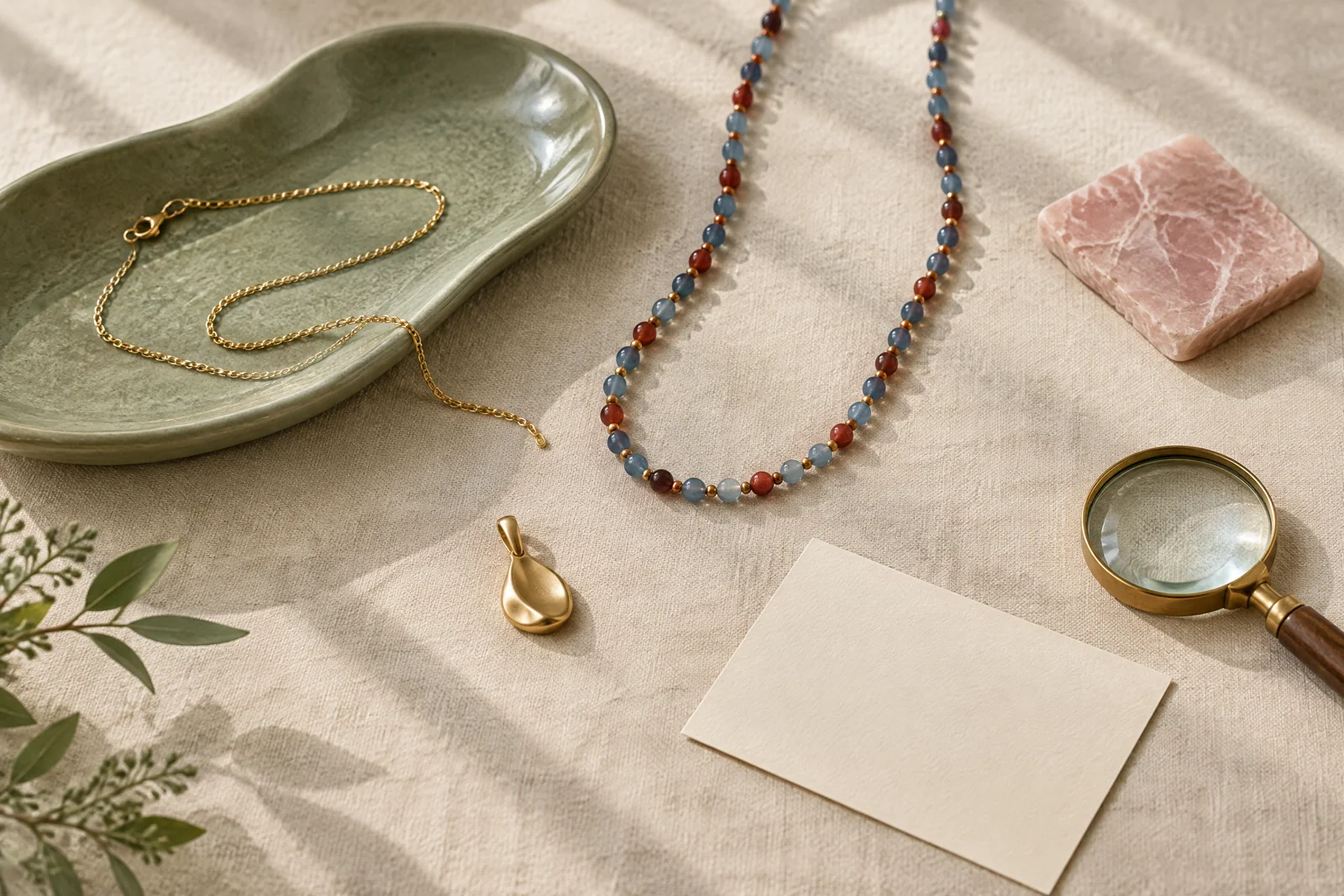
Catalog examples can help illustrate how a role differs from a category. Midnight is described as an ink-blue glass-bead necklace with a shell-inspired charm and gold-plated mixed-metal details, making it a possible dark-color accent in a necklace story. Karia brings a different note: a red glass-bead necklace with silver-plated mixed-metal details, 10 mm beads, and a stated 42 cm length. For a boutique jewelry buyer, these are examples of how color and material details can distinguish similar category slots—not prescriptions to stock either style. Check the current product information and your own customer fit before making any buying decision.
When planning boutique jewelry, make the assortment legible across the whole shop. A customer who notices a color in earrings should be able to discover a related necklace or bracelet without being steered into an identical set. A shell motif, for instance, can appear as a small detail among otherwise different silhouettes. On The Beach is described as real shells edged with silver, paired with blue-enamel-coated gold-plated hoops; its shell markings vary. That description offers useful merchandising cues—material, color, scale, and natural variation—while reminding a buyer to communicate the actual product details rather than promise uniformity.
Turn the edit into a realistic wholesale buying plan
A boutique jewelry open-to-buy plan connects the point of view to a workable commitment. A point of view still needs a working plan. Set an open-to-buy limit—the amount you can commit to inventory over the period you are planning—before selecting favorites. Build it from your own cash-flow needs and business records, not a generic benchmark. Account for the supplier’s stated terms, freight or other costs where applicable, and the time between placing an order and being able to sell it. Because terms differ, confirm them directly rather than assuming minimums, reorder windows, or delivery dates.
Then create a simple buying sheet with columns for style or reference, category, role, material or color notes, planned quantity, confirmed cost, supplier terms, expected receipt period, and a reason for inclusion. A boutique jewelry buying sheet is most useful when it separates confirmed facts from estimates. If the line sheet does not explain a finish, size, closure, or material composition, ask before you commit. A clear record helps compare options and makes it easier to explain the selection to staff and customers later.
Use these boutique jewelry planning checks to challenge the draft:
- Category coverage: Does the mix reflect what your customers seek, with enough depth in the shop’s strongest areas and a sensible limit on weaker ones?
- Distinctiveness: Can you describe what each style adds? Flag pieces that duplicate a silhouette, color, scale, or price position without a clear reason.
- Wearability and display: Do anchor pieces make sense alongside accents and statements? Can a customer compare lengths, sizes, and finishes clearly?
- Budget resilience: Does the plan leave room for operating needs and unknowns, rather than assuming every selected piece will sell quickly?
- Information quality: Are materials, dimensions, care notes, and supplier conditions clear enough to support accurate merchandising?
For a boutique jewelry first order, plan quantities conservatively when uncertainty is high. A first order is also a learning tool: a focused selection makes it easier to notice which colors, shapes, and categories prompt a response. Where supplier rules permit, decide in advance what evidence would justify a reorder, what would make you pause, and how you will document a substitution if a chosen style is unavailable. Do not base a plan on stock status or terms you have not verified.
Finally, sequence the presentation. Group items by a shopper-friendly idea—color, occasion, or styling use—rather than only by supplier or material. Give the eye a few clear entry points, then show how to build a look with a second piece. A small sign or staff styling note can explain a detail such as a necklace length or a color pairing, provided the information is accurate. The goal is discovery, not pressure.
Review, learn, and refine without losing the edit
A boutique jewelry review is most useful when it follows a steady rhythm. After the assortment reaches customers, schedule regular reviews that fit your selling cycle. Compare sell-through and remaining stock by category, style, and time period, and look for patterns instead of reacting to one quiet day. A strong overall result can hide an overfull color family; a slow-moving item may reflect how it was displayed rather than the piece itself. Note the context—placement, season, promotions if any, and the questions customers asked—so the numbers have a useful explanation.
Keep a simple decision log. Record what you expected, what happened, and one next step. If a particular scale repeatedly draws try-ons but not purchases, investigate fit, price positioning, or product information before assuming customers dislike the style. If a color consistently attracts attention, test a related form rather than automatically buying more of the same silhouette. This makes boutique jewelry curation a continuing conversation with your audience, not a one-time attempt to predict them.
Refresh the display with pieces already on hand before deciding that the whole assortment needs replacing. Re-group a color story, pair a statement with a quieter anchor, or give a less-seen category clearer space. When a new order is appropriate, retain what customers return to and edit what no longer serves the shop. Consistency makes the boutique recognizable; thoughtful change keeps the selection alive.
For a practical closing check, ask whether a first-time visitor can understand the shop’s jewelry point of view, find an approachable place to begin, and notice something with personality. If the answer is yes—and the order fits your documented budget and verified supplier terms—you have a sound basis for the next buy. That is the heart of boutique jewelry planning: a distinct edit, grounded in customer knowledge, with enough discipline to evolve as the shop learns.
Related reading
Continue exploring the Duddingtons point of view: A Jewelry-Inspired Weekend Style Guide to St. Augustine, Discover Duddingtons: Color, Character, and Everyday Jewelry, and How to Shop a Jewelry Collection Online with Confidence.