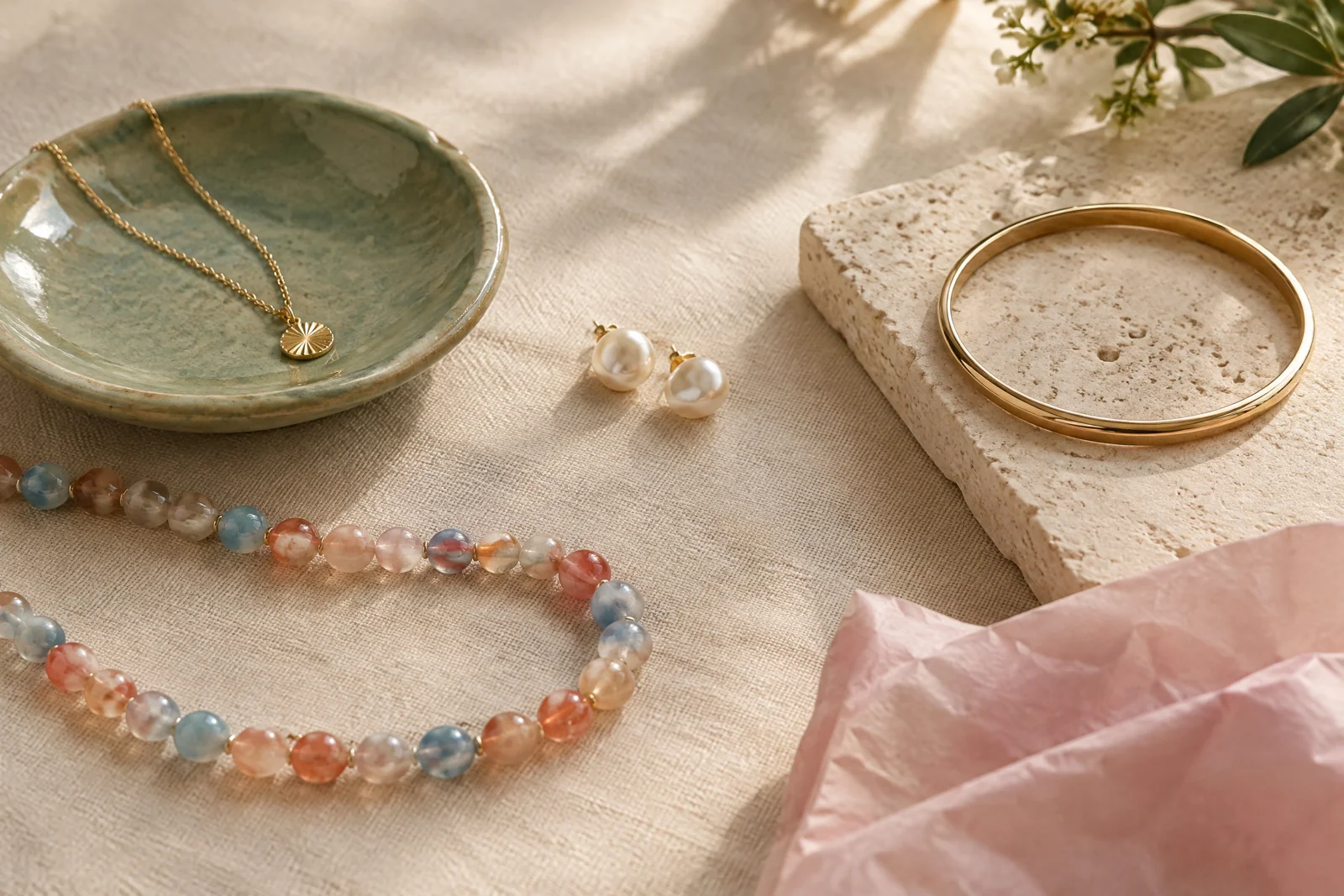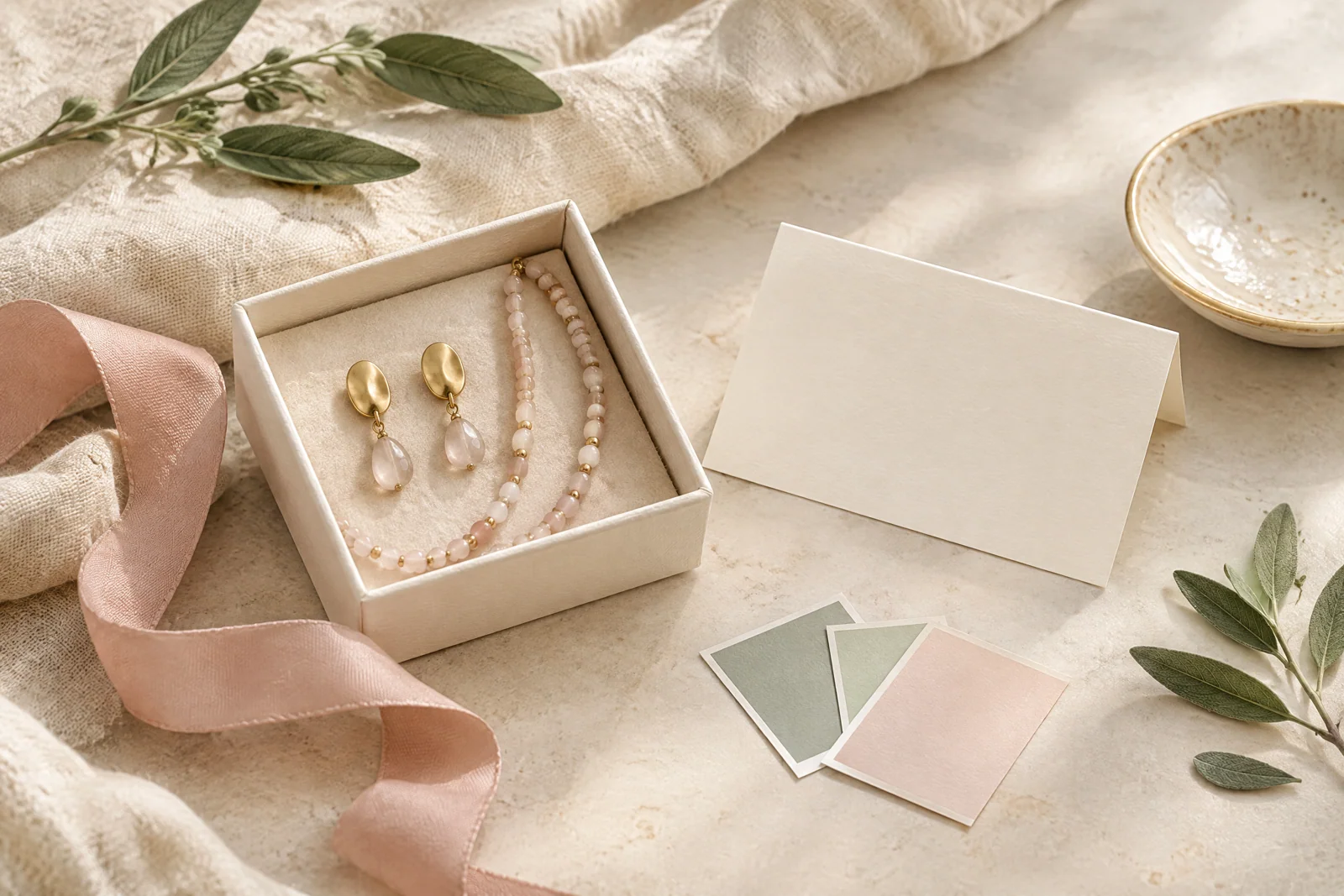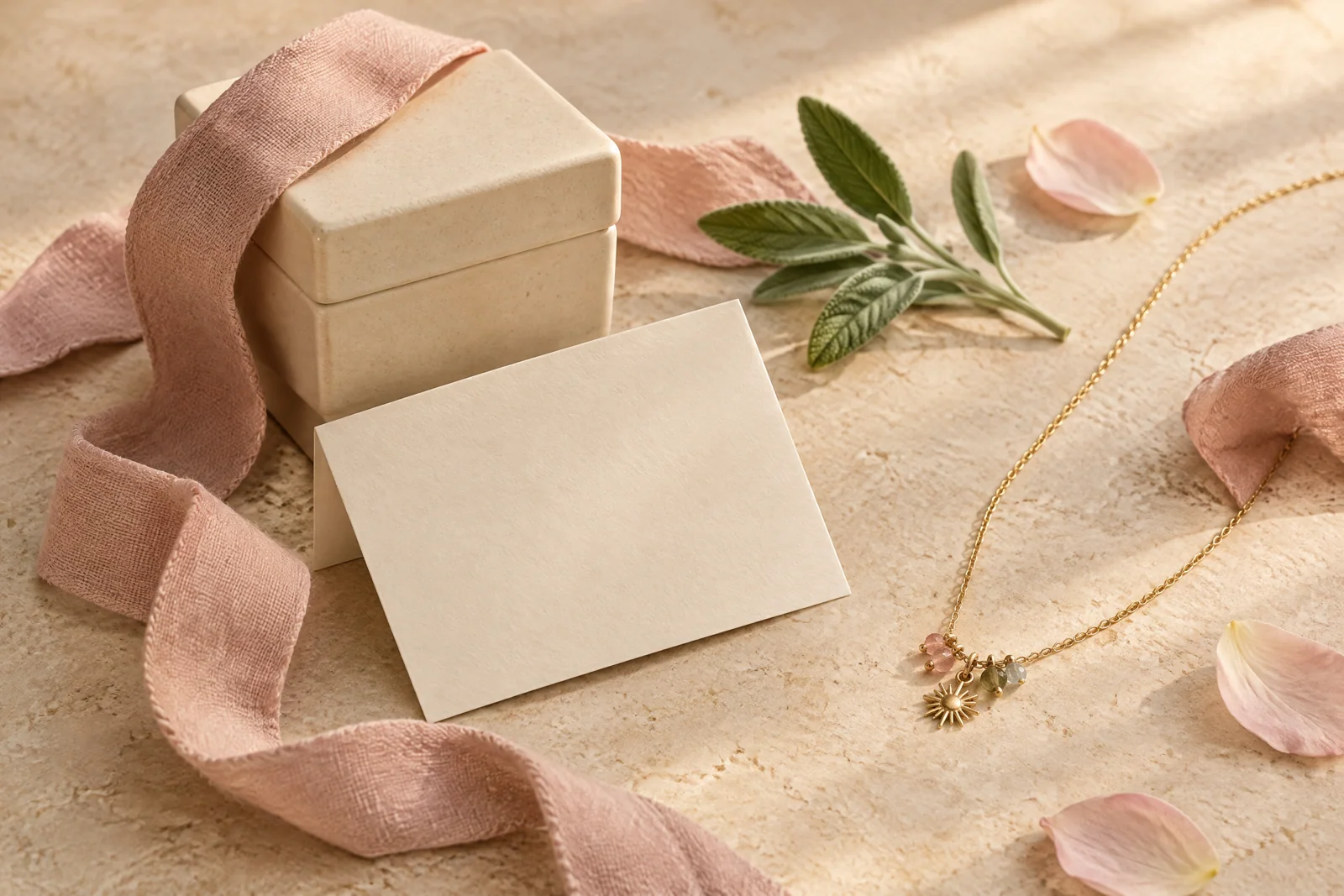
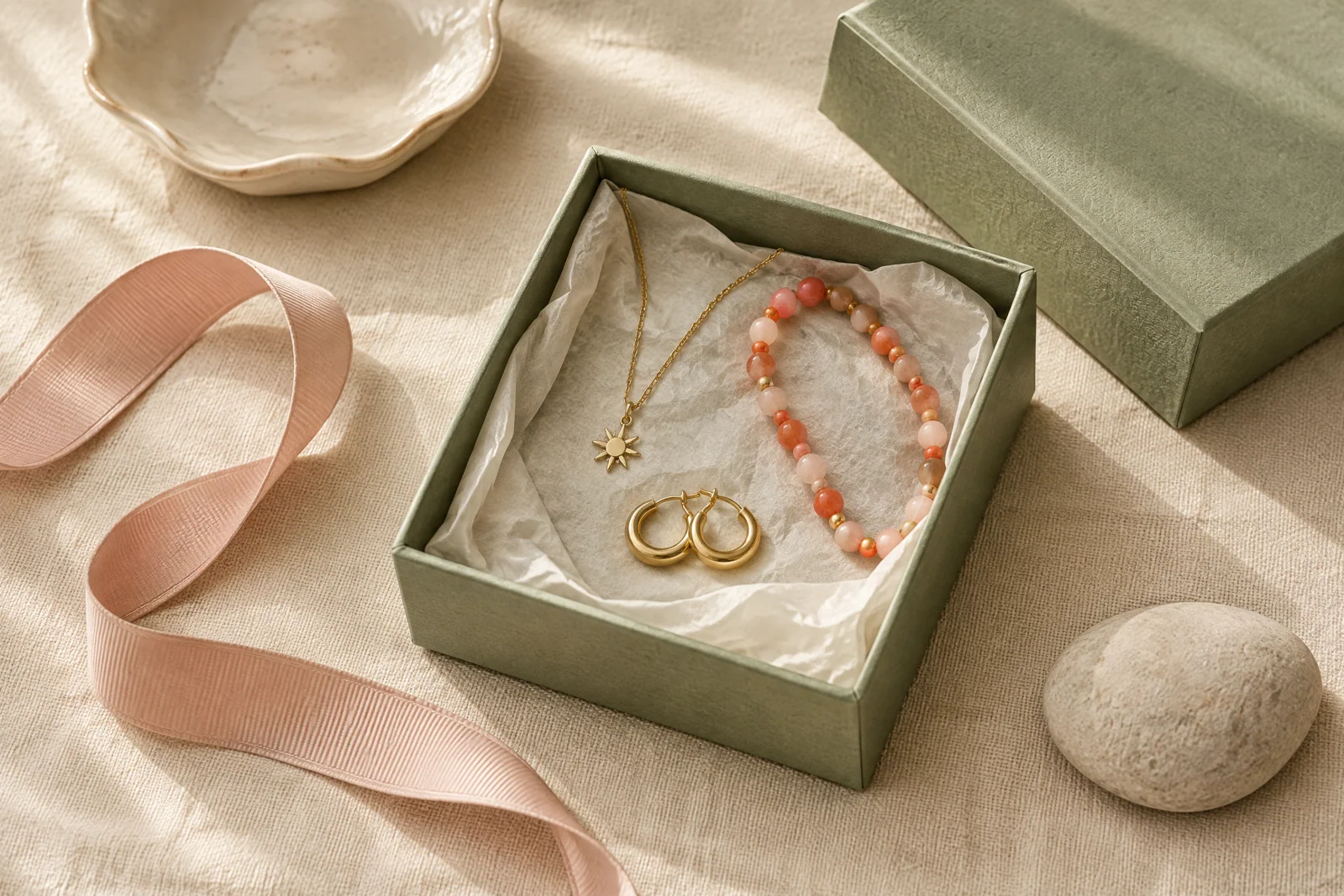
The best jewelry gift set is not the one with the most pieces; it is the one that feels as if you noticed the recipient. Jewelry gift sets can be as simple as two pieces that work together, or one piece paired with a useful, personal finishing touch. The aim of jewelry gift sets is to make choosing easy without guessing at an entire wardrobe. Start with what they already wear, then build a considered pairing around color, scale, and everyday habits. With a little observation, jewelry gift sets can feel generous and individual while staying comfortably edited.
Begin with the person, not the number of pieces
Before browsing, think about the recipient in real-life terms. Do they reach for small earrings on workdays, a favorite pendant every morning, or colorful beads when an outfit needs energy? Notice whether their jewelry is usually delicate or bold, warm-toned or cool, simple or full of playful detail. These clues are more useful than trying to assign them a fixed style label. A person may love a statement necklace but prefer understated earrings, so look at the piece category as well as the overall mood.
Consider their routine, too. Someone who dresses quickly may appreciate an easy-to-wear pair rather than a complicated combination. A person who enjoys changing accessories might be delighted by two distinct pieces that can be worn separately or together. When planning jewelry gift sets, if you are unsure about pierced ears, necklace length, wrist fit, or metal preferences, do not turn uncertainty into a risky purchase. Choose a flexible piece, check the product details carefully, or ask a tactful question. Jewelry gift sets should feel like an invitation, not an obligation to wear something that does not suit.
Thoughtful jewelry gift sets begin with what you know rather than assumptions about age, occasion, or what someone “should” like. Their everyday bag, favorite scarf, or the colors they wear often can offer helpful clues. If they wear a lot of neutral clothing, a small color accent might be welcome; if they already love saturated color, a tonal pairing may feel more natural. The most thoughtful jewelry gift set is not necessarily the most formal one. It is a pairing that fits the recipient’s own habits and leaves room for their own styling.
Set a clear scope before you shop: one main piece and one supporting piece is often enough. A compact edit makes jewelry gift sets feel intentional, easier to wrap, and gives each item space to be enjoyed. For a broader browse, start with necklaces or earrings, then compare options against what you have observed rather than adding pieces simply to make the box look full.
Choose one anchor, then add a compatible accent
Give jewelry gift sets a center of gravity. The anchor is the piece most likely to be worn on its own: perhaps a necklace with a distinctive color, a pair of hoops, or a small charm. The second piece should support that anchor without competing for attention. This simple method keeps jewelry gift sets cohesive and makes both pieces useful beyond the unboxing. A necklace can pair with earrings in a shared metal tone; a colorful necklace can be balanced with a simpler, smaller accessory.
Think about how the pieces will meet when worn. If a necklace is already bold in color or bead size, choose an accent with a quieter silhouette. If the anchor is a fine chain or a tiny charm, a bead or earring with more texture can bring the combination to life. Matching does not mean identical: repeating one visual cue—such as warm gold color, a soft coastal palette, or a rounded shape—is often enough. Leaving one element different gives the pairing personality.
Catalog examples can help illustrate the balance. Mini Sun is described as a small sun charm on a 14k gold-fill chain, with a chain length of approximately 40 cm; its compact motif could serve as a delicate anchor. A more colorful direction might start with Karia, described as a red glass-bead necklace with silver-plated mixed-metal details, 42 cm long, and 10 mm beads. Those specifics suggest a noticeable color focal point, so a modest companion would keep the overall set from feeling crowded. These are examples of styling logic, not claims that any combination is sold as a ready-made set.
For a recipient who likes a more graphic focal point, Big Fish is described as a gold-plated stainless-steel fish necklace approximately 42 cm long with an extender chain. Its motif already carries character; a small, uncomplicated accent can complement it without creating a second centerpiece. Product materials and dimensions vary, so use the item descriptions as your guide and check current product details before deciding. Avoid assuming two pieces are identical in color or construction merely because both are described as gold-tone.
Finally, imagine three ways the recipient could wear the pieces: each alone, together, and with something they already own. If the answer is easy for at least two of those situations, you have likely found a practical pairing. If every possible combination feels busy, remove a piece or choose a quieter accent. The advantage of thoughtful jewelry gift sets is that each item can stand on its own while still making sense beside the other.
Use color, scale, and material details with care
Color is often the most personal part of a gift because it connects jewelry to clothing, complexion preferences, and mood without requiring an exact match. Build from one color already present in the recipient’s wardrobe. A coral or red piece can lift cream, denim, navy, or black; sage and soft greens can sit comfortably beside earth tones; blue can feel crisp against white or warm neutrals. These are starting points, not rules. If you know the recipient repeats a particular color, let it lead. If not, choose a versatile neutral anchor and use a smaller accent for color.
Scale matters just as much. A petite charm beside an oversized earring may feel deliberately playful, while two equally prominent shapes can compete. Consider proportions in relation to the person’s usual jewelry, not their body size: look at what they choose to wear. A subtle piece can be a welcome counterpoint to a bold favorite; someone who regularly layers may enjoy a little more detail. A balanced set usually includes one focal point and one piece that gives the eye a place to rest.
Read the material description rather than relying on color names alone. “Gold-plated,” “gold-filled,” and “gold-tone” do not mean the same thing, and plating is not the same construction as a gold-filled component or solid gold. Mixed-material pieces may combine metal with glass, resin, shell, cord, or faux pearls. Such combinations can be lovely, but they make care more specific: do not assume that every piece can be soaked, polished with the same cloth, or cleaned with a machine. If two gifts use different materials, keep their care instructions distinct and share only guidance supported by the product details.
For jewelry gift sets that will be worn together, consider whether the finishes look harmonious in daylight and indoor light. A warm metal accent can echo a chain; a silver-colored detail can work alongside a cool bead palette. You do not need to enforce a strict metal rule. Instead, repeat something visible—finish, shape, color, or scale—so the pair feels connected. For category inspiration, browse bracelets or rings if you know those are pieces the recipient enjoys, but avoid adding a category simply for variety.
When in doubt, choose contrast with a reason. A red bead beside a quiet gold accent feels intentional when the color is already part of the recipient’s wardrobe; a delicate silver detail may bring clarity to a warm, multicolor piece. The goal of jewelry gift sets is not a perfect color wheel exercise. It is a pairing the recipient can understand and make their own. That thoughtfulness matters more than assembling jewelry gift sets that look identical from one box to the next.
Finish the gift with useful, personal presentation
Presentation can make small jewelry gift sets feel complete without turning them into elaborate packaging. Place each piece so it is visible and protected from rubbing against the other. Keep a chain secured or loosely arranged to reduce tangles, and separate delicate surfaces from harder components. If you are adding a box, pouch, or card, choose a size that fits the pieces rather than excess filler. A simple arrangement with a little breathing room often feels more considered than a crowded display.
Add a short note that explains the connection between the pieces. It might mention a color they wear often, a shape that reminded you of them, or the fact that each item can be worn on its own. Keep the message specific and sincere instead of promising what the recipient will feel. A useful note can also identify the materials or offer a gentle reminder to store pieces separately and follow their individual care guidance. Avoid suggesting that jewelry is waterproof or suitable for every activity unless the product information expressly says so.
Think practically about the occasion. For a birthday, a familiar color or motif can make the pairing feel personal. For a thank-you, a small wearable piece with a supporting accent may feel warm without being overly grand. For someone you do not know well, a simpler option or a note inviting the recipient to choose a favorite from the collection can be a considerate alternative to guessing at personal preferences. The purpose of jewelry gift sets is to make the recipient feel seen, not to prove how much you spent or how many objects fit inside a box.
Before wrapping, do a final check: are the product names and materials clear, does the set reflect something you know about the person, and can both pieces be worn separately? If the gift includes different materials, keep any care notes accurate and modest. Do not promise longevity, comfort, skin suitability, or resistance to water without reliable product-specific support. A little honesty is part of gifting, and thoughtful jewelry gift sets leave room for accurate care notes whenever materials and finishes call for careful handling.
Small jewelry gift sets also benefit from a clear stopping point. Resist adding a third or fourth piece just because space remains. If the main item and its companion already create a useful choice, the set is finished. If you still want to add something, consider a handwritten note rather than another accessory. This keeps jewelry gift sets focused and leaves the recipient free to combine each piece with items they already love.
Ultimately, successful jewelry gift sets are little styling stories: one piece says what caught your eye, and the other shows how you imagined it being worn. Start with the recipient, select a single anchor, find one supporting accent, and finish with a note that explains your thought. The result can be modest in size and still feel generous in attention.
Related reading
For more ideas, read 10 Thoughtful Jewelry Gift Ideas for Different Personalities, How to Choose Jewelry for Someone Else, and A Guide to Meaningful Birthday Jewelry Gifts.