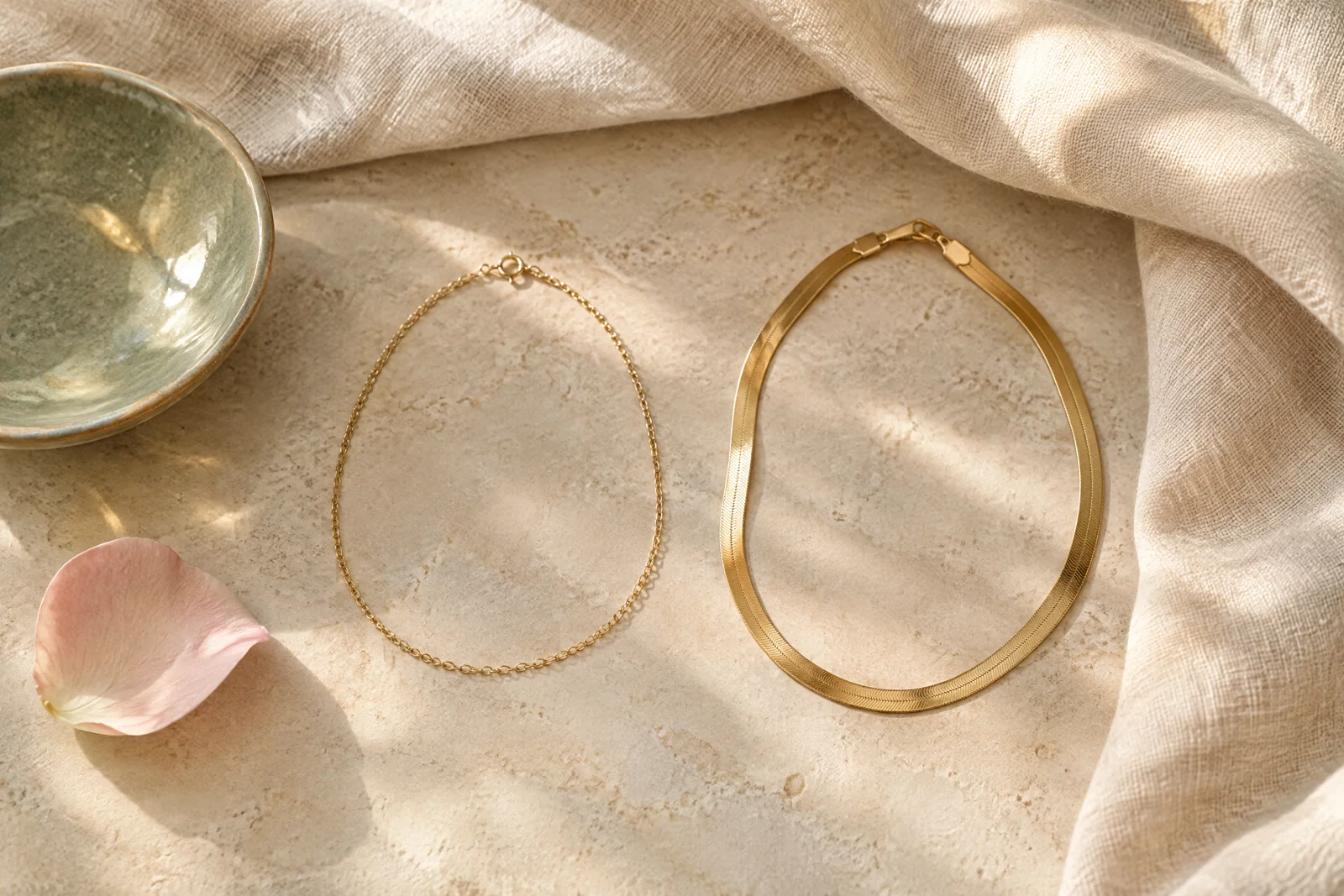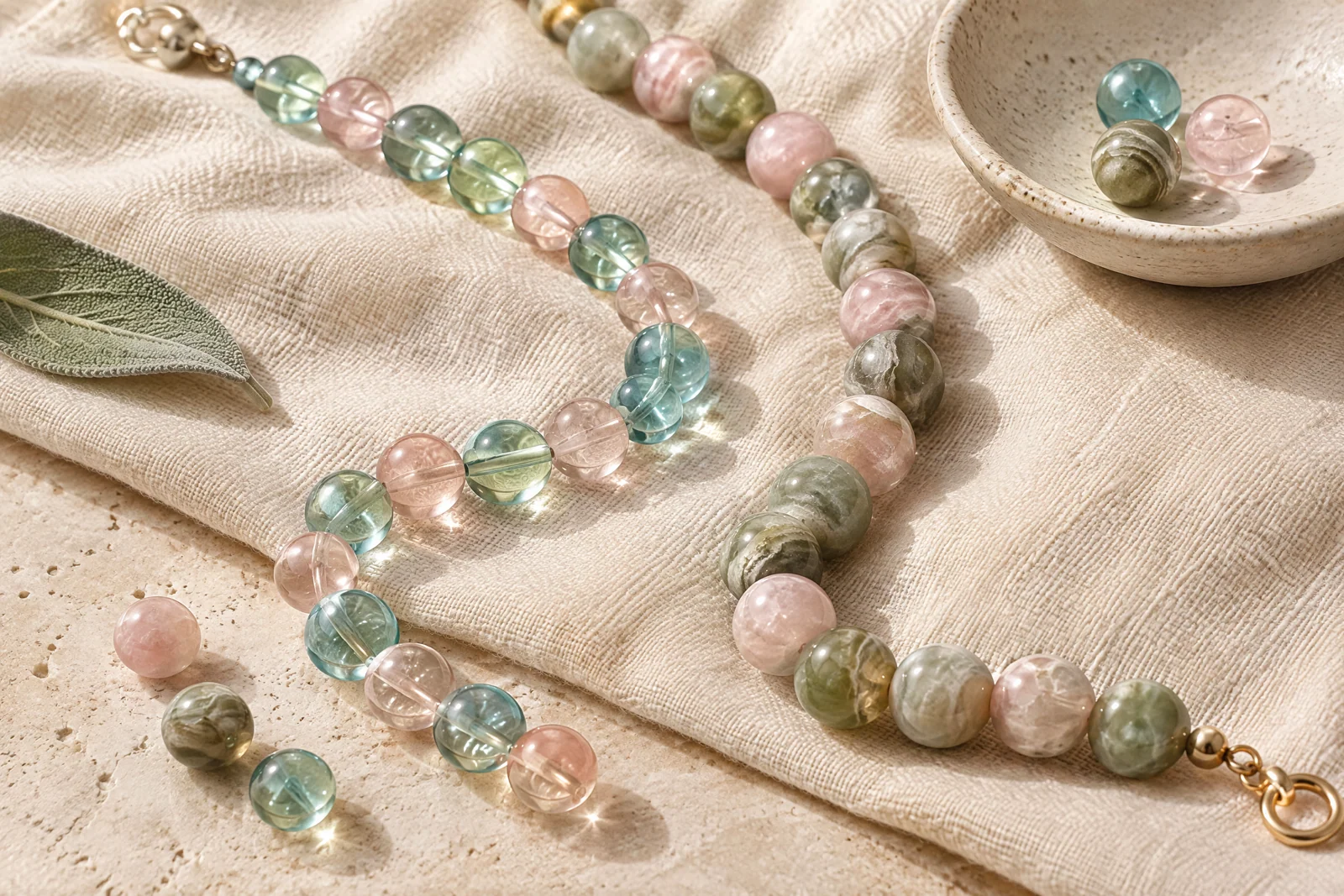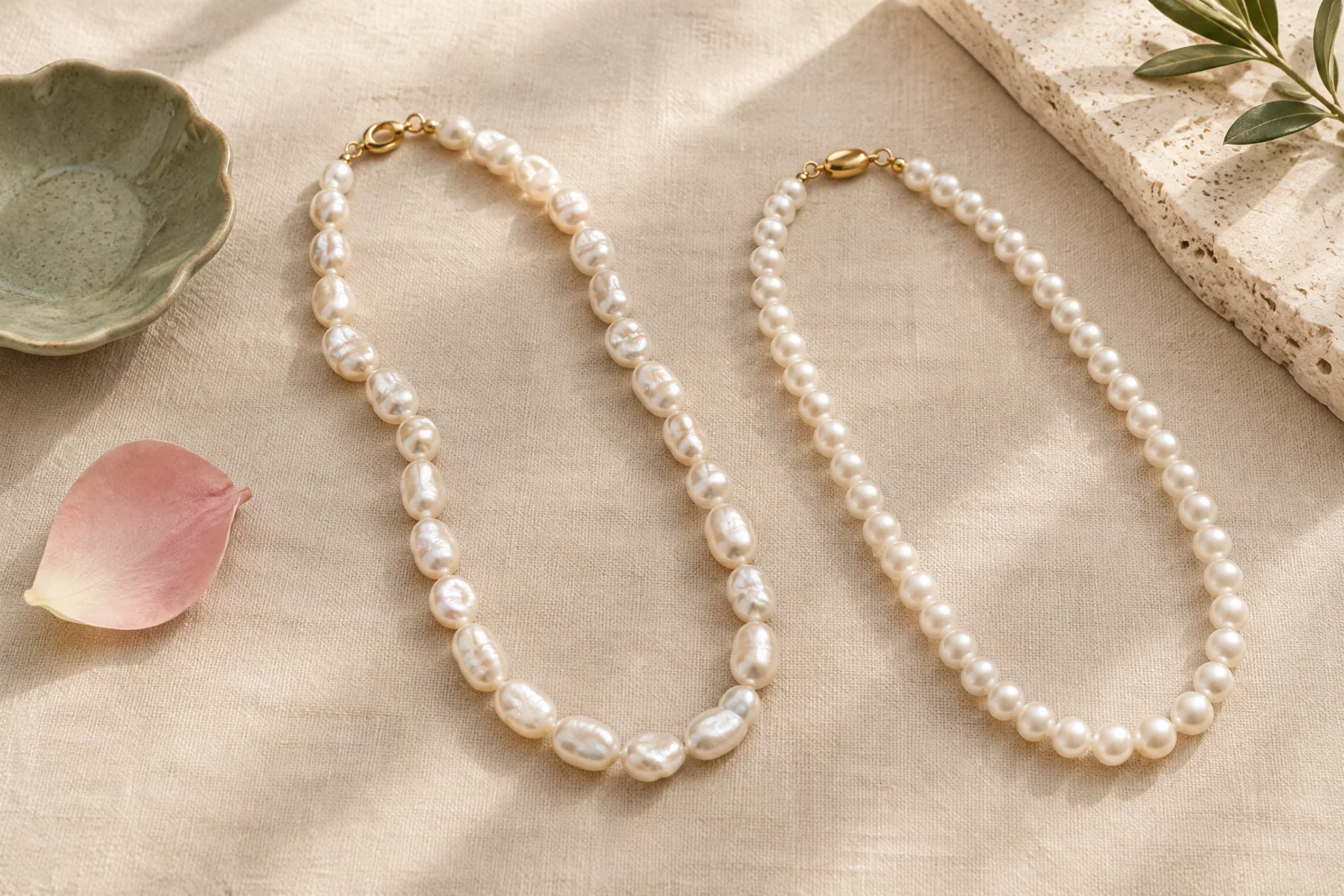
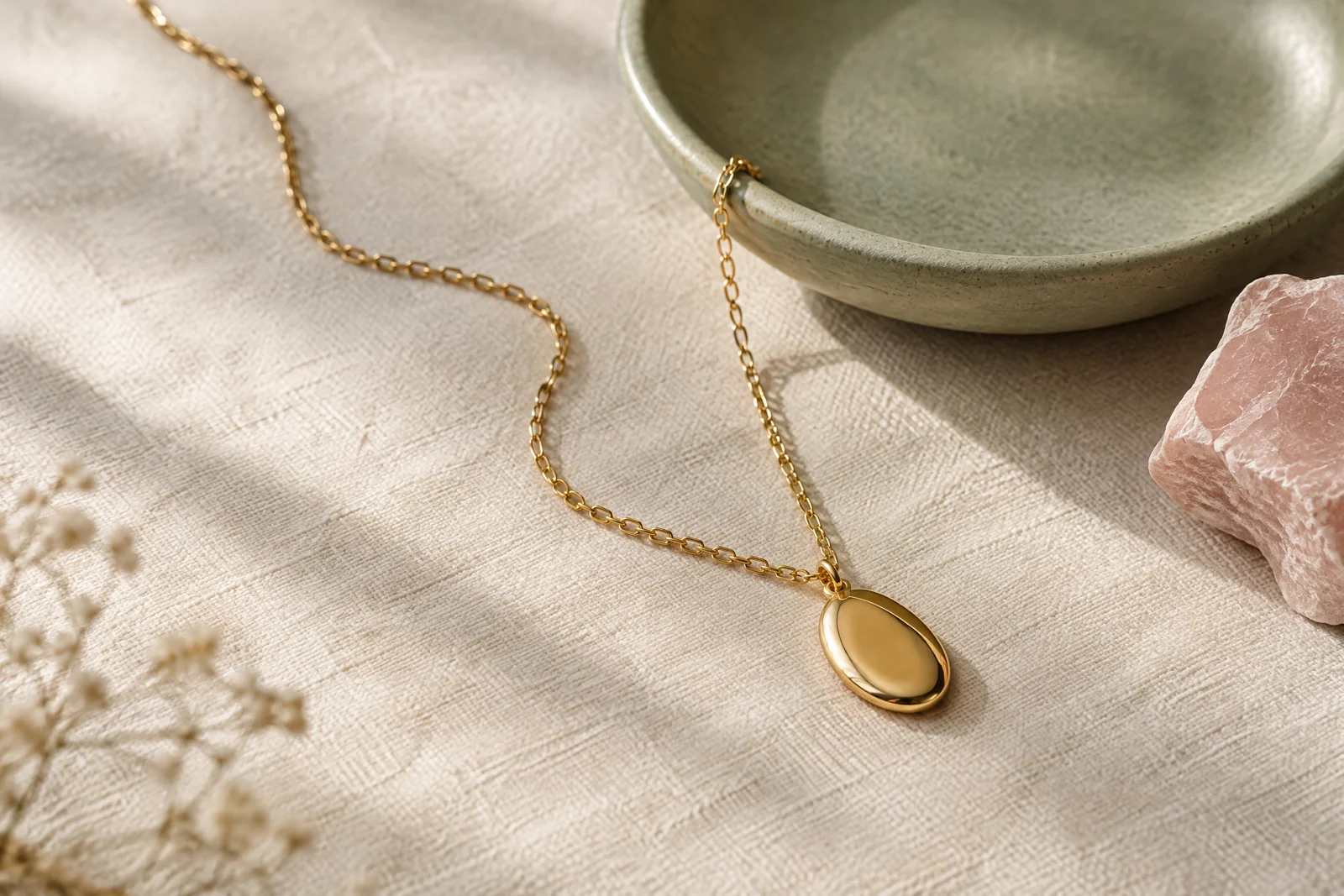
Gold-tone jewelry is often described in a few compact words, but those words carry useful distinctions. Stainless steel jewelry can refer to a piece whose structural base is stainless steel; when it is gold-plated, a separate, thin gold-colored layer gives the surface its warm finish. That combination can offer the clean look of gold with the character of a steel base, but it is not solid gold, gold-filled, or maintenance-free. Knowing what each layer does makes shopping clearer and helps you care for a piece with realistic expectations.
Here is a practical guide to the base metal, the plated surface, the language to look for in a listing, and the small habits that help a finish stay attractive. The central idea is simple: judge the whole piece by its exact material description, not by color alone.
Understand the base metal and the gold-colored surface
Stainless steel is an iron-based alloy. Its chromium content helps form a protective surface layer that slows corrosion; worldstainless explains that chromium is the defining alloying element and that stainless grades vary according to their composition and intended properties. This is one reason stainless steel jewelry is used across many settings, alongside applications such as household fixtures. But “stainless” does not mean that every grade behaves identically in every environment, or that a finished piece cannot be scratched, dulled, or affected by prolonged exposure to moisture and chemicals.
In gold-plated stainless steel jewelry, the steel is the underlying structure and the visible gold tone comes from a surface layer applied through a plating process. The word “gold” in this description identifies the finish, not the bulk material. The coating can differ in thickness, process, and composition; a brief product description may not specify those details. Unless a seller states more, it is best not to infer a particular karat, plating thickness, or precise alloy from the color or from the phrase alone.
That distinction matters because several terms that sound similar describe different constructions. Gold-plated jewelry has a gold layer applied to another metal. Gold-filled and rolled-gold-plate terms refer to a different construction involving a mechanically applied gold layer, while vermeil describes gold over sterling silver. The Federal Trade Commission’s consumer guide to buying precious-metal jewelry explains these distinctions and notes that plating can wear with use, depending on wear and layer thickness. A gold-plated steel item should not be casually relabeled as gold-filled or solid gold.
Color is not a reliable material test for stainless steel jewelry. Two pieces may have a similar yellow hue while using different base metals, coating methods, or gold alloys. Likewise, “gold-tone” may describe appearance without identifying the underlying metal. For a useful comparison, read the complete materials line and any detail about the clasp, chain, pendant, and decorative elements. With stainless steel jewelry, those components are not automatically all the same metal just because they sit together in one design.
It is also worth separating a material fact from a performance promise. A steel base can have useful corrosion resistance, but that alone does not establish that a gold-colored coating is waterproof, tarnish-proof, or guaranteed to retain its color indefinitely. Wear depends on construction and on how often a piece meets friction, skin products, humidity, cleaning agents, or salt. A clear stainless steel jewelry description should tell you what the item is made of; it should not ask you to guess at a guarantee.
Read a product description with confidence
A complete listing for stainless steel jewelry should name the base and finish rather than relying on product photography. When you shop for stainless steel jewelry, look for a direct statement about which components use each material. A useful description might name gold-plated stainless steel, specify which component uses that material, and separately identify any cord, stone, bead, enamel, resin, or faux pearl. If the listing only says “gold necklace,” ask what metal sits beneath the color and whether every component shares the same construction.
Check the details that affect fit and use, too. Necklace length and extender length tell you where a pendant may sit; pendant dimensions help you judge scale; closure style tells you how it fastens. These practical facts are different from finish claims. They let you imagine the piece with a crewneck, an open collar, or a light knit before you decide whether its proportions suit your wardrobe. They are useful comparison points when choosing between stainless steel jewelry designs.
For a concrete example, the Duddingtons catalog describes the Big Fish necklace as gold-plated stainless steel, with an approximate 42 cm overall length and an extender chain; its raised-dot fish pendant measures about 5 cm. The description makes the metal and design legible without suggesting that the pendant is solid gold. The Lucky Fish necklace is a different combination: a red cord with an 18k gold-plated stainless-steel fish pendant, listed at 42 cm plus a 5 cm extender. These are examples of how the same base-metal-and-finish pairing can appear in very different styling contexts within stainless steel jewelry.
Those distinctions also show why the word “18k” needs context. In a phrase such as “18k gold-plated stainless steel,” it describes the gold used for the plating, not an 18-karat solid-gold chain or pendant. If a listing does not make the construction clear, ask the seller rather than translating a karat number into a solid-gold claim. This is an important distinction in stainless steel jewelry material descriptions. The FTC guide notes that gold plating is applied by different processes and eventually wears depending on use and thickness; the label alone does not establish how long a particular finish will last.
Think about the full design, not just the metal. In mixed-material stainless steel jewelry, a steel pendant on a cord, for example, has a cord that needs different care from the pendant. A chain may rub against a charm, and a clasp can experience more handling than the central motif. If a piece combines multiple materials, the most delicate component may set the limits for cleaning and storage. You can browse the broader necklace collection for different silhouettes, then compare the material notes and dimensions item by item.
If metal sensitivity is a concern, do not treat stainless steel jewelry as a personal suitability guarantee. Alloys and plated surfaces vary, and the product description may not state every constituent or disclose a formal skin-sensitivity test. Check the exact listing and consult a qualified clinician about individual reactions; avoid relying on generic marketing shorthand. A retailer can clarify what is specified for a particular piece, but should not be expected to diagnose an allergy.
Care for the finish without overpromising
The gentlest care routine for gold-plated stainless steel jewelry starts with prevention rather than polishing. A gentle stainless steel jewelry care routine favors prevention over aggressive cleaning. Put jewelry on after perfume, lotion, sunscreen, hair products, and makeup have dried. Take it off before swimming, bathing, exercising, or doing chores that involve sweat, detergents, or abrasive surfaces. These are cautious habits, not a claim that a particular piece is waterproof or that every brief contact causes damage. They simply reduce avoidable exposure and rubbing, a sensible approach to caring for stainless steel jewelry with a plated surface.
After wearing, use a clean, soft, dry cloth to lift away skin oils and surface residue. Wipe lightly rather than scrubbing; an abrasive cloth, polishing compound, or gritty household cleaner can scuff a plated surface. If the piece needs more than a dry wipe, consult the seller’s specific care instructions first. In particular, avoid assuming that soaking, strong cleaners, or an ultrasonic machine are appropriate: an item may include a plated finish, cord, adhesive, stone, enamel, or other component that responds differently.
Let a damp piece dry fully before storage, and keep it separate from other jewelry so chains and pendants do not scrape one another. A soft pouch or a divided jewelry box can limit contact with dust and harder surfaces. Do not leave jewelry in a steamy bathroom, a sunny windowsill, or a pile where clasps can snag delicate pieces. For mixed-material stainless steel jewelry, store it according to its most delicate part rather than treating the steel component as permission to neglect the rest.
With ordinary wear, plated color may gradually change or show areas of base metal, especially where a piece repeatedly rubs against skin, clothing, or another object. The timing varies. There is no reliable universal lifespan that can be promised from the category name alone. If the finish changes, stop using harsh home remedies; ask the seller or a professional jeweler whether evaluation or replating is appropriate for that specific design. A scratched coating cannot be restored simply by polishing harder.
Careful handling helps preserve appearance, but it cannot turn plated construction into a permanent finish. This balanced expectation is useful when comparing stainless steel jewelry with gold-filled, vermeil, or solid-gold pieces: each has a different structure, price point, and care profile. If you are weighing those terms side by side, our gold-plated versus gold-filled comparison offers a companion explanation.
Style the warm finish with intention
Gold-plated steel has a bright, warm surface that can read as polished without requiring an elaborate outfit. Let one piece provide the focal point: a pendant over a plain tee, an open-collar shirt, or a soft knit leaves room for the metal to catch light. If your clothes already carry strong prints or saturated color, a simple chain can add definition without competing with the pattern. With a pared-back outfit, a sculptural pendant can supply shape and personality.
For a relaxed layered look, start with one necklace whose length and pendant size feel comfortable. Add another chain only if the lines remain distinct; varying lengths and visual weight makes the combination easier to read. A colored cord can introduce contrast while keeping the metal detail modest, as the Lucky Fish example demonstrates. When pairing a gold-plated pendant with beads or another metal, repeat one color or shape elsewhere—perhaps a warm neutral, a small gold accent, or a related curve—so the mix feels considered rather than accidental.
Gold tone also works naturally alongside cream, sand, olive, terracotta, navy, and soft blush. Against a crisp white shirt it feels sunny; against deep blue or green it becomes a clear point of contrast. There is no requirement to match every other accessory exactly. If you wear silver, choose a piece with a shape or color that connects the metals, then keep the rest of the look simple. For more ways to coordinate pieces, explore the complete jewelry collection and use each product’s material notes as your guide.
Ultimately, the best choice is the one whose scale, color, and construction suit your habits. Read the description, ask about anything unclear, and think about when you will wear the piece and how much care you want to give it. Gold-plated stainless steel jewelry offers a useful combination of a steel base and gold-colored surface, but the exact finish remains a plated layer with its own limits. Knowing that lets you enjoy the look honestly, style it with confidence, and care for it gently.
Related reading
For more material context, continue with Gold-Plated vs Gold-Filled Jewelry: A Clear Comparison, Glass Beads vs Gemstone Beads: Color, Feel, and Care, and Freshwater Pearls vs Faux Pearls: What to Know.