A seasonal change is a natural moment to pause, open your jewelry box, and see what has quietly collected there. A thoughtful round of jewelry maintenance is less about making every piece look brand-new and more about noticing small changes: a clasp that no longer catches, a strand that needs a little untangling, or a favorite pair that has been tucked away since the last season. With a clean surface, good light, and a few minutes, you can give the pieces you wear a sensible checkup at home.
This routine is deliberately gentle. Jewelry can combine different metals, finishes, beads, stones, shells, cords, enamel, or faux pearls, and those materials do not all respond to the same treatment. When you are unsure what a piece is made from, choose the least aggressive option: inspect it dry, wipe only where appropriate, and check the maker's care guidance before using liquid or a cleaning product. The goal of seasonal jewelry maintenance is to preserve what you have, not to test it.
Set up a calm, well-lit checkup
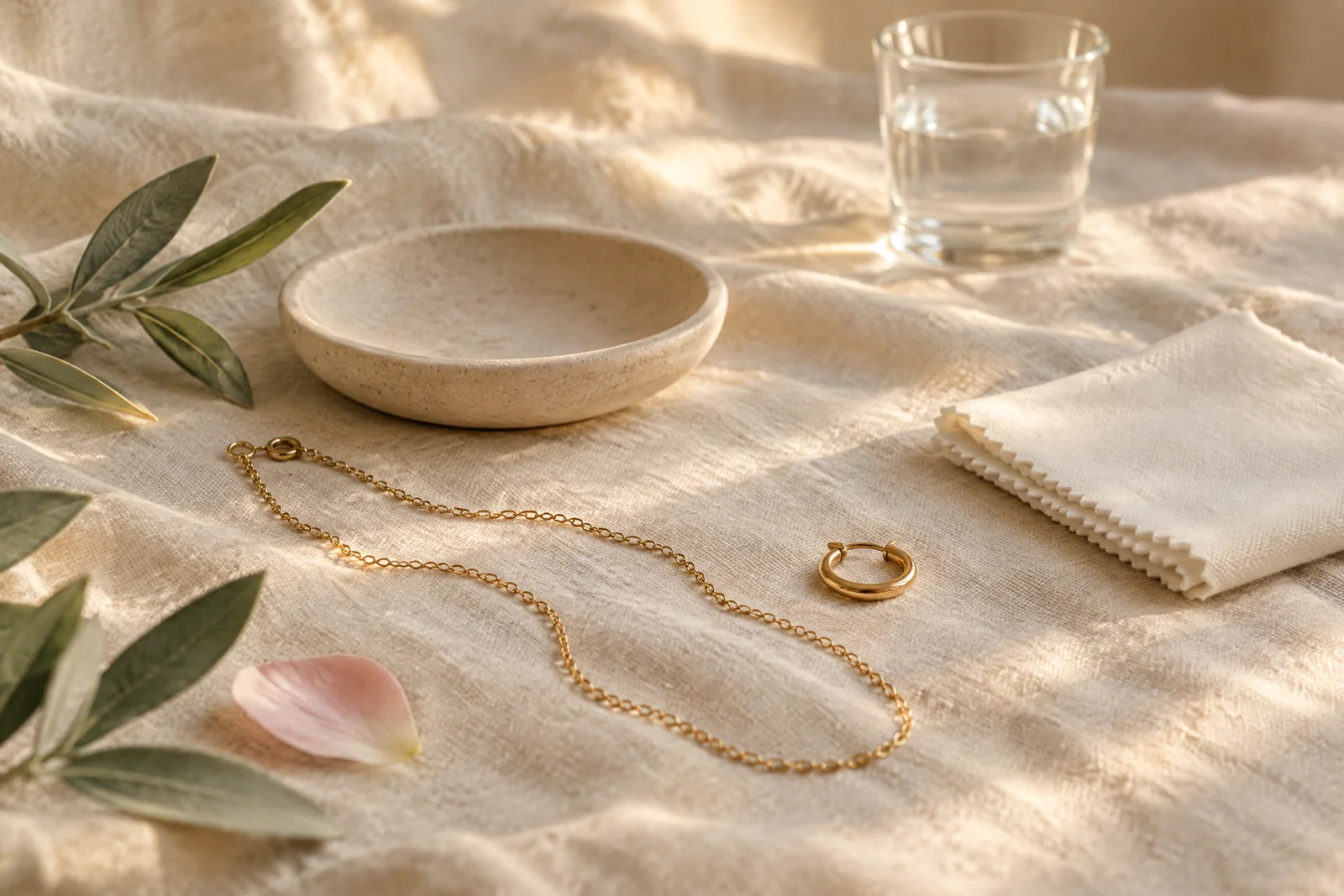
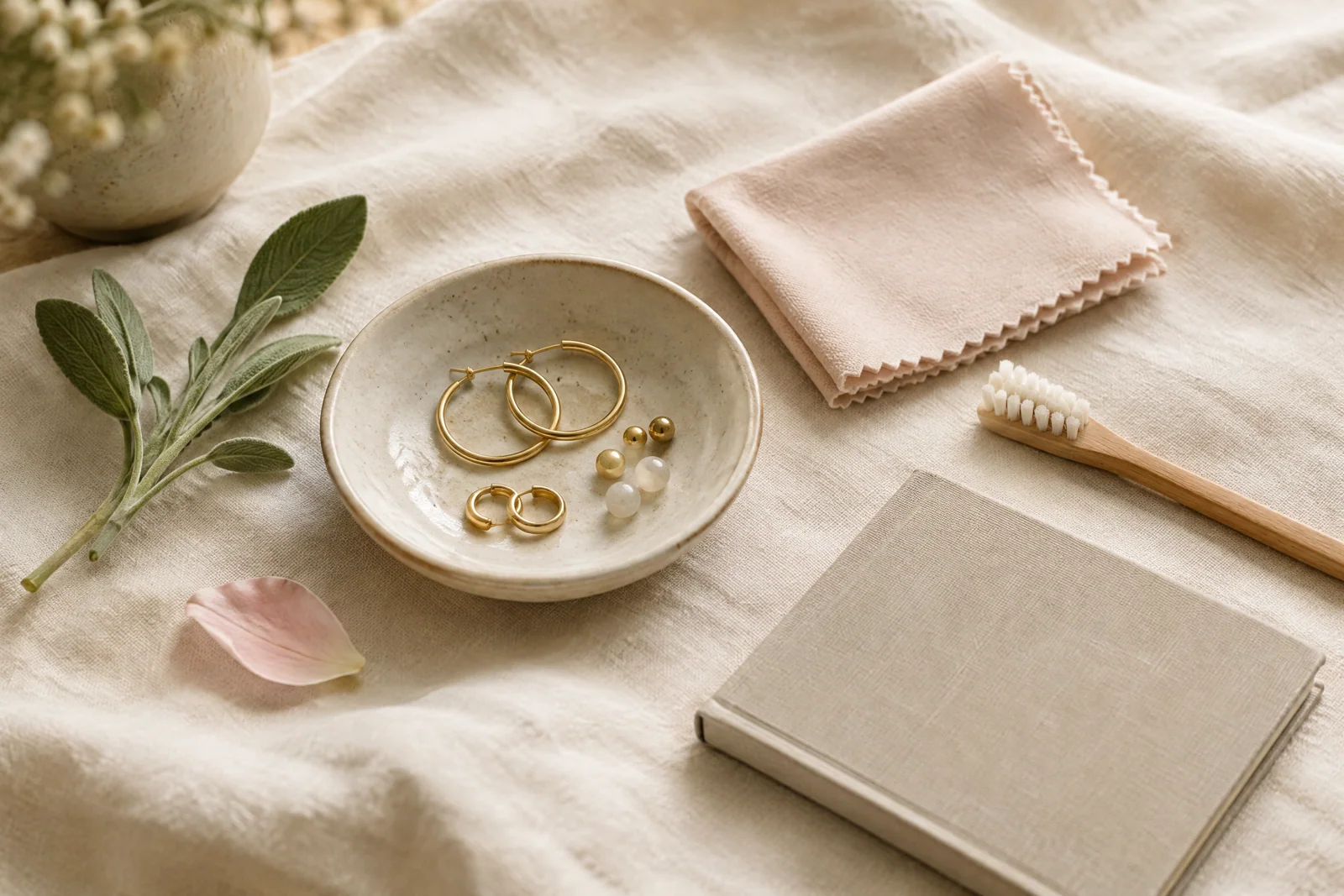
Choose a table with a light-colored, lint-free cloth and enough room to spread pieces apart. A bright window or a lamp aimed toward the surface helps you see clasps, links, and small details without handling everything repeatedly. Keep a shallow dish nearby for earrings or loose pieces, and gather a clean, soft cloth. A soft brush can be useful for dry dust in accessible crevices, but it is not a universal cleaning tool; avoid brushing delicate finishes, soft stones, pearls, or anything whose construction you cannot assess.
Work in small groups rather than emptying the whole jewelry box at once. Separate necklaces, bracelets, rings, and earrings, then set aside anything damaged or unfamiliar for closer attention. This is practical jewelry maintenance: a clear view makes it easier to notice a problem before a piece is worn, and a contained work area helps prevent tiny earring backs or jump rings from disappearing.
Make a short note as you go. You might list a clasp that needs watching, a necklace that should be stored separately, or a piece you have not worn lately. A simple note on paper or in your phone turns a seasonal check into a useful record without needing a special kit, and makes jewelry maintenance easier to revisit. If an item appears valuable, sentimental, or structurally complicated, professional advice is a better next step than home repair.
Before you begin, check product descriptions or care information where available. Materials matter more than the broad label “jewelry”: an item with a plated metal detail and a bead strand needs a different approach from a plain metal hoop. If you are exploring the range of styles you wear, browse the necklace collection or earrings collection for examples of how varied jewelry construction can be.
Inspect the details that keep a piece wearable
Start with closures. Open and close a clasp gently once or twice, watching whether it aligns and catches as expected. Look for a bent lever, a gap that was not there before, a loose jump ring, or a small connection that shifts when touched. Do not force a stiff mechanism or squeeze a ring closed with household pliers. If a clasp repeatedly slips, feels rough, or no longer secures, set the piece aside until it can be assessed or repaired; attentive jewelry maintenance means not wearing a closure you do not trust.
For necklaces and bracelets, lay the strand flat and follow it from one end to the other. On a chain, look for links that are stretched, twisted, or snagged. On a beaded piece, notice whether the beads move in an unusual way, whether the cord looks frayed, or whether knots near beads or a clasp have loosened. Do not pull the strand taut to “test” it. A delicate thread or cord can be under strain even when the piece looks fine at first glance, which is why jewelry maintenance begins with observation rather than pulling.
Check earrings one at a time. Confirm that backs are present and that hinged or hook fittings move smoothly without being bent out of shape. Inspect decorative drops for movement where components join. A tiny missing back may be easy to overlook in a drawer, so keep pairs together in a dish while you work; this small step belongs in any jewelry maintenance routine. For rings, look around settings and decorative details for movement, catching, or a change in alignment; do not press a setting to see if it is secure.
It can help to consider real pieces as specific constructions rather than generic categories. For instance, the catalog describes the Karia necklace as red glass beads with silver-plated mixed-metal details, while Midnight combines glass beads, a shell-like charm, and gold-plated mixed metal. These are different combinations to inspect and care for thoughtfully. Product descriptions can help identify materials, but they are not a substitute for a jeweler's assessment if a component is loose or damaged; this distinction is central to careful jewelry maintenance.
Finally, look for changes in appearance without trying to diagnose them. A finish that seems dull, a bead that looks different, or a chain that catches fabric can be a cue to pause and investigate—not an invitation to polish harder. Make a note and compare it with any care instructions you have. Careful observation is one of the most useful parts of regular jewelry maintenance, especially when a change is subtle.
Clean gently, with the materials in mind
Begin with the simplest option: a clean, dry, soft cloth on a smooth, sturdy surface. Use light strokes and a fresh part of the cloth rather than rubbing forcefully. For many pieces, removing surface fingerprints or dust is enough, and knowing when to stop is part of good jewelry maintenance. If the item includes plating, colored finishes, glued components, shell, pearls, cord, or mixed materials, avoid assuming that a polishing cloth, liquid cleaner, or household solution is suitable. Follow care advice specific to the materials and finish; that material-first approach keeps jewelry maintenance cautious instead of one-size-fits-all.
Plated jewelry deserves particular restraint. Plating is a surface layer, not the same thing as gold-filled or solid gold, so abrasive rubbing and strong cleaning products may affect its appearance. Use a soft dry cloth only if appropriate for the piece, and avoid polishing compounds unless its care instructions specifically recommend them. If you are comparing descriptions, our guide to gentle care for gold-plated jewelry offers a focused companion read.
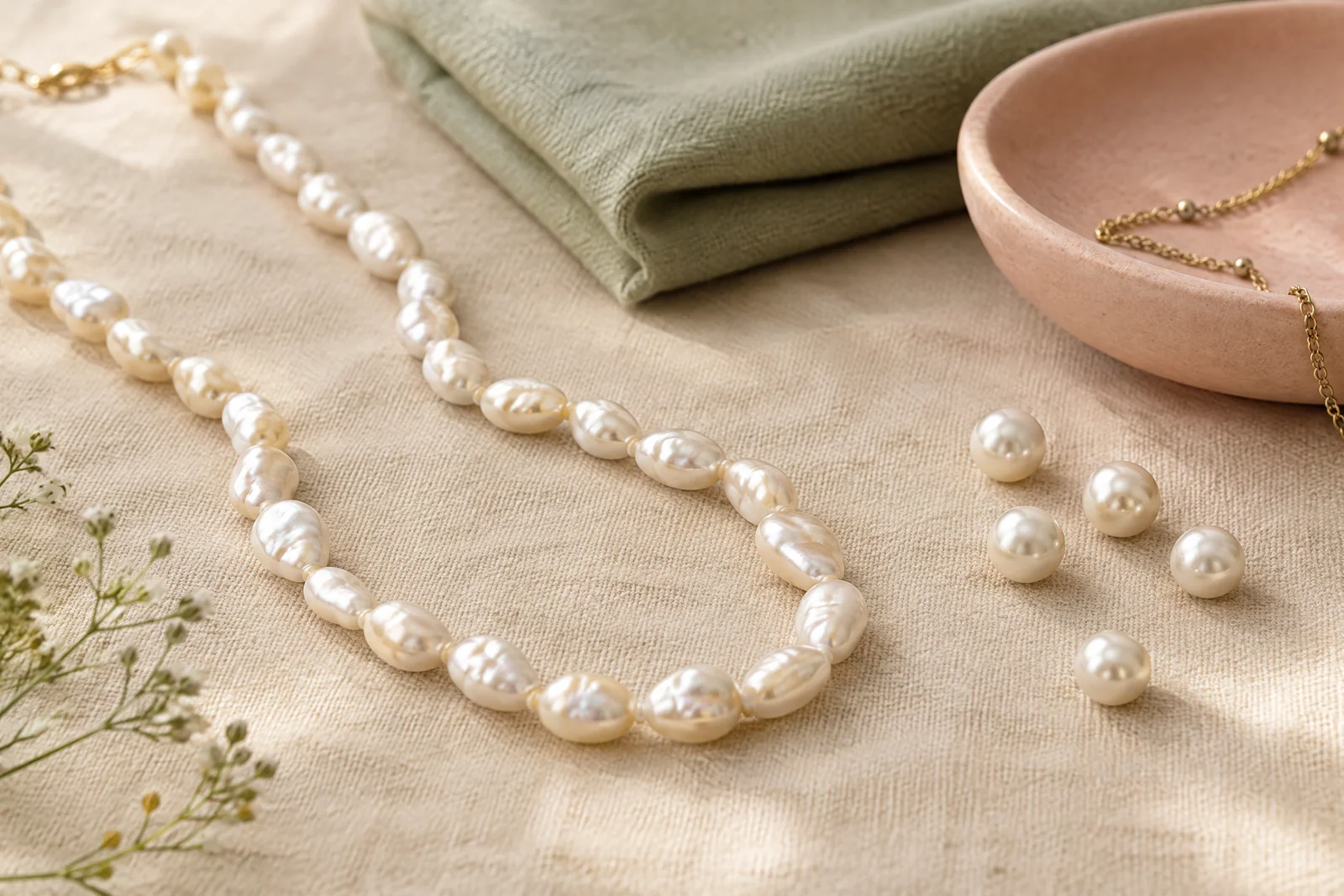
Beads and decorative components also call for individual judgment. Glass beads can usually be dusted carefully with a soft cloth, but a strand may include metal findings, coatings, knots, or other materials that should not be soaked. Avoid immersing mixed-material jewelry in water or cleaner. For pearl or faux-pearl pieces, use a gentle dry wipe and keep cosmetics, fragrance, and cleaning chemicals away; do not scrub or use ultrasonic devices. A component that is uncertain or delicate is a reason to stop at dry surface care; restraint is an important jewelry maintenance skill.
Cords, leather, and fabric elements can absorb moisture or react differently from metal. Keep them dry unless the maker's instructions say otherwise, and do not tug at knots while wiping. For a piece that has accumulated grime in a crevice, resist improvising with a pin, toothpick, or stiff brush. A professional who understands the construction can clean or repair it more safely than a forceful home attempt, an important boundary for at-home jewelry maintenance.
Never mix jewelry with household cleaners, bleach, or abrasive powders, and do not apply a product simply because it worked on a different item. Ultrasonic cleaning is not a universal shortcut: stones, settings, treatments, and joined materials vary, so do not use it unless a qualified professional confirms it is appropriate for that exact piece. Thoughtful jewelry maintenance means matching the method to known materials and choosing caution when the details are unknown, not trying every cleaner in the cupboard.
Store, rotate, and make a simple seasonal note
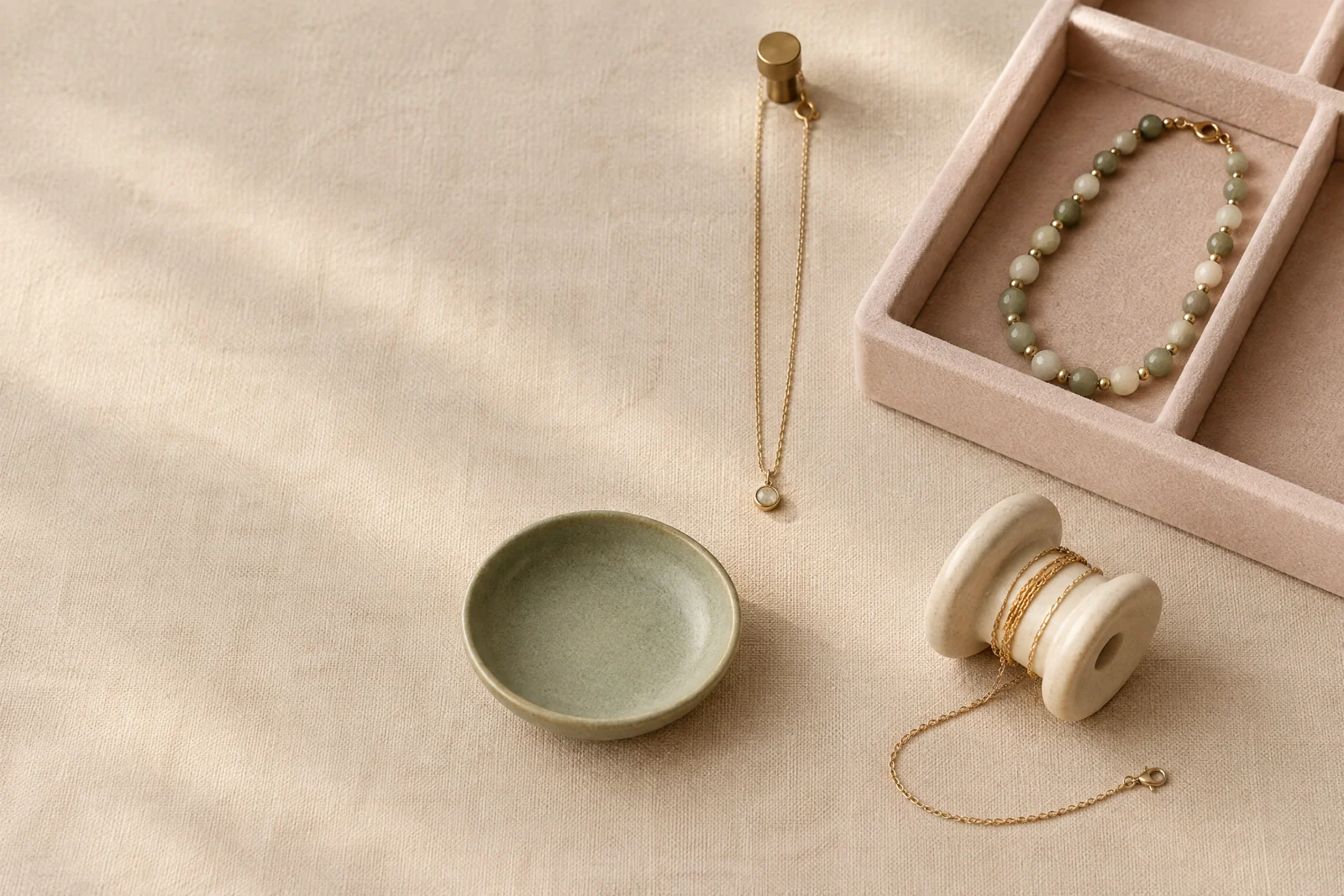
Once a piece is dry, give it its own resting place. Fasten necklaces before storing them, then lay them flat or use a separate compartment so chains are less likely to tangle. Keep earrings paired and small parts together. A soft pouch or divided organizer can help limit contact between pieces, especially when beads, finishes, or decorative elements might rub against one another; storage is the quiet final step of seasonal jewelry maintenance. Avoid storing jewelry in a damp bathroom or in direct sun, which can be unkind to some materials and finishes.
Separate by construction as well as by type. Keep delicate strands away from chunky pieces that could snag them, and avoid piling plated pieces against rough surfaces. Store shell, bead, pearl, or cord designs where they will not be crushed under heavier jewelry. If you already have an organizer, a quick reset can make it easier to see what you own and keep up with jewelry maintenance; our guide to storing necklaces without tangling has more practical ideas.
Use the seasonal moment to rotate thoughtfully rather than treating it as a reason to replace anything. Put the pieces you reach for often in an easy-to-access spot and return special-occasion styles to a protected compartment. If a necklace's color or scale works particularly well with the clothes you are wearing now, leave it visible for the week. For a fresh perspective, revisit the bracelet collection or rings collection and think about how each category fits your existing wardrobe, without needing to assemble a larger set.
Finish with a short seasonal note: what you checked, what needs repair, and what care instructions you want to look up. Add a reminder to revisit a piece only if a specific issue needs follow-up; there is no need to clean every item on a fixed schedule. A good jewelry maintenance habit is regular enough to catch changes, but gentle enough to leave sound pieces alone; consistency matters more than intensity. If you find a loose stone, a broken clasp, a damaged strand, or a finish that concerns you, stop wearing that item until it has been assessed.
With a little light, patient observation, and material-aware care, seasonal jewelry maintenance can make a jewelry collection easier to enjoy and easier to look after. It is a small ritual of attention: notice what is working, protect what is delicate, and ask for help when a repair goes beyond a simple wipe and a tidy place to rest.
Related reading
Continue with How to Care for Gold-Plated Jewelry Gently, How to Store Necklaces Without Tangling Them, and A Gentle Care Guide for Pearl and Faux-Pearl Jewelry.
"