Brooch styling is a small, satisfying way to make an outfit feel considered without changing its basic shape. A pin can sharpen a familiar blazer, bring a soft point of color to a plain knit, or give a scarf a deliberate finish. It is also wonderfully flexible: the same piece can move from a lapel to a bag or hat as the day’s outfit changes. That is the appeal of brooch styling: an expressive finish without a whole new outfit.
Good brooch styling starts by treating a brooch as a finishing detail, not a rule-bound heirloom. Start with where you want the eye to land, then consider scale, fabric, color, and the way the pin fastens. Whether your taste runs classic, playful, or a little unexpected, a few practical choices make brooch styling feel natural and personal.
Start with placement, proportion, and a clear focal point
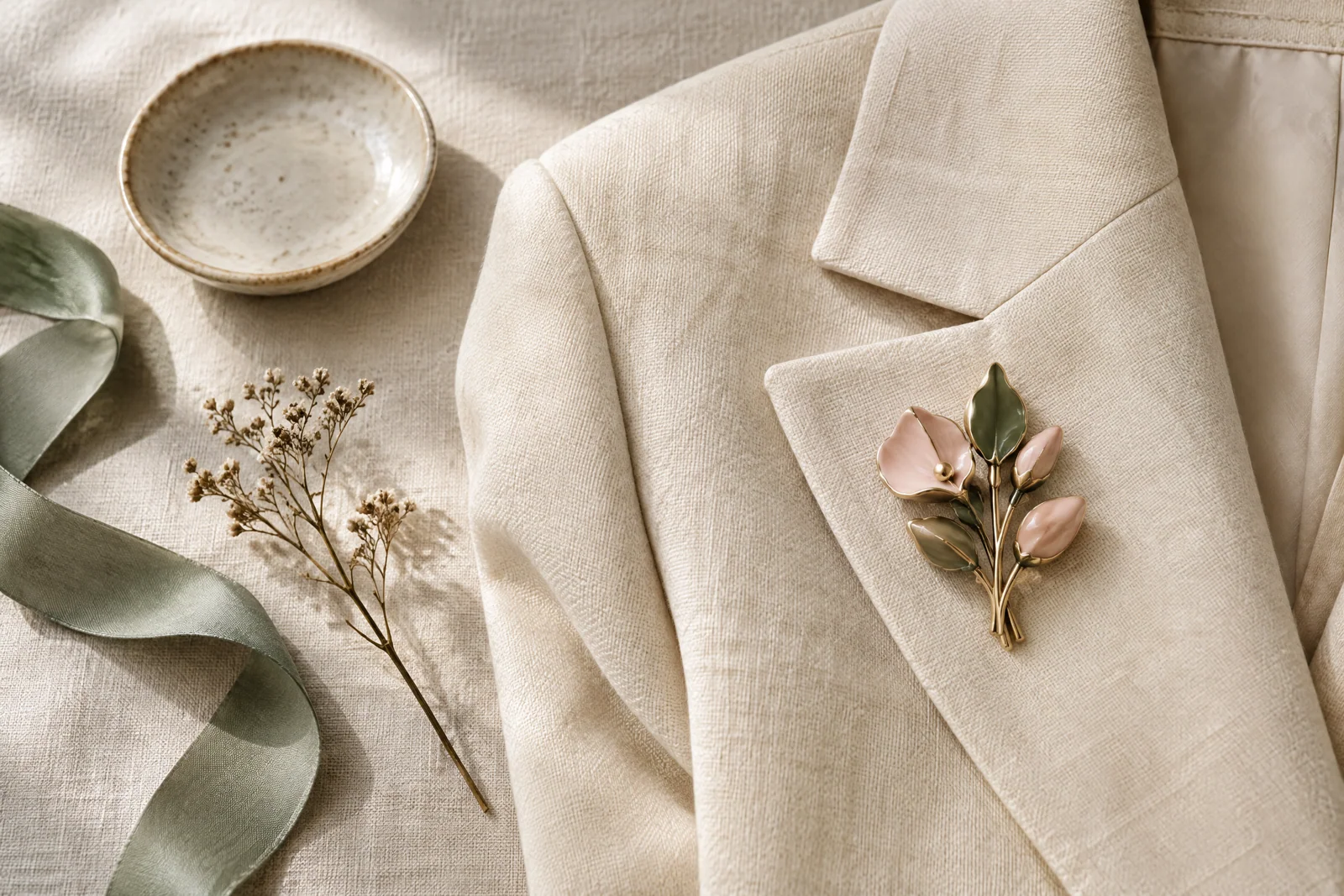
The familiar lapel is a useful starting place because it gives a brooch a natural frame. Try it high on one lapel, close to the shoulder, or slightly lower toward the jacket’s button line. Step back and notice how the placement relates to your face, neckline, and any other details. A brooch near the collar draws attention upward; one closer to the waist creates a quieter point of interest. Neither position is more correct—the balance of the whole outfit matters. That simple check is a useful foundation for brooch styling.
On a simple jacket, one medium or larger pin can carry the look. With a fine blouse or a narrow cardigan edge, a smaller piece tends to feel more at ease. Proportion is relative: a broad coat lapel can accommodate a sculptural shape, while a delicate collar may ask for something neat and light. In brooch styling, scale is always relative to the garment. If the brooch has a strong silhouette or bright color, let it be the focal point rather than placing it beside a busy necklace, oversized earrings, and a patterned scarf all at once. Brooch styling works best when the eye has somewhere to rest.
You do not have to center a brooch perfectly. A little asymmetry can make brooch styling feel relaxed rather than arranged. A slight angle can feel relaxed, and a small cluster can look collected when its pieces share a color, shape, or mood. For a pair, vary the spacing rather than arranging them in a rigid grid. Two small pins along a lapel, for instance, can echo the line of the jacket. With three, keep the grouping compact and check that the combined weight does not pull the fabric out of shape.
Match the fastening to the fabric before you pin
Safe brooch styling starts with a look at the back of the pin and the cloth you plan to wear it on. A traditional straight pin needs enough fabric to pass through and close securely. Woven wool, denim, and sturdy cotton often provide a more forgiving base than thin silk, a loose knit, or a fine jersey. Very open knits can snag, while delicate or tightly woven fabrics may show a puncture. If the garment is precious, fragile, or difficult to repair, consider another placement instead of testing it.
For a heavier pin, choose a stable area with some structure, such as a lined lapel or a reinforced seam, and support the fabric with your free hand as you fasten it. Do not force the point through a thick seam or tug the cloth to make it fit. Close the clasp fully, then give the brooch a gentle check before wearing. If it tips forward, pulls down, or leaves the fabric visibly distorted, it may be too heavy for that spot. A brooch back that feels secure in your hand is not automatically right for every garment; thoughtful brooch styling respects both clasp and cloth.
Scarves and wraps offer a flexible alternative to puncturing clothing, and give brooch styling another easy setting. Pin through a folded section where the layers overlap, or use the brooch to hold a drape in place if the fabric and fastening can handle it. Test the fold while standing and moving, since a placement that looks tidy on a table may slide once worn. On a hat, choose a firm area away from the edge and from places that rub against your hair or hands.
A bag can be a good canvas when its material and construction suit the pin. For brooch styling on accessories, check the surface before fastening. A sturdy fabric tote or a removable ribbon tied to a handle is usually a lower-risk place to experiment than thin leather or a tightly woven favorite. Avoid piercing materials that could show a permanent hole or weaken at the puncture. For a no-hole option, fasten the brooch to a detachable fabric tab, scarf, or bag charm loop, then attach that element to the accessory. This gives you the decorative effect while keeping the bag itself untouched.
Catalog descriptions can help you assess scale and materials before choosing a piece. For example, Duddingtons’ Power Brooch is described with gold-plated mixed metal and 14k gold-fill details; its pin measures about 35 mm, with beads around 18 mm. Treat those dimensions as a prompt to consider the fabric and the visual weight of the piece—not as a promise that it suits every garment. That is practical brooch styling: fit the accessory to the setting. For more pin and accessory ideas, browse the accessories collection.
Use color and texture to make a small detail feel intentional
Color is often the quickest route to a harmonious look. A brooch can repeat one shade already present in a print, pick up a bag or shoe, or introduce a contrasting accent to a quiet outfit. Repetition does not need to be exact: a muted green pin can sit comfortably with a deeper green trouser, and warm blush can soften a crisp cream shirt. Brooch styling is especially easy when you choose one color relationship first and let the rest of the outfit stay simple.
For a calm, tonal combination, pair a pin with clothing in a similar family but vary the textures. In brooch styling, tonal does not have to mean flat. A gold-toned detail can add warmth to oatmeal, camel, or cream; sage and dusty pink can feel gentle against ivory; a bright accent can wake up navy or charcoal. If your clothes already have a busy pattern, pick up just one color from it, or choose a brooch in a clear neutral metal. This keeps the detail connected without asking it to compete with every line in the print.
Contrast can be just as pleasing. A crisp metallic shape against soft wool, a glossy enamel-like surface over matte cotton, or a vivid accent on a dark jacket makes the brooch easy to notice. Consider the finish as well as the color: mixing metals can look deliberate when another detail—perhaps a buckle, button, or bag fitting—quietly bridges them. You do not need every metal in an outfit to match. A repeated tone or a shared level of visual weight is often enough. For complementary accents, browse the necklace collection or earrings collection, then keep the brooch’s role in view.
Texture gives a brooch another role beyond adding color. A smooth, polished design can bring definition to a nubby knit; an organic or dimensional shape can enrich a plain woven jacket. If both the brooch and fabric are highly detailed, keep the surrounding accessories understated. If the clothing is plain, you have more room to choose a lively motif or a stronger color. A look that feels balanced in a mirror usually has a mix of quiet and expressive surfaces rather than one texture repeated everywhere.
Wear it beyond the lapel, then store it with care
Once you are comfortable with a jacket, try a collar, the edge of a cardigan, or the shoulder of a simple dress. Exploring placement is part of brooch styling, not a departure from it. A brooch can also bring a scarf into a new shape: gather a corner, fold it once, and pin only after checking that the fabric is not stretched. On a hat or sturdy bag, treat the pin as a removable accent and confirm that it will not catch when you set the item down. Small changes in placement can make a familiar piece feel fresh without requiring a new outfit.
Care begins with the materials and construction of the individual piece. A thoughtful brooch styling routine includes putting the piece away just as carefully as you put it on. Fasten and unfasten it over a table or other steady surface so it is less likely to fall. Keep pins closed when not in use, and store each brooch separately in a soft pouch or divided compartment so its pin cannot scratch another item. If a brooch includes mixed materials, follow any care information supplied for that piece and avoid soaking it or applying a cleaner without checking whether every component can tolerate it.
Before putting the brooch away, check that the clasp closes properly and that no thread or lint is caught around the pin. If it has touched perfume, lotion, or moisture, follow the maker’s material-specific guidance rather than assuming every finish can be wiped or polished the same way. For a garment, unpin carefully and smooth the area gently; do not pull the cloth against the point. A little attention at the end of the day helps keep both accessory and clothing ready for another wear.
Most of all, let brooch styling be an invitation to experiment. Start with a stable fabric, one clear placement, and a color or texture you enjoy. Wear it for an hour, notice whether it shifts or catches, and adjust next time. A well-chosen small detail can make a familiar jacket feel newly yours, but it should still feel comfortable enough to forget about while you get on with your day.
Related reading
For more inspiration, explore Coastal Jewelry: Bringing a Little Seaside into Your Style, Shell Jewelry: Natural Variation and Styling Ideas, and Fish Necklaces: A Playful Motif with Everyday Appeal.