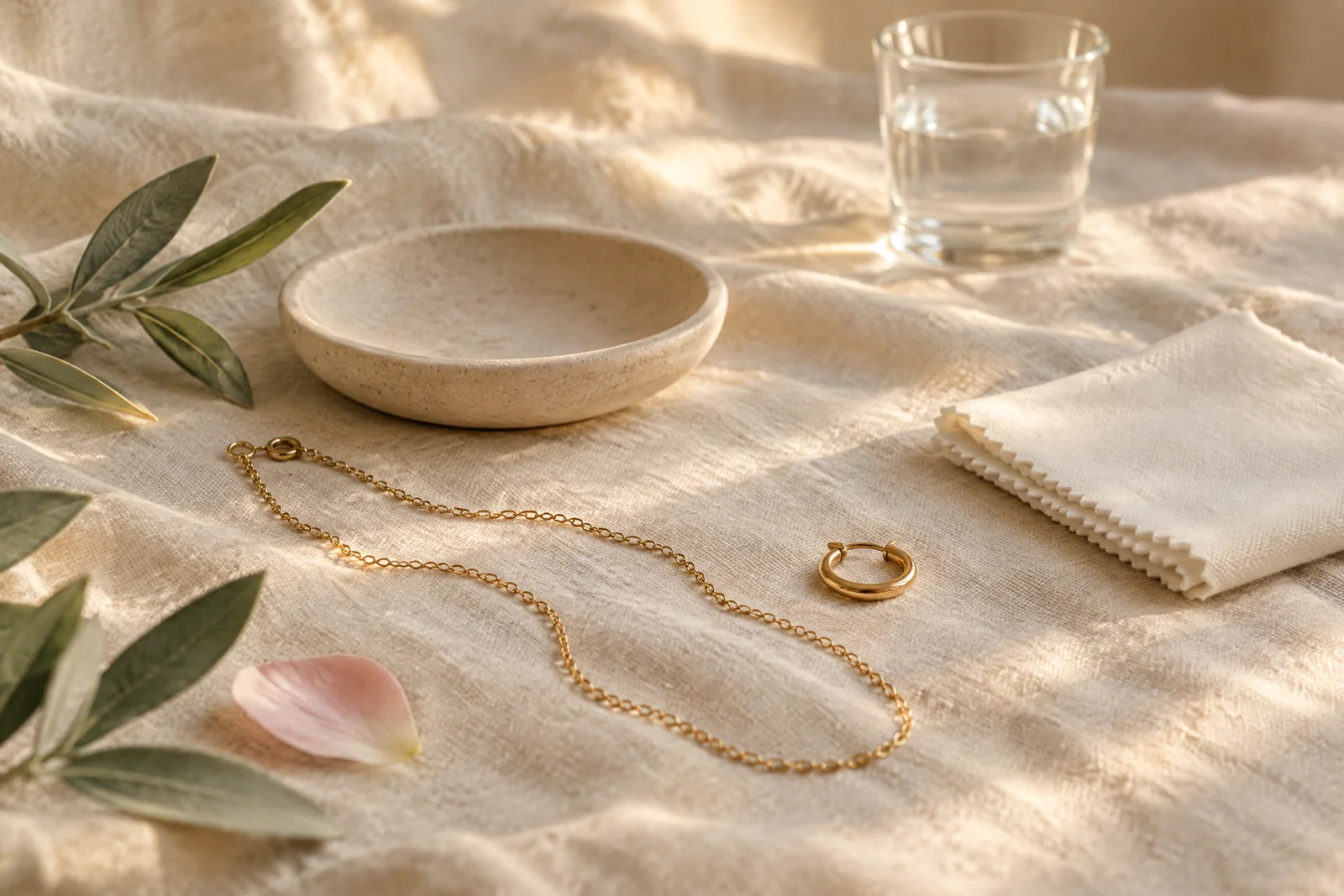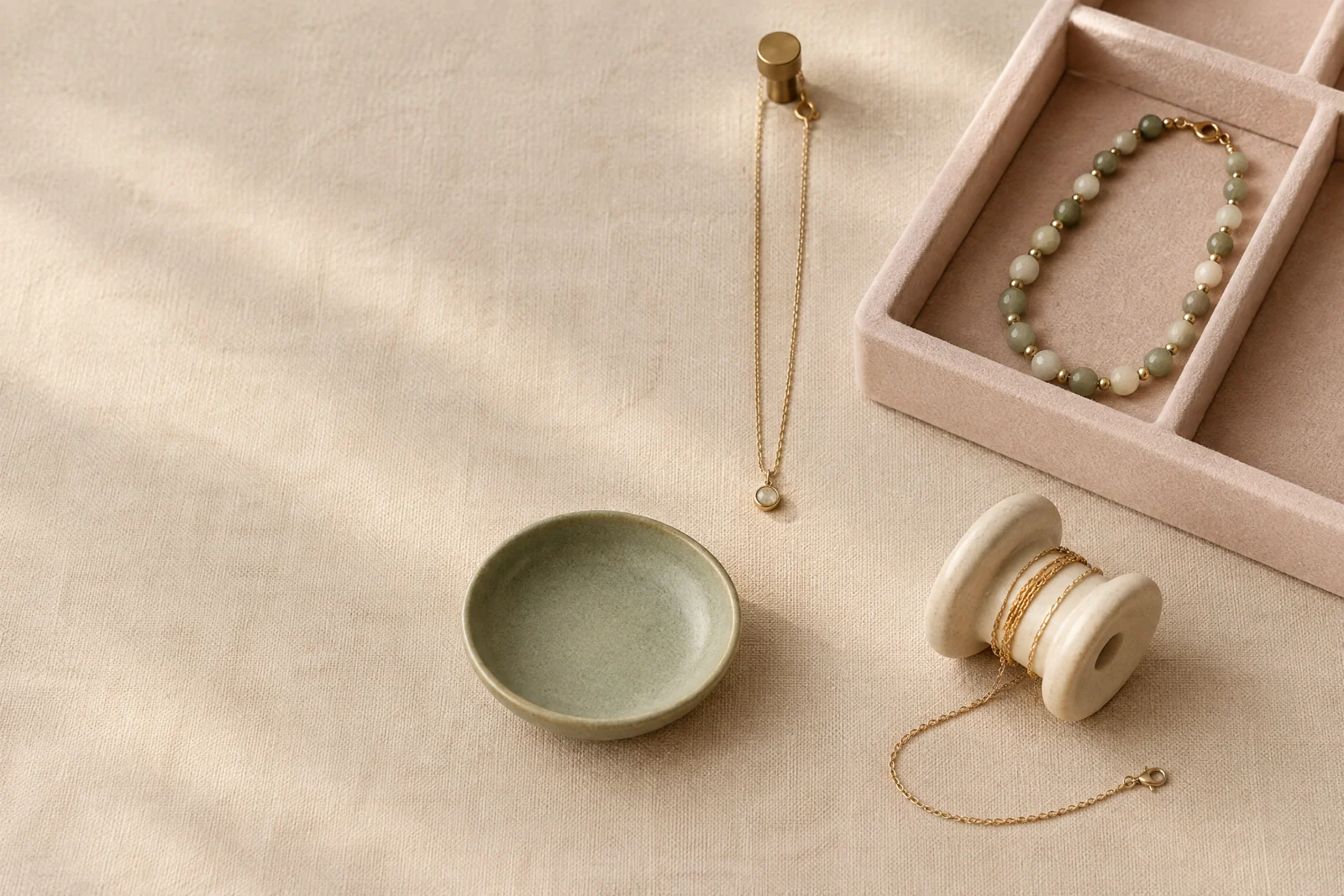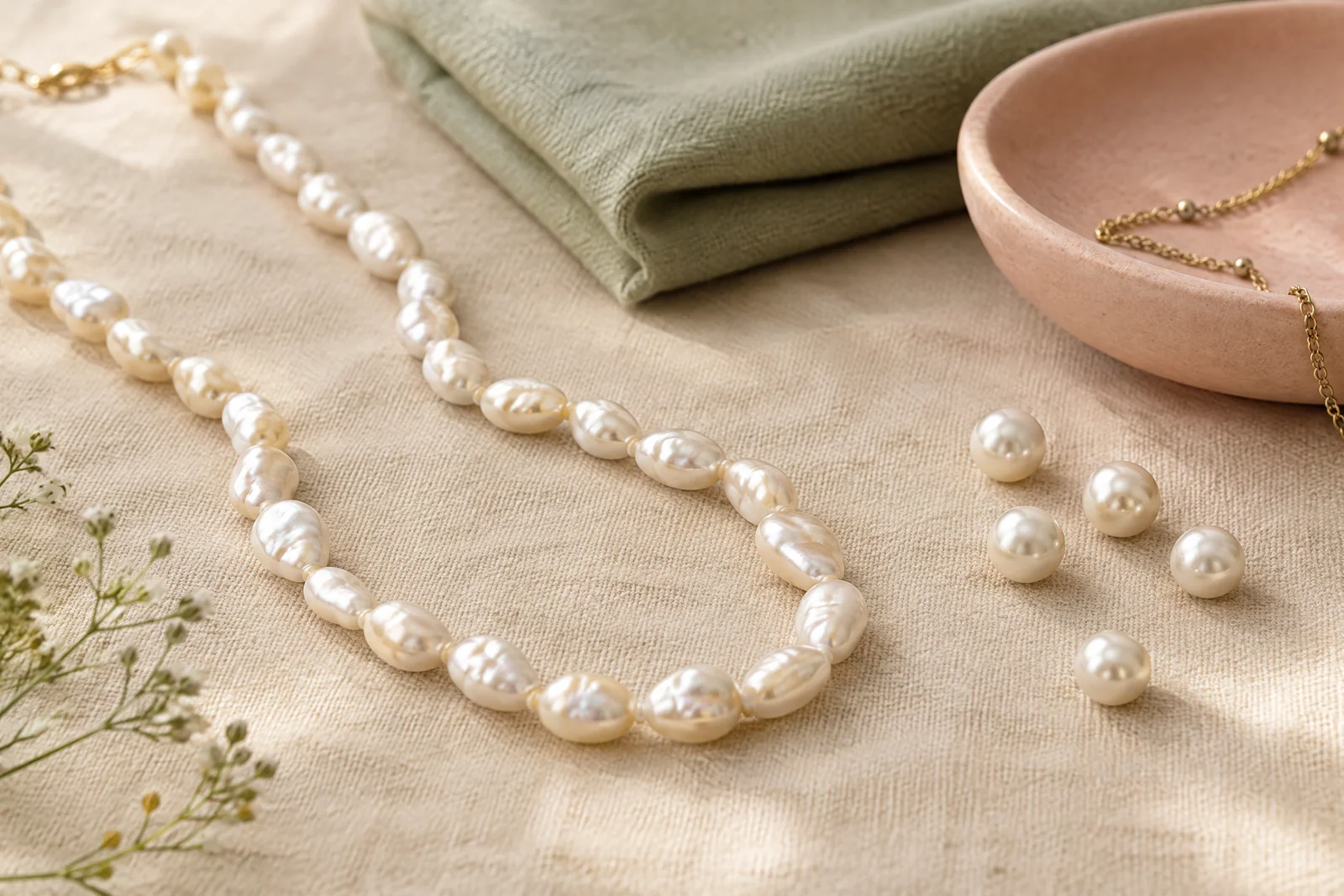
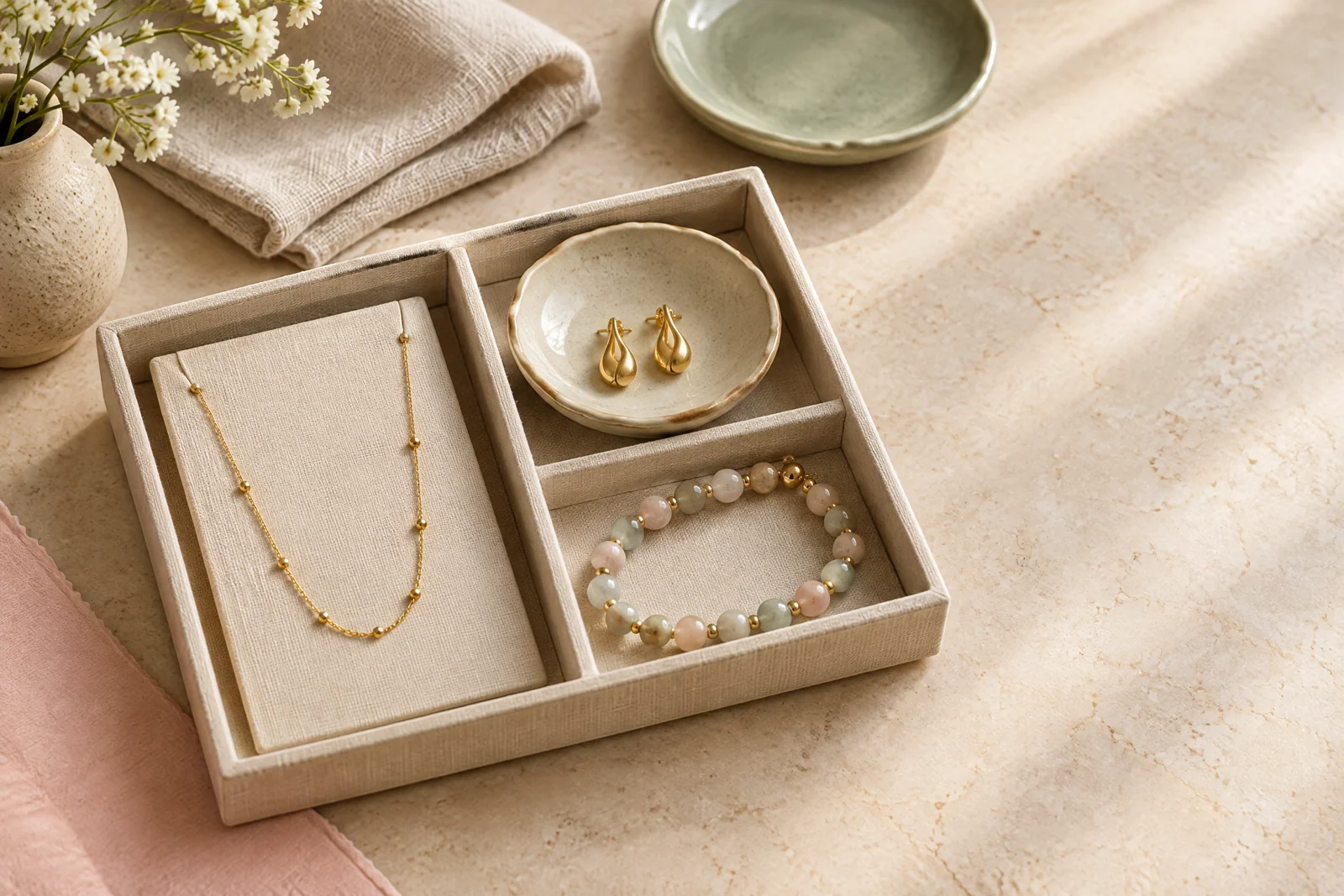
A small jewelry collection should feel like a pleasure to open, not a puzzle to solve. Thoughtful jewelry organization is less about buying a perfect box than giving each piece a visible, safe place that suits how you wear it. A few practical decisions can prevent tangled chains, missing earring backs, and the familiar pile that forms on a busy morning. Start with what you own, what you reach for, and the room you actually have. The goal is a compact system that makes getting dressed easier while treating different materials with care.
Begin with a useful edit, not a bigger organizer
Before choosing storage, gather everything in one place and sort it into broad groups: necklaces, earrings, bracelets, rings, and special-occasion pieces. This first pass is not a test of how often you wear something; it is a way to see the collection clearly. That clarity makes jewelry organization easier to maintain. Notice duplicates, pieces that need repair, and favorites that have disappeared under less-used items. Jewelry organization works best when it reflects real routines, so keep regular rotation pieces within easy reach and move occasional or sentimental pieces to a separate, protected spot. A visible jewelry organization system keeps that distinction simple.
Make three temporary piles: wear often, wear sometimes, and decide later. The last pile matters; you do not need to make a permanent decision during a tidy-up. Set aside pieces with loose clasps or missing earring backs so they cannot snag other items. If you are unsure whether something needs attention, note the issue and store it alone until you can inspect it calmly. A small collection can include meaningful keepsakes, and there is no need to discard something simply because it is not part of your weekly rotation.
Next, think about your habits. Do you choose earrings at the mirror, or put on a necklace after selecting a neckline? Do you take off rings near the sink or beside the bed? Those ordinary details suggest where a landing spot belongs. Put daily favorites in the easiest-to-reach place; group occasional pieces somewhere distinct. This is the practical starting point for jewelry organization, and it helps you avoid buying storage with more compartments than you need. That is efficient jewelry organization for a limited space.
Let the collection guide your container. A handful of necklaces may need more separation than a stack of small earrings; rings benefit from a lined groove or individual cup. Browse the necklace collection or earrings collection to see how shapes and scales differ by category. You are not copying a display, just deciding what kind of separation makes your own pieces easy to identify.
Create a few clear zones in the space you have
A compact system can fit in a shallow drawer, on a dresser, or inside a small lidded box. Think in zones rather than building a miniature jewelry store: everyday favorites, category storage, and occasional or delicate pieces. Use a divided tray, small fabric pouches, or clean, smooth dishes that are stable and not abrasive. The container should keep pieces from sliding into one another and be easy to put away. If a lid makes you less likely to return jewelry after wearing it, an open tray may suit your everyday pieces better. Keep jewelry organization simple, with only the sections you use.
Keep necklaces separate whenever possible. Fine chains tangle when clasps, pendants, or chain lengths catch against one another, so fasten each clasp and lay chains in individual sections, a soft pouch, or a hanging organizer. Leave space between hooks so pendants do not bump together. This kind of jewelry organization prevents avoidable wear. For a drawer or travel pouch, a chain card can keep a necklace flat; check that the chain is not sharply bent around it. These small jewelry organization choices prevent one of the most common storage frustrations before it starts.
Give earrings a dependable pair-making home. A divided tray, soft card, or earring holder makes it easy to see matching pairs and keeps posts from catching on other jewelry. Put backs with their earrings instead of collecting them loose in a dish. Studs may need only a shallow compartment; drops and hoops need enough room to lie without pressure. For jewelry organization that is quick in the morning, place the pairs you wear most often at the front. That is jewelry organization designed for a real morning routine.
Bracelets and rings need different kinds of order. A bracelet bar or separate compartments can prevent bangles from knocking together, while soft pouches help keep pieces apart. Rings can sit in a lined roll, divided insert, or individual shallow sections. Avoid overfilling each space: when jewelry is pressed tightly together, clasps catch and shapes can be distorted. A useful test is whether you can lift out one item without dragging several others along with it. This jewelry organization plan keeps each category distinct.
Place storage where your routine happens, but away from damp areas and direct sun. A bedroom dresser or closet shelf is generally more predictable than a bathroom counter, where humidity and splashes may expose materials to conditions they do not tolerate. Do not leave jewelry loose near a sink. If you share a room or have pets or children, a closable box on a stable shelf may be a safer choice than an open display. Good jewelry organization is convenient without being careless. The best jewelry organization is convenient without putting pieces in harm's way.
Store different pieces with gentle, material-aware care
Good jewelry organization also means avoiding one-size-fits-all cleaning and storage rules. Check each piece's material description and care guidance when available. A necklace combining beads, cord, metal, enamel, shell, or faux pearls has more than one surface to consider; follow the most delicate component's needs. Do not assume every piece can be soaked, polished with the same cloth, or treated with an ultrasonic cleaner. When material is uncertain, keep the piece dry and separate until you can confirm appropriate care.
For many wearable pieces, a soft dry cloth after use can remove fingerprints and surface residue, but use a light touch and avoid rubbing delicate finishes. Let a piece dry fully before putting it in a closed pouch if it has been exposed to moisture. Keep plated surfaces from unnecessary friction with other metal items, and give softer or textured components their own compartment. These are cautious everyday habits, not a promise that any particular finish will remain unchanged indefinitely.
Keep chains loosely laid rather than folded into tight knots. Close clasps before storing so the ends are less likely to slip through links, then fasten the chain to its card or lay it in its own channel. Do not force a stubborn tangle; set it on a flat surface and work slowly with your fingers, not sharp pins that could scratch a surface or damage a link. If a chain seems weakened, bent, or caught at a clasp, stop rather than pulling harder.
Store pieces away from direct sunlight, heaters, and places where humidity changes frequently. A soft lining can cushion jewelry, while individual compartments reduce rubbing. Avoid tossing pieces into a drawer with keys, coins, hair clips, or cosmetics. Even a small tray becomes more protective when jewelry has a clear boundary and everyday objects stay elsewhere. A particularly delicate piece may be best kept in suitable original packaging or a separate padded compartment.
Keep the care routine modest enough to repeat. When you remove a piece, return it to its assigned place rather than setting it down wherever you happen to be. This is the heart of practical jewelry organization: a known home is more useful than an elaborate system that is inconvenient. A small dish can serve as a temporary landing pad, but empty it into the main organizer regularly so chains, earrings, and rings do not mingle.
Make the setup easy to maintain and easy to use
Test your arrangement through a normal week. Notice which compartment you reach for, which pieces still tangle, and whether putting things away takes too many steps. If a favorite necklace is always left on the dresser, move its storage closer to where you take it off. If a pouch is so small that a clasp snags, switch to a wider compartment. Good jewelry organization adapts to your behavior rather than asking you to change your whole routine. That is the lasting advantage of jewelry organization built around daily habits.
Try a brief weekly reset. Return stray pieces to their zones, match loose earrings, check that clasps are closed, and remove lint or dust from the tray. This is not a full cleaning session, just a quick visual check that restores order before a small tangle becomes a knot. If you travel, keep a compact pouch ready and return pieces to their home when you unpack instead of leaving them in a suitcase pocket.
Review the setup seasonally or when your collection changes. You may find that an extra divider helps, or that one category needs less space. Change only what makes daily choices harder. If a piece is awaiting repair, place it in a clearly separate container and make a note so it is not mistaken for ready-to-wear jewelry. A temporary “decide later” pouch gives you room to revisit a piece without crowding the rotation.
For a simple layout, put the most-used pieces in the top or front section, necklaces in separate channels, earrings in pairs, and rings in a lined row. Keep occasional jewelry distinct from everyday pieces. A small note inside the lid can remind you which materials need special handling or which items are waiting for repair. Make the system visible enough to use, but not so exposed that delicate pieces gather dust or can be knocked to the floor.
Choose containers for function before appearance: soft-lined compartments, smooth dividers, and secure closures matter more than matching every surface in the room. Add a ceramic dish or a fabric color you enjoy while keeping jewelry separated. The result can feel personal without turning every piece into decor. For more everyday inspiration, browse the broader accessories collection, then tailor your storage to the shapes you own.
Above all, let jewelry organization reduce friction. You should be able to spot the pair that suits a sweater, choose a necklace without freeing it from a knot, and put everything away in seconds. Keep the system small, forgiving, and specific to your space. To learn more about Duddingtons, visit About Duddingtons; for a question about a particular piece, use the contact page rather than guessing about its care.
Related reading
For more gentle routines, read How to Care for Gold-Plated Jewelry Gently, How to Store Necklaces Without Tangling Them, and A Gentle Care Guide for Pearl and Faux-Pearl Jewelry.